My first arrival in Manali was anticlimactic in a way I was not prepared for. The main bazaar — the Mall Road that runs between banks, trekking shops, and restaurants advertising Tibetan pizza — felt like every mountain tourist town I had ever been in, compressed and slightly breathless at 2050 metres. Auto-rickshaws competed for space with tourist buses. A man in a booth sold permits for Rohtang Pass. I found my guesthouse and felt mildly disappointed, until the next morning I walked upstream along the Beas River toward Old Manali and everything changed.
Old Manali is maybe fifteen minutes on foot from the new town, separated by a bridge over the Beas and what feels like several decades. The lanes here are unpaved and lined with apple orchards, deodar cedars, and traditional Himachali houses of wood and stone, with carved balconies dark from seasons of wood smoke. The Manu temple — supposedly the oldest in the region, dedicated to the sage who survived a great flood — sits above the village on a stepped platform and receives visitors who remove their shoes and climb in stockinged feet past small offerings of marigolds. Nobody is hurrying. A dog sleeps across a doorway. Two women hang laundry from the upper balcony of a house that appears to date from at least the nineteenth century. This is what Manali was before the buses arrived, and it is still here if you choose to find it.

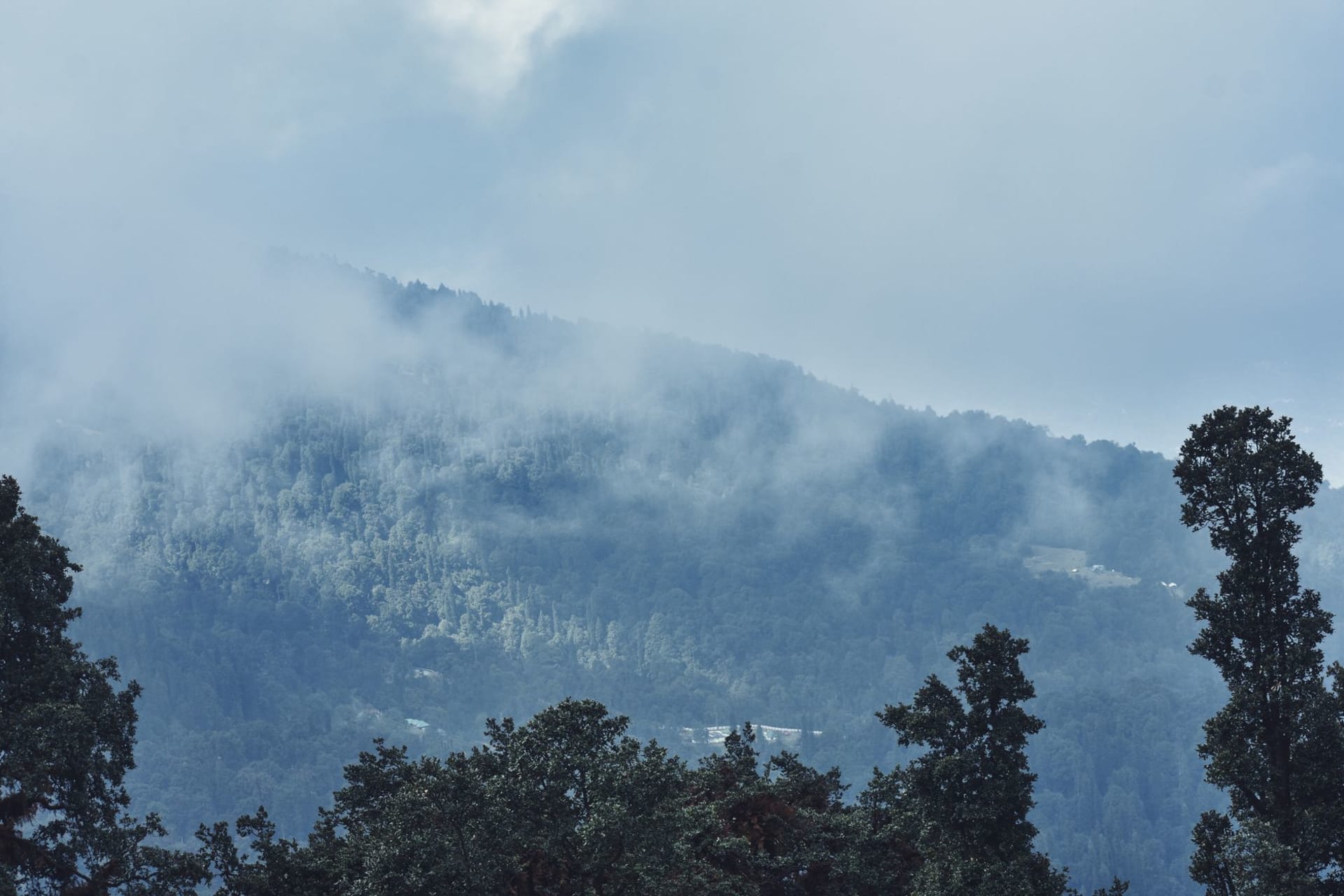
The reason people genuinely love Manali — not just pass through it — is the landscape that presses in from every direction. The Beas River comes down from the Rohtang Pass with the force of recent snowmelt and the valley it has cut is both dramatic and green in a way that surprises you after the bareness of everything above. The Solang Valley branches off to the north, its meadows scattered with wildflowers in early summer and skiers in winter. And then there is the Rohtang Pass itself, which Manali serves as base camp for — a brutal, beautiful, cloud-wreathed crossing that turns the landscape from Himalayan forest to Tibetan desert in the space of an hour’s driving. I have crossed it twice: once in June in a shared jeep with a family from Punjab who had never seen snow and kept photographing each other in it, and once in September alone on a rented motorcycle with the road mostly to myself and the feeling of complete exposure that comes from being small and moving through a landscape that is very large and very indifferent.
The food in Manali proper is its most democratic pleasure. The Tibetan restaurants around Old Manali serve thukpa — a noodle soup that arrives with a layer of rendered fat on top and warms you from the inside in a way that makes you understand how people survive winters here. The Himachali trout, farmed in the cold Beas tributaries, appears on almost every menu and is best simply pan-fried with mustard oil and ginger. The chai stalls on the main bazaar operate on a sliding scale of quality but the best ones use local honey stirred in at the last moment.

What I keep returning to about Manali is its particular position as a threshold. Nothing important about Himachal Pradesh is in Manali itself — but nearly everything important is accessible from it. The Spiti Valley begins north of Rohtang. The Parvati Valley runs east. The Great Himalayan National Park stretches west. Manali is the node, and the town has organized itself accordingly: every second shop sells gore-tex and freeze-dried meals and maps with contour lines. It is a place for getting ready, for acclimatizing, for one last bowl of something warm before the road gets serious.
When to go: May to June is ideal for the valley itself and for catching the apple orchards in blossom. July and August bring monsoon clouds but remain passable. September is perhaps the finest month — clear light, cooling temperatures, fewer tourists. Winter (December–February) transforms Manali into a ski resort of sorts; Solang Valley gets decent snow.