Asia
Himachal Pradesh
"The road ends and the silence begins — and you still go further."
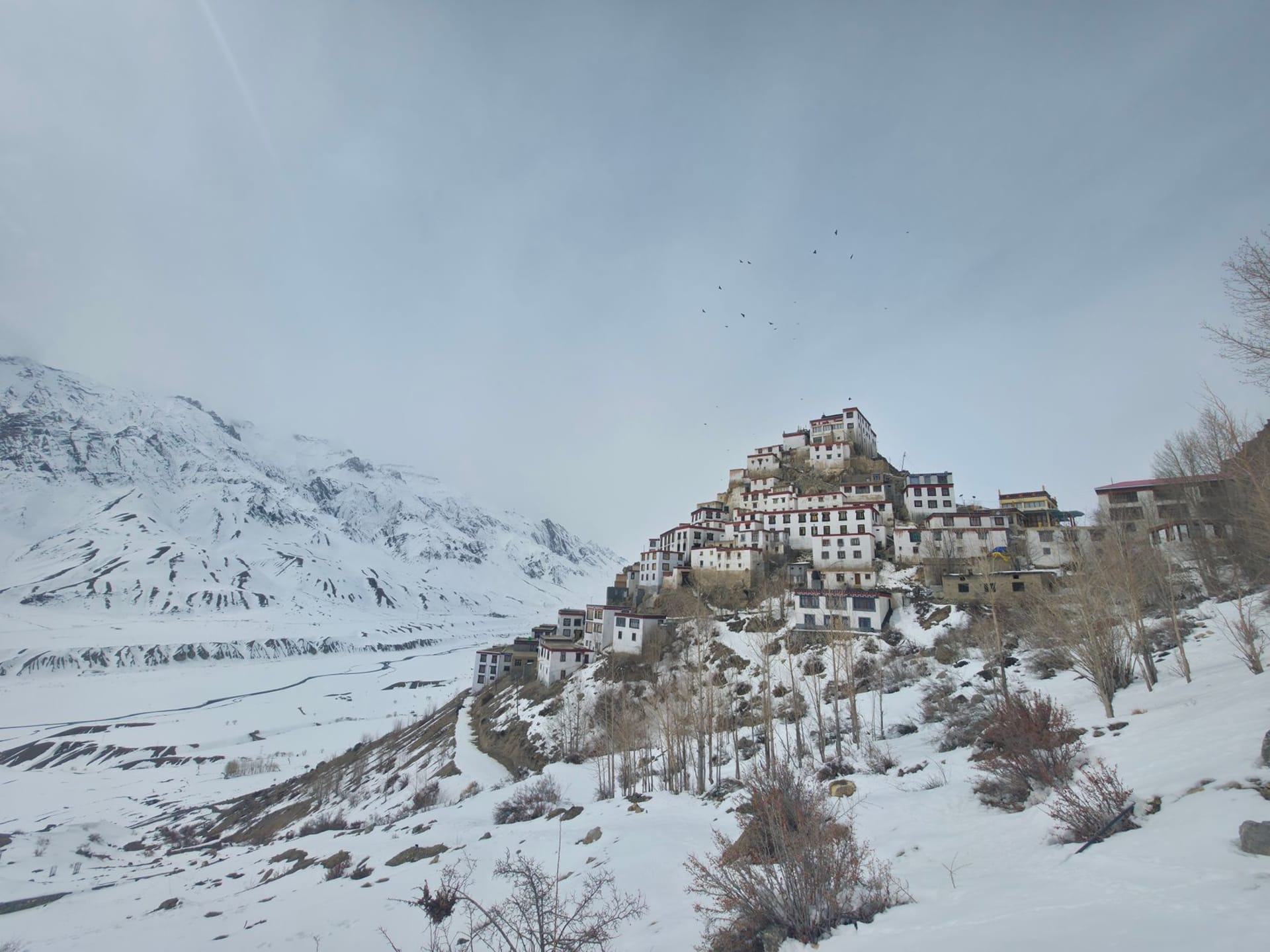
The bus from Manali to Kaza takes twelve hours on a road that alternates between gravel, ice, and sheer drops into the Spiti River. Somewhere after the Rohtang Pass, the trees disappear entirely — and you enter a landscape so stripped and austere it looks like a painting someone gave up on. Brown ridges, violet shadows, a monastery the color of saffron balanced on a rock that has no business holding anything. That was my introduction to Himachal Pradesh’s Spiti Valley, and nothing I had read prepared me for how completely it erased everything before it.
Himachal Pradesh is two states in one. The lower half — Manali, Dharamshala, Shimla — is organized tourism: apple orchards, Tibetan tea shops, traveler hostels with good Wi-Fi. Go there if you want beautiful mountains at human altitude. But the upper half, the cold desert districts of Spiti and Kinnaur, requires more of you — more time, more acclimatization, more willingness to eat the same dal and chapati in a guesthouse where the generator cuts out at nine. What you get in return is monasteries that predate most European cathedrals, villages so remote that the school runs four grades in a single room, and a quality of light in the afternoon that turns every cliff face orange and pink. Key Monastery. Tabo’s thousand-year-old cave murals. The village of Dhankar teetering on its ridge. These places exist in a state of barely-organized impermanence that no restoration budget will ever fully fix — which is part of why they matter.
Dharamshala deserves its own note. The Tibetan government-in-exile has made this hill town something genuinely singular: monasteries functioning as living institutions, a medical college, a library of texts that survived the Chinese Cultural Revolution only because monks carried them over the Himalayas on their backs. McLeod Ganj is crowded and loud, but an hour’s walk uphill and you’re on trails in cedar forest with the Dhauladhar range filling the sky. Eat momos from a kitchen run by a Tibetan woman who learned to cook in Lhasa before 1959. That is not a history lesson. That is Tuesday breakfast.
When to go: June to September is the only window for Spiti and Kinnaur — the passes are snowbound from October to May. Dharamshala and Manali work year-round; in winter they are quieter and the snowfall on the Dhauladhar is extraordinary. Avoid Shimla in peak summer (May–June) — it becomes gridlocked with Indian families from the plains.
What most guides get wrong: They treat Himachal Pradesh as a trekking destination and skip the culture. The Buddhist monastery circuit — Tabo, Key, Dhankar, Nako — is one of the most intellectually rich journeys in Asia. Slow down, hire a local guide who speaks Spitian, and actually go inside.