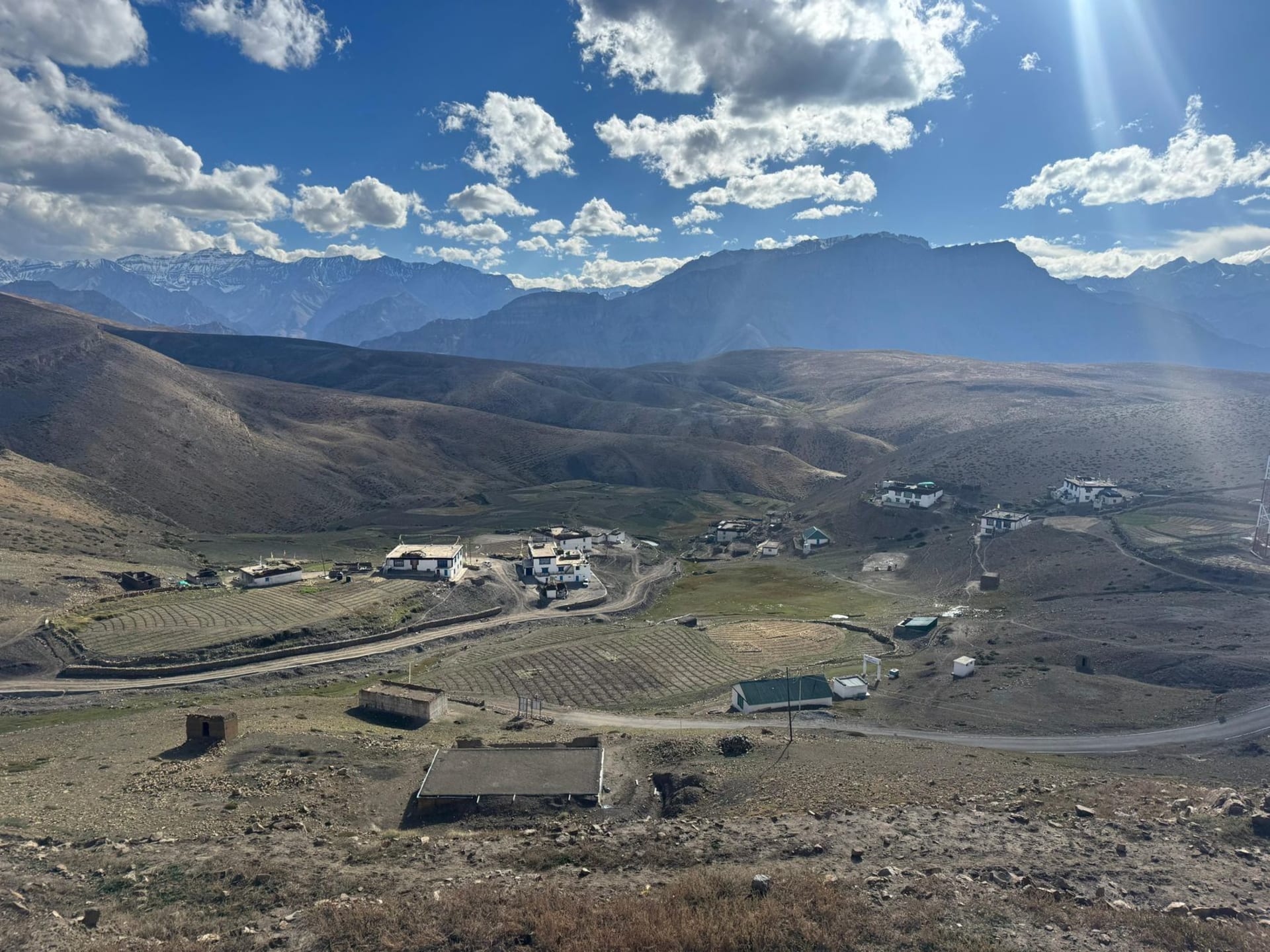
There is a photograph that gets taken at Dhankar — you have probably seen it if you have spent any time looking at images of Spiti — that shows the monastery and village buildings stacked on what appears to be a single thin column of eroded rock, with two river valleys dropping away on either side into nothing. I had seen this photograph many times before I went there. I was not prepared for the photograph to be an understatement.
Dhankar sits above the confluence of the Pin and Spiti rivers at 3890 metres, on a spur of ancient lacustrine clay that has been eroding for thousands of years and will continue to do so until the buildings on it go with it. This is not a metaphor. UNESCO has listed the old monastery as one of the hundred most endangered heritage sites in the world — not because of neglect or indifference but because the geology underneath it is disintegrating. The monks who study at the new monastery (built at a safer distance from the crumbling spur) continue to maintain the old buildings as long as it is possible, which is an act of devotion that takes on additional meaning when you understand its geological impermanence.

I arrived at Dhankar on a shared jeep from Kaza, getting off at the fork in the road at the valley floor and walking the steep path up through the village. The path is about a kilometre but gains maybe 200 metres and at this altitude it requires attention — breathing becomes a conscious activity. The village itself is partly inhabited, partly abandoned: some houses have had their roofs removed and stand open to the sky, while others are clearly occupied, with smoke rising from kitchen chimneys and small children sitting on doorsteps watching strangers arrive with the frank curiosity that children in remote places always have.
The old monastery is unlocked and can be entered freely. The main prayer hall holds a 12th-century Buddha figure of considerable presence, lit by the light from a single window, surrounded by thangkas and butter lamps and the accumulated centuries of smoke from devotional fires. What I remember most distinctly is the floor — polished by generations of bare feet and the woollen robes of monks dragging as they circumambulate. Smooth and dark and carrying the weight of use. I stayed in the hall for a long time, not doing anything in particular, which felt appropriate.
The lake above Dhankar — Dhankar Lake, half an hour’s steep walk above the monastery — is a sheet of impossible turquoise against a landscape of brown rock and blue sky. I went there in the late afternoon when the light was starting to get golden and sat on the lake shore with my boots off, eating an apple I had carried from Kaza. The water was glacier-cold. A couple of choughs — the glossy black crow-relatives that appear everywhere at Spiti’s altitude — were picking at something on the shore nearby. The Pin Valley stretched away below in brown and violet, and the sound of the two rivers meeting at the confluence rose faintly from hundreds of metres below. There was no other sound.

Stay overnight if you possibly can. The guesthouse in the village is basic — a spare room in a family home, a shared squat toilet, dinner of dal and chapati by kerosene lamp — but waking at dawn in Dhankar, with the first light hitting the opposite valley walls while the monastery silhouette resolves against the lightening sky, is one of those mornings that belongs to a different category than ordinary mornings.
When to go: July to September when the Spiti Valley road is open. Mid-September is the sweet spot: harvest season, fewer visitors, extraordinary light. Dhankar is on the main Spiti circuit and most travelers stop only for a few hours — spending a night dramatically improves the experience of the place. The Dhankar Festival (date varies, usually August or September) includes traditional dance and music worth timing for.