Thurston Lava Tube
"A river of fire once ran exactly where I was standing, dry and lit and quiet."
A walk-through tunnel carved by molten rock centuries ago, framed by one of the lushest fern forests on the Big Island.
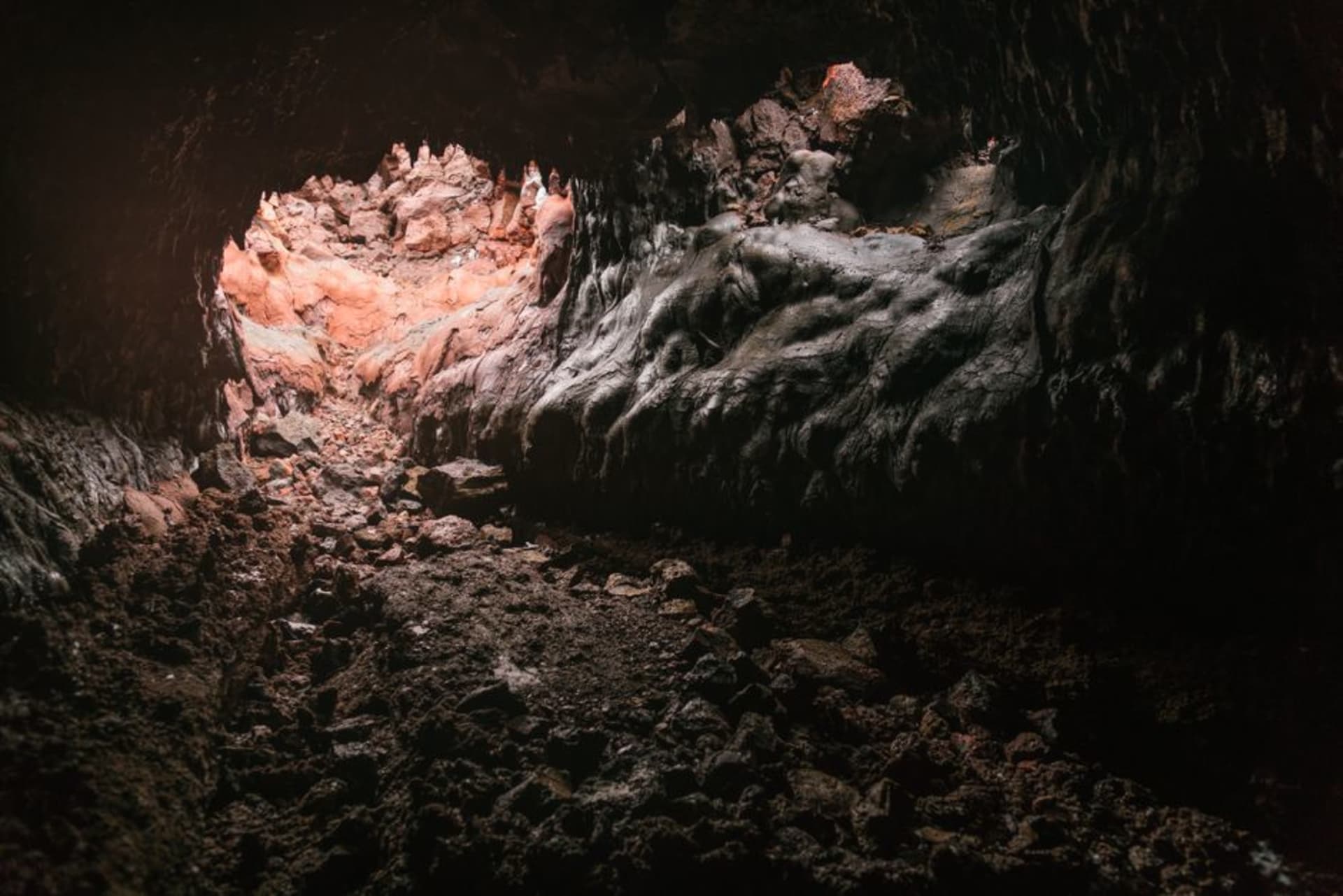
Nahuku, known to most visitors as Thurston Lava Tube, is the kind of stop that sounds like a footnote in a guidebook and turns out to be one of the strangest things I have walked through in years. It formed somewhere between four hundred and five hundred years ago, when the outer surface of a lava flow cooled and hardened while molten rock kept moving underneath, eventually draining out and leaving a hollow tunnel behind. Walking through it is like walking through the plumbing of a volcano that finished its work centuries before your grandparents were born.
The Fern Forest First
The approach matters as much as the tube itself. The short loop trail drops through an ancient hapu’u fern forest so dense and green it feels deliberately staged, fronds arching overhead thick enough to filter the light down to a dim underwater green. Native birds — ‘apapane, mostly, small and red — flitted between the fern crowns while we walked, audible long before visible. Lia stopped every few meters to point one out. I stopped mostly to look at the size of the tree ferns, some easily twice my height.
Inside the Tube
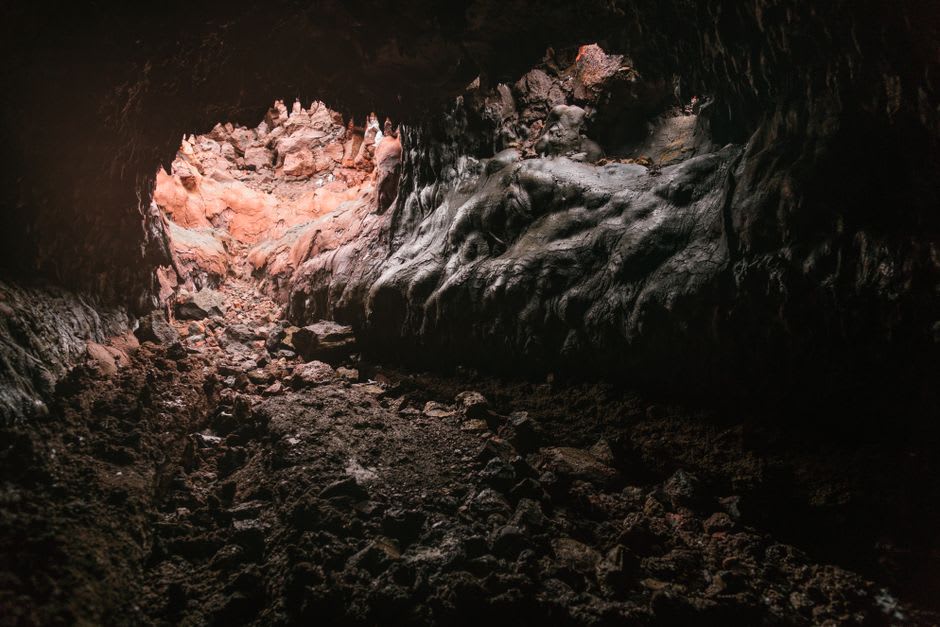
The lit section of the tube runs about six hundred feet, ceiling high enough in most places to walk upright, the rock walls smoothed and rippled in a way that makes the “river of fire” description feel completely literal rather than poetic. Water drips steadily from the ceiling in spots — groundwater percolating through the porous rock above — and the sound echoes just enough to make the space feel larger than it is. Past the lit section, an unlit and rougher extension continues further into the hillside; park rangers allow it with a flashlight, though we didn’t push past the point our phone lights felt reliable.
Why It’s Worth the Crowds
This is one of the most visited spots in the entire national park, and unlike some overhyped stops, I think it earns the traffic. It takes barely twenty minutes round trip, requires no special fitness, and delivers something genuinely unusual — a completely different geological process than the open lava fields and craters everywhere else in the park. Go either right at opening or in the last hour before closing to get a few minutes without a line at the entrance.
When to go: Year-round, but early morning or late afternoon avoids the worst of the tour bus crowds. Bring a light jacket — the tube stays noticeably cooler than the surrounding forest.