Punalu'u Black Sand Beach
"Sand the color of obsidian, and a turtle that couldn't care less about the tourists."
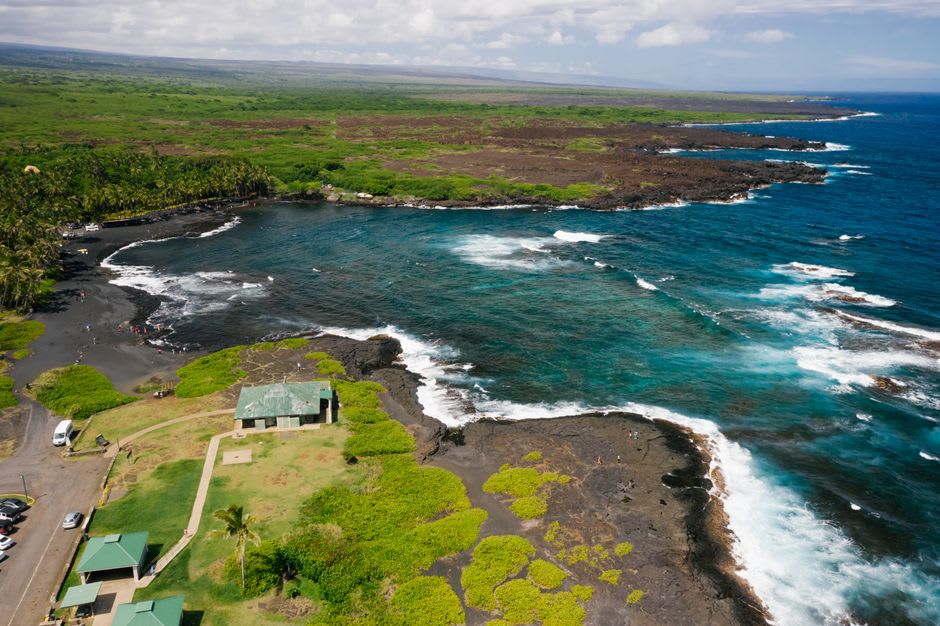
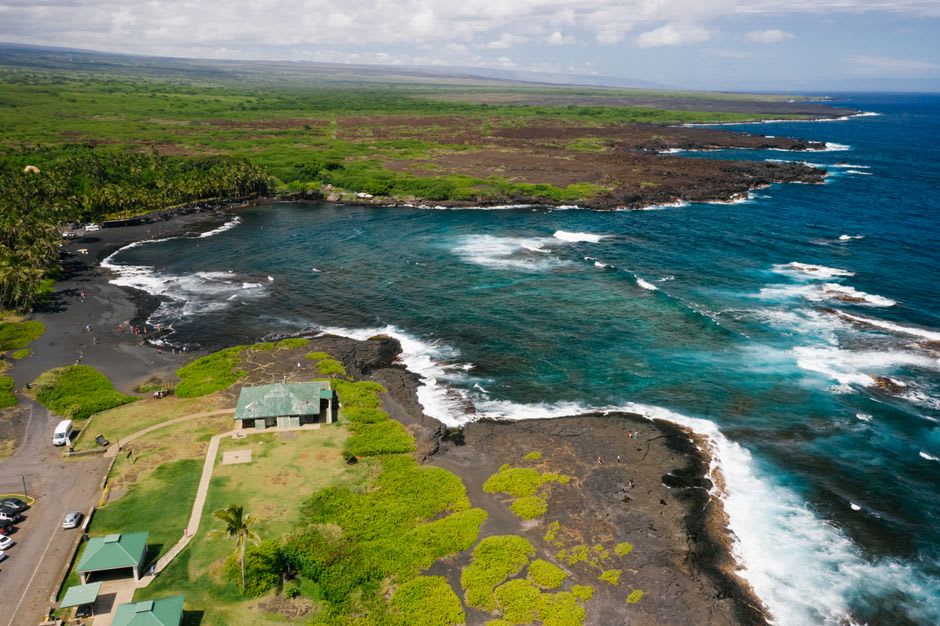
Volcanic glass ground into sand over centuries, coconut palms leaning toward the surf, and green sea turtles that haul out to nap in the open.
We’d driven past a dozen ordinary-looking beach signs on the way from Volcanoes to Kona, and I nearly let this one go too — the parking lot was small, the setting unremarkable from the road. Then we crossed the last row of palms and the sand was black. Properly black, not dark gray, not volcanic-tinted — a color so total it looked like it had been dyed for a photograph.
Where the Sand Comes From
Punalu’u’s sand formed when hot lava met the cold Pacific and shattered into fragments of basaltic glass, which the surf has spent centuries grinding down into the fine, dense grains underfoot today — hot in the midday sun in a way that regular sand never quite manages. A freshwater spring seeps up through the sand near the shoreline, cold against the warm surface layer, and I found the exact spot by accident, standing ankle-deep and suddenly registering the temperature change like stepping into a different beach entirely.
The Turtles Own This Beach
Honu — Hawaiian green sea turtles — haul out here regularly to bask, a behavior unusual enough elsewhere that it draws its own crowd of quiet observers standing the required distance back. We counted four the afternoon we visited, motionless on the black sand except for the occasional flipper twitch, utterly unbothered by the line of phones pointed at them. A volunteer from a local conservation group was stationed nearby with rope stakes marking a buffer zone, and she told us the turtles have been coming to this exact stretch for generations — it isn’t tourism that drew them, they were here first.
A Beach You Don’t Swim At
The water here is rough, with a strong current and no reef to break the swells, so this isn’t the snorkeling stop that Kealakekua Bay is further north — it’s a place to walk, watch the turtles, and eat something from the small food trucks that park near the entrance. We had grilled corn and shave ice standing barefoot in sand hot enough to make us hop between shady patches, which felt like an appropriately absurd way to experience it.
When to go: Late morning to early afternoon offers the best light for photographing the sand’s true color, and turtle sightings are common throughout the day. Avoid swimming regardless of season — the currents are genuinely hazardous.
Keep exploring
More from Hawai'i
 hawaii
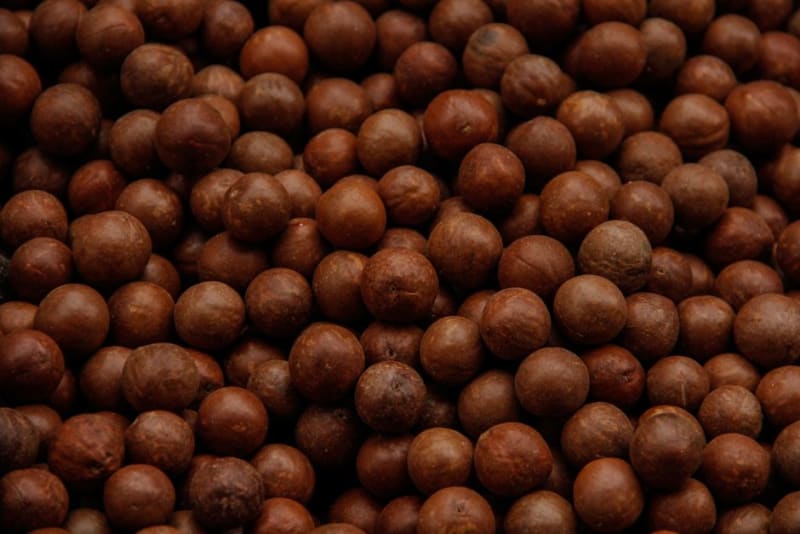
 Purdy's Macadamia Nut Farm
A family-run grove on Molokai's upcountry where a hundred-year-old tree still produces, and the tour is really just a guy cracking nuts and telling stories.
Explore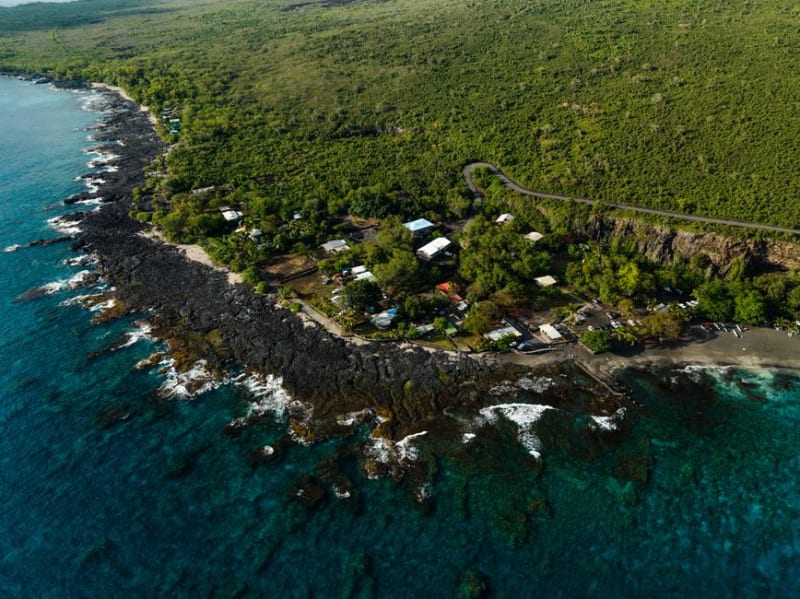 hawaii
 Pu'uhonua o Honaunau
A sacred place of refuge on the Kona Coast where ancient law once meant the difference between execution and forgiveness.
Explore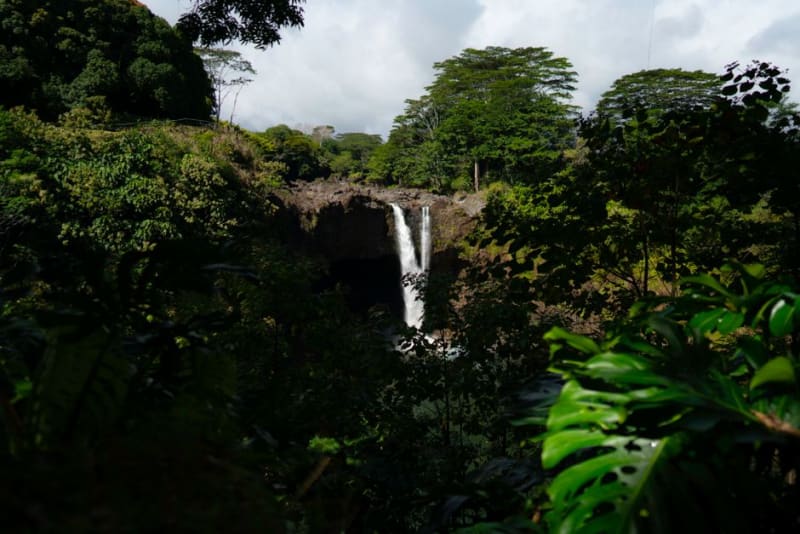 hawaii
 Rainbow Falls
A single eighty-foot waterfall on the edge of Hilo, best seen with the morning sun still low enough to throw a rainbow.
Explore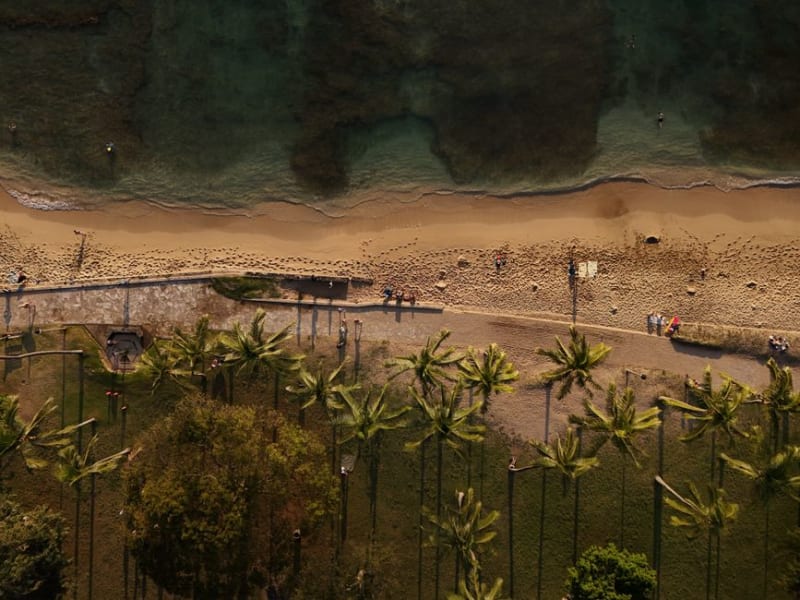 hawaii
 Salt Pond Beach Park
A sheltered, family-friendly cove on Kauai's sunny south shore where Hawaiians still harvest sea salt in shallow clay pans by hand.
Explore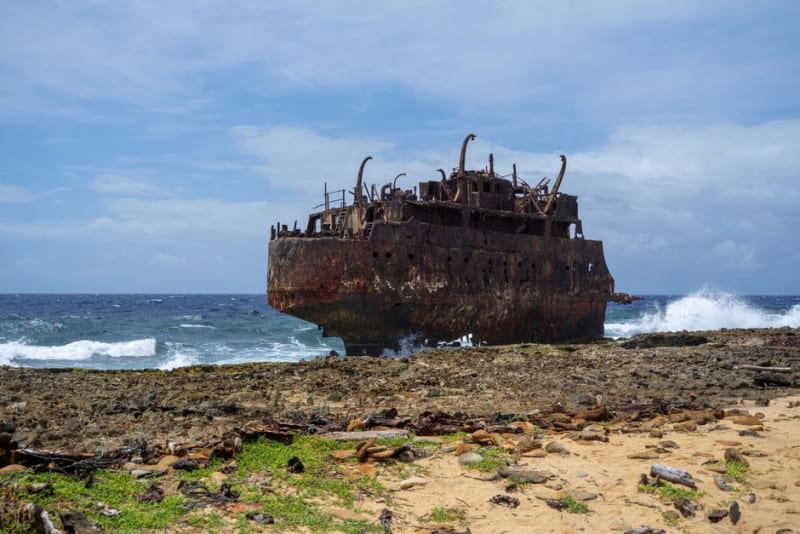 hawaii
 Shipwreck Beach
A wind-scoured stretch of Lanai's north shore where a rusting World War II tanker still sits offshore, and the shoreline is one long open-air museum of debris and driftwood.
Explore hawaii
 South Point
The southernmost point in the United States — wind-scoured cliffs, cliff-jumping fishermen, and a trail to a green sand beach found almost nowhere else on Earth.
Explore