
Kauai's inaccessible cathedral cliffs — 4,000-foot sea walls draped in waterfalls and accessible only by sea or trail.

We approached from the water. The zodiac raft bounced hard over swells that didn’t exist an hour before, and the captain told us to hold the rope — not the railing, the rope — as if the distinction mattered. Then the cliffs appeared around the headland at Ke’e Beach and I stopped listening to anything.
Nothing in a photograph prepares you for Na Pali Coast. The scale defeats the frame. Walls of basalt and fern and red earth rise 4,000 feet straight from the ocean, pleated like fabric that hasn’t been ironed in a million years, and from their creases spill waterfalls so thin they dissolve into mist before reaching the sea. I had seen the images. I had read the descriptions. I was still unprepared.
The Kalalau Trail and the Logic of Effort
The coast is accessible two ways: by boat on calm summer seas, or on foot via the Kalalau Trail — eleven miles from Ke’e to Kalalau Beach, over ridges that drop without ceremony toward the Pacific. Lia and I walked the first two miles to Hanakapi’ai Beach in the morning when the light came in flat and gold from the east, and even that truncated stretch felt like an argument for the physical body as the only honest instrument of travel. The trail climbs through guava trees and native hala, smelling of damp earth and something faintly medicinal, and then opens onto switchbacks where the ocean appears hundreds of feet below, framed between ridgelines the color of oxidized copper.
What the Boat Reveals
The sea tour reveals what the trail cannot: the sea caves punched through the base of the cliffs, the spinner dolphins that materialize off the bow without invitation, the particular angle of midday light that turns the green of the valley walls almost yellow. We drifted into the mouth of one cave near Honopu — accessible only by water, the valley behind it reachable only by swimming from a boat — and the echo inside was the sound of the ocean eating rock, slowly, with complete indifference.
The Unexpected Detail
What surprised me most was the color of the soil exposed along the ridgelines: a burnt orange so saturated it looked artificial, like a stage designer’s idea of a Hawaiian cliff rather than the thing itself. It bleeds into the waterfalls after rain, running faintly red into the blue water below. It looked wrong. It was completely real.
When to go: May through September offers the calmest seas for boat tours and permits swimming into the sea caves; the Kalalau Trail is hikeable year-round, but winter swells make ocean access unreliable and sometimes dangerous.
Keep exploring
More from Hawai'i
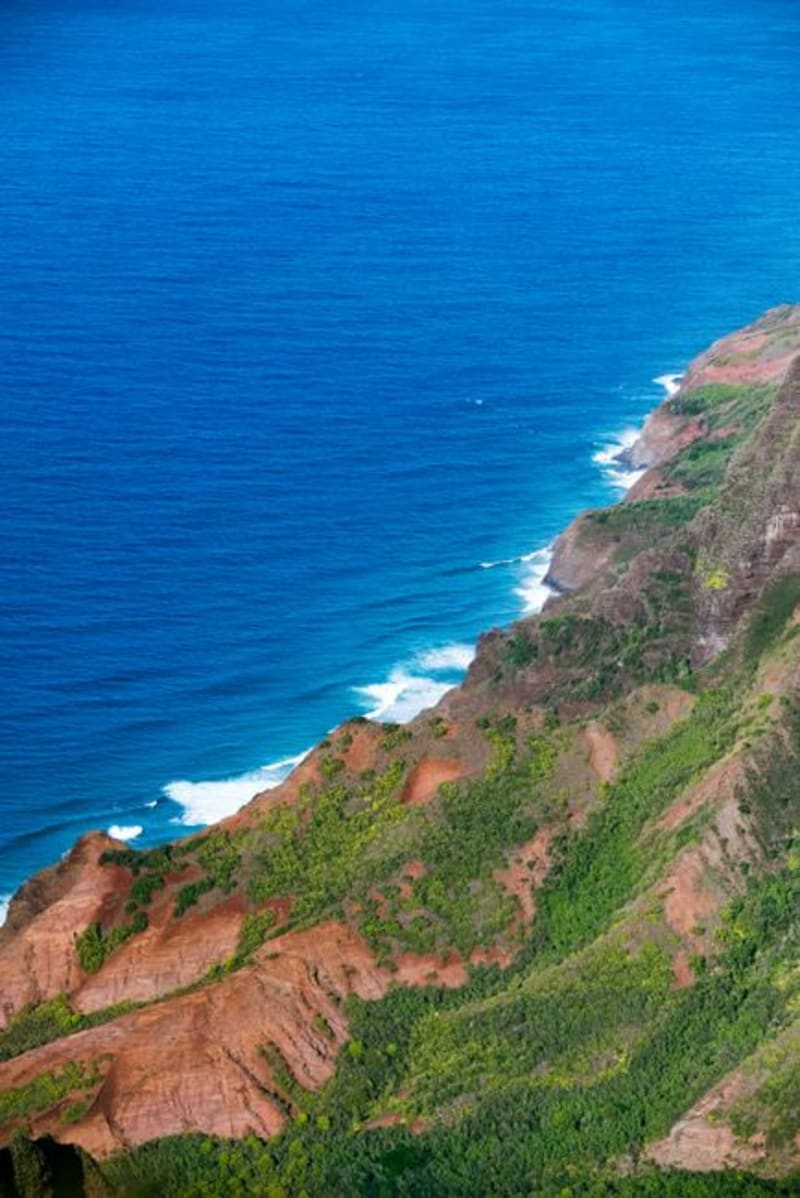 hawaii
 Nu'uanu Pali Lookout
A wind so strong it's a running joke, at the clifftop pass where a decisive 1795 battle sealed Kamehameha's conquest of Oahu.
Explore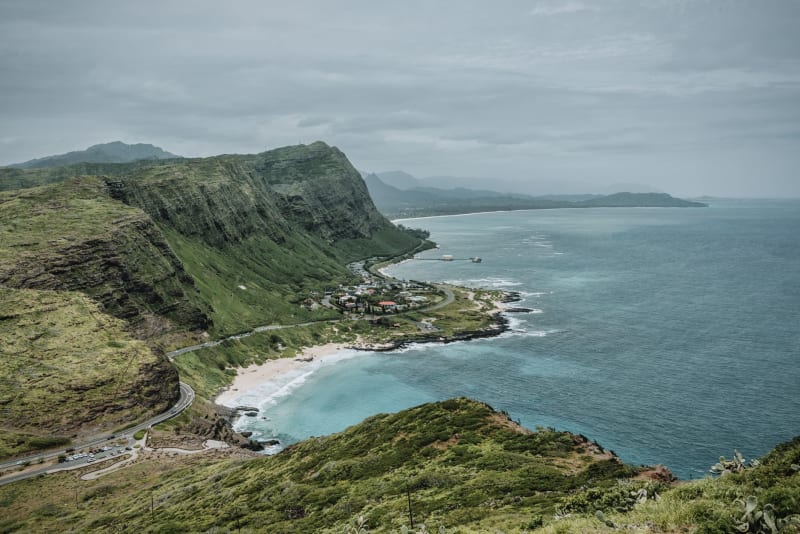 hawaii
 Oahu
The island that holds Honolulu's neon pulse and Diamond Head's volcanic silence within the same afternoon.
Explore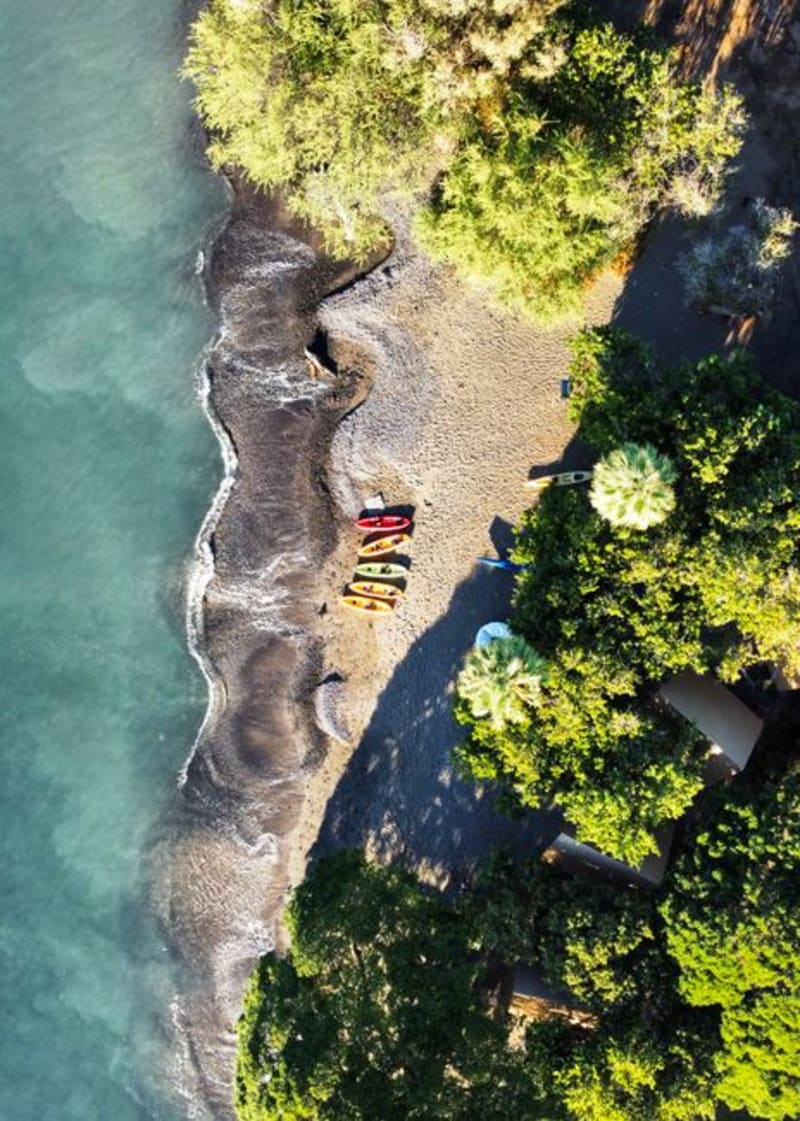 hawaii
 Olowalu
A quiet stretch of West Maui coastline between Lahaina and Ma'alaea, known for a reef so close to shore you can snorkel to it from the beach.
Explore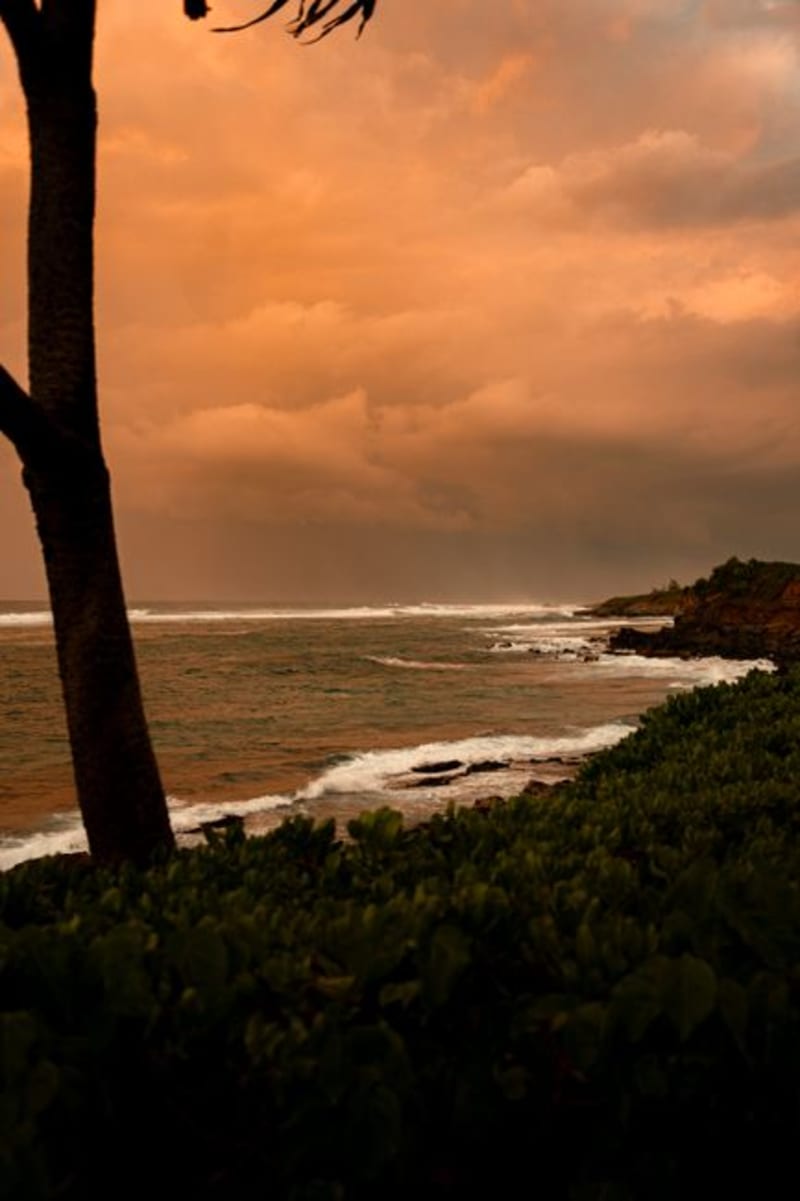 hawaii
 Paia
A former sugar plantation town turned windsurfing and yoga hub, and the last real coffee stop before the Road to Hana.
Explore hawaii
 Papohaku Beach
Nearly three miles of gold sand on Molokai's west end, wide enough to lose a person in, and almost never occupied by more than a handful of people.
Explore hawaii
 Pearl Harbor
A working naval base and a sunken battleship that still leaks oil, sixty years after the morning that changed the Pacific.
Explore