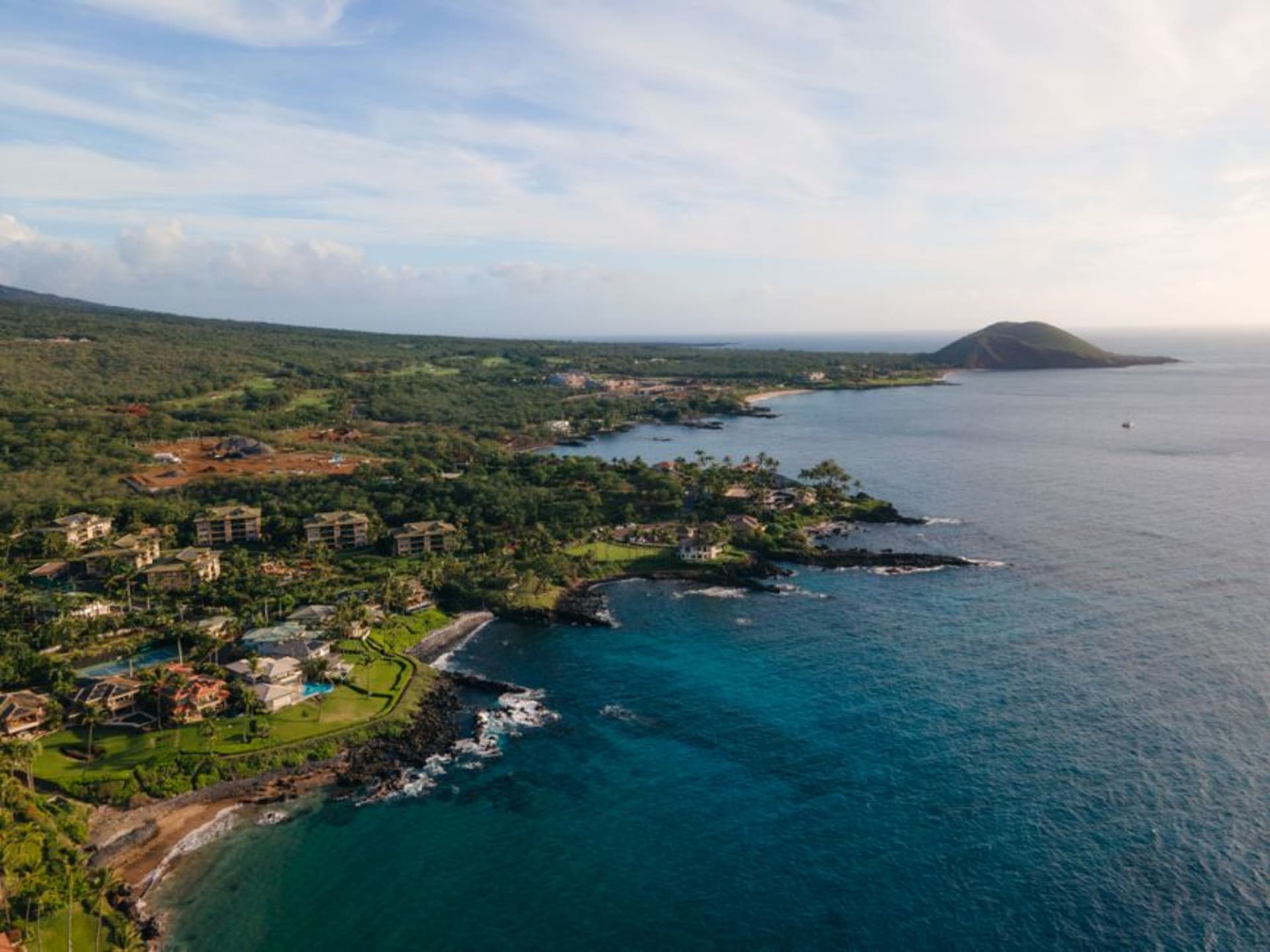
South Maui's wildest beach stretch — a mile of undeveloped golden sand, punishing shore break, and a coastline that resisted resort development.
South Maui gets developed in careful stages — Kihei, then Wailea’s manicured resort grounds, each mile a little more polished than the last — until suddenly, at Mākena, it just stops. No hotels, no landscaped entrance, just a state park boundary and a mile of sand that felt, the first time we walked it, like the whole coast had exhaled.
Big Beach Earns Its Name
Mākena Beach State Park is better known locally as Big Beach — Oneloa in Hawaiian, meaning “long sand” — and it does not undersell itself. A hundred meters of open sand at low tide, backed by kiawe trees and the volcanic cone of Pu’u ʻŌla’i standing guard at the north end. We arrived at 7 a.m. specifically to have it close to ourselves, and for the better part of an hour it was just us, two joggers, and a man doing tai chi at the water’s edge with a stillness that made our loud coffee-cup conversation feel like an intrusion.
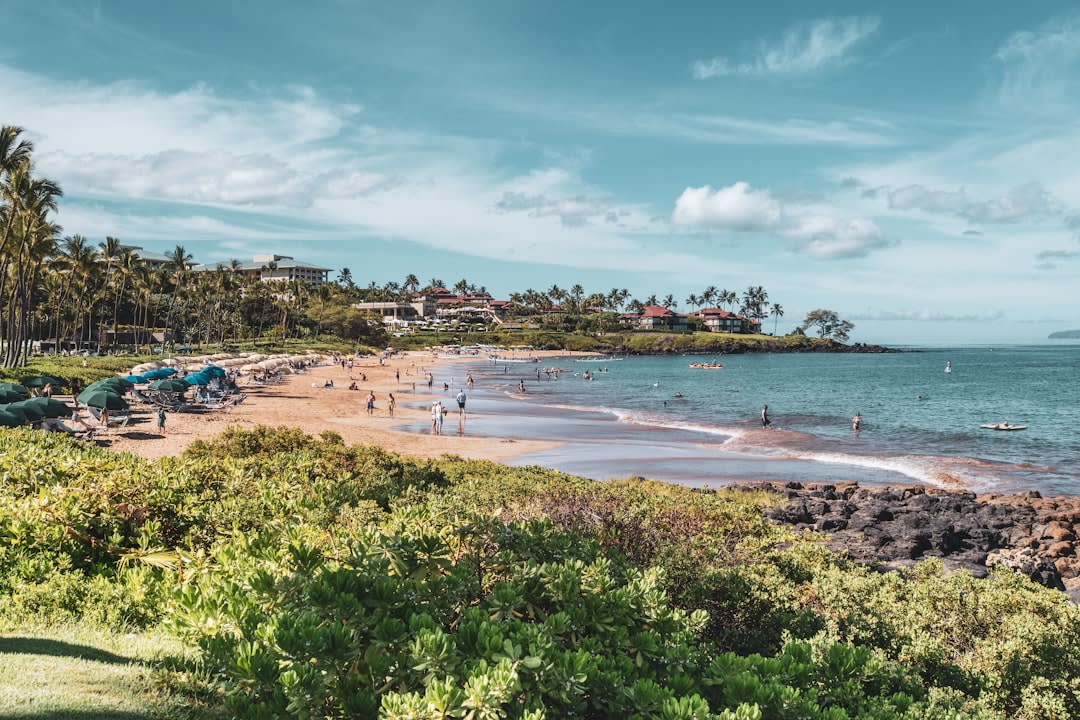
The shore break here has a reputation, and it deserves it — waves that look modest from the sand can slam you into the shallows hard enough to knock the wind out of you, which is exactly what happened to me on our second morning, emerging with a mouthful of sand and considerably more respect for the ocean than I’d had ten minutes earlier. Swim carefully, or better, watch the bodyboarders who clearly know the rhythm of the sets.
Little Beach and the Climb Around Puu Olai
A short scramble over the black lava shoulder of Pu’u ʻŌla’i leads to Little Beach, smaller and more sheltered, and locally known — unofficially, since nudity is technically against state park rules — as Maui’s clothing-optional beach. We didn’t linger there, but the walk over the point itself was worth it alone: volcanic rock underfoot, waves breaking directly below on both sides, and a view back down the coast toward Wailea that put the whole geography of South Maui into focus for the first time on the trip.
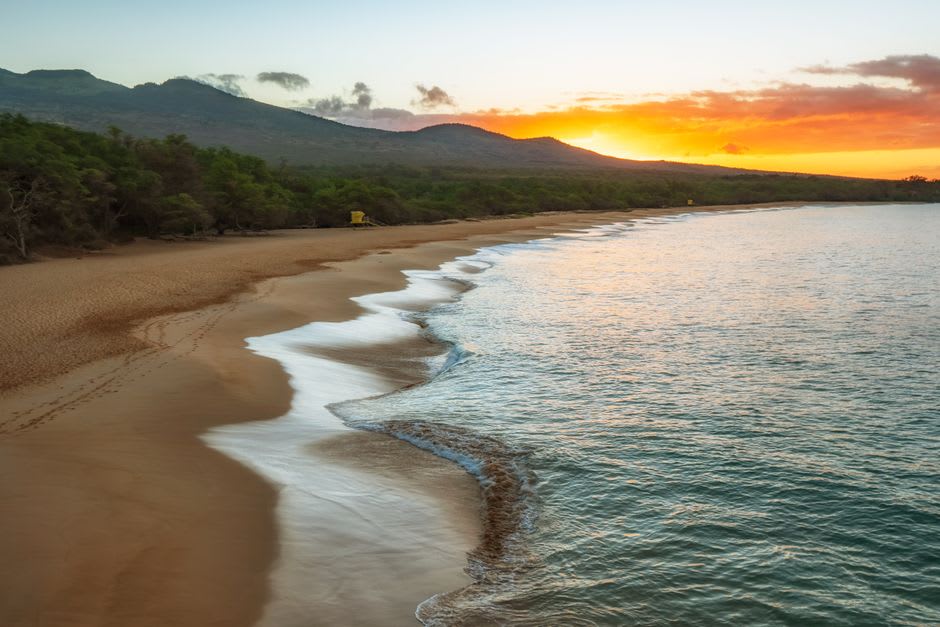
Snorkeling off the south end of Big Beach, near the rocks, turned up more fish than I expected for an open sand beach — needlefish skimming the surface, a small ray gliding along the sandy bottom. Sunset here, unobstructed by any building, is one of the best on the island.
When to go: Morning is essential — arrive before 8 a.m. for a near-empty beach and calmer water before the trade winds pick up in early afternoon. Summer has gentler shore break than winter.