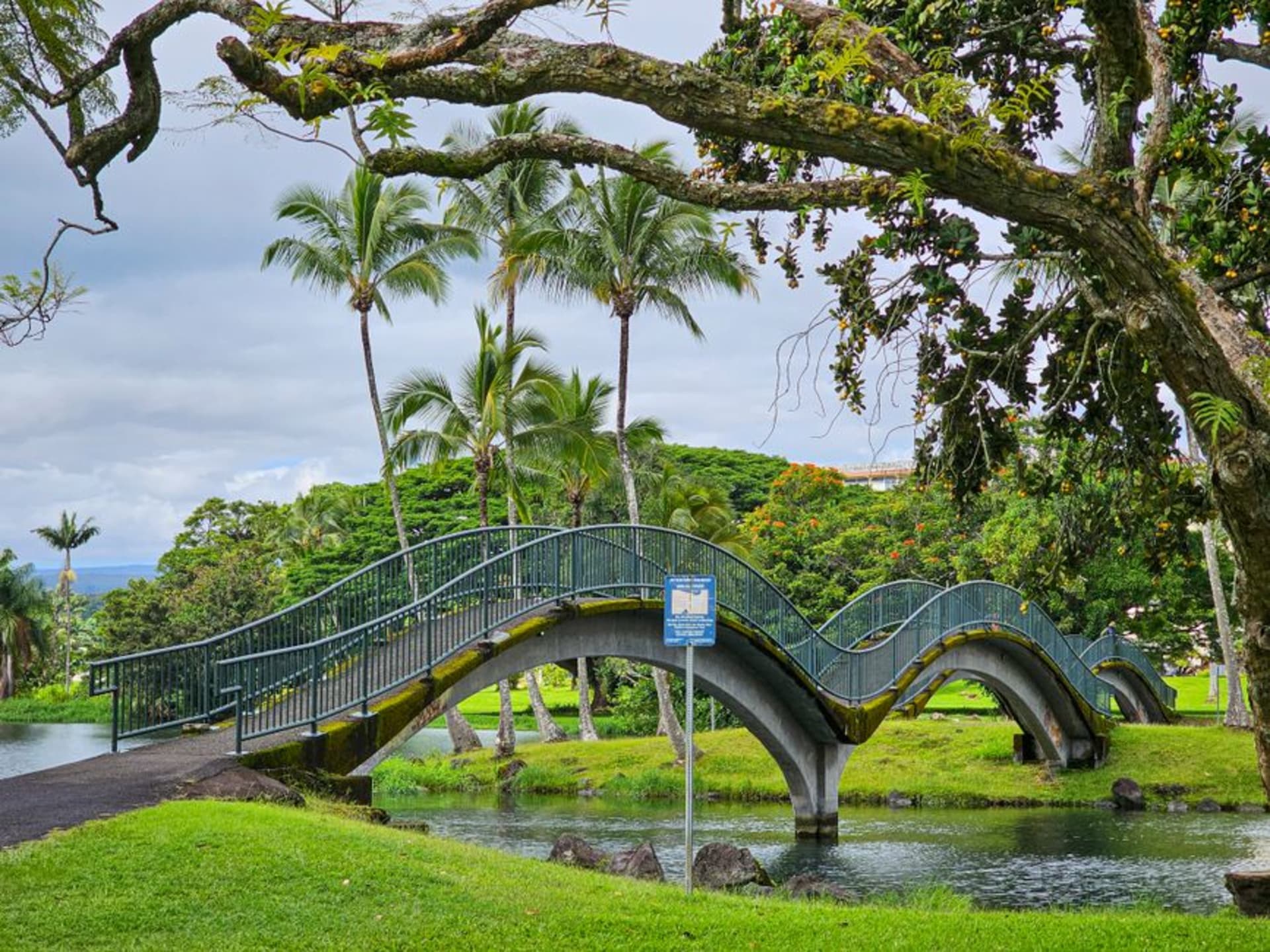
The rainy side of the island: a farmers market thick with tropical fruit, a tsunami museum that doesn't flinch, and the quiet counterweight to Kona's sunshine.
We arrived in Hilo under a rain so steady and unremarkable to the locals that nobody at the rental car counter even mentioned it. That’s the town’s whole personality, really — it gets over four thousand millimeters of rain a year, more than almost any city in the United States, and it has simply built its identity around that fact rather than fighting it. Everything is greener here, louder with birdsong, and the pace drops the second you cross over from the Kona side.
The Market on Saturday Morning
The Hilo Farmers Market sprawls across a couple of downtown blocks on Saturdays, though a smaller version runs daily, and it’s the single best place in Hawai’i to understand what actually grows on this island. Rambutan, lychee, apple bananas the size of a thumb, rows of ginger and taro, a woman selling nothing but different varieties of avocado from a card table. I bought a bag of poha berries — a kind of tart golden cape gooseberry that grows wild on the volcano slopes — and ate the whole thing walking back to the car before Lia got a single one.
What the Waves Left Behind
The Pacific Tsunami Museum, housed in a former bank building downtown, does not soften the story. Hilo Bay’s shape funnels tsunami energy directly into the waterfront, and the town was hit hard in both 1946 and 1960 — the 1960 wave killed sixty-one people, many of whom had ignored the warning sirens because a previous false alarm had made them complacent. The museum’s photographs of Waiakea town, entirely wiped from the map, are the reason that whole neighborhood today is a park rather than houses. I left quieter than I went in.
Banyan Drive and the Bay at Dusk
Banyan Drive loops along the bay past a row of enormous banyan trees planted by visiting celebrities in the 1930s — Babe Ruth’s tree is still labeled — their aerial roots dropping down to form new trunks until the canopy over the road feels like a tunnel. We walked it at dusk, Coconut Island just offshore lit by the last orange light, fishermen casting from the seawall, and it was the closest the Big Island got to a quiet postcard moment that wasn’t trying to be one.
When to go: Year-round, but accept that rain is part of the deal — mornings tend to be drier than afternoons. The Saturday farmers market is the fullest version; smaller vendors run Wednesday through Saturday too. Hilo is also the practical base for early Mauna Kea summit access, being closer than Kona on the mountain’s wet side.