Kenscoff
"At 1500 meters above Port-au-Prince, Haiti stops feeling urgent and starts feeling geological."
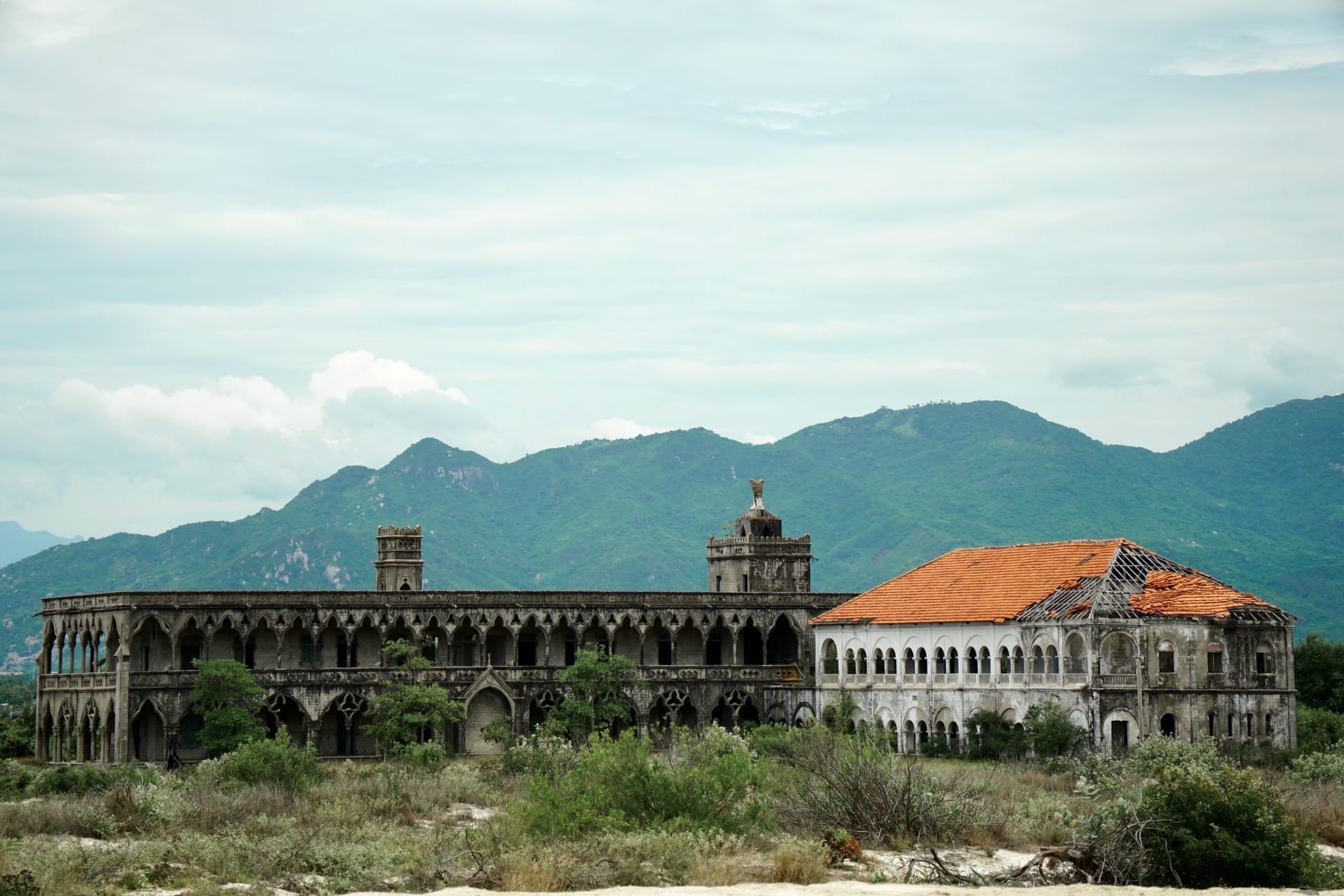
The road up from Pétion-Ville to Kenscoff is one of those mountain drives that causes you to periodically stop breathing. Not from fear — the road is narrow and winding but the drops are not technically alarming — but from the view. You’re climbing through what was once tropical vegetation and is now pine forest, and at each switchback the city behind and below you reorganizes itself: first you see the rooftops of Pétion-Ville, then the full sweep of Port-au-Prince down to the bay, then the harbor itself, and eventually, on clear days, the shape of the Haitian coastline extending in both directions. The Caribbean sits on the horizon like a blue wall.
Kenscoff itself is a small market town at around 1500 meters elevation, and the first thing that strikes you is the temperature. After the heat of the coast and the city below, the mountain air is startling — genuinely cool, sometimes cold in the early mornings of the dry season, with a quality of light that is completely different from sea level. The pine trees that grow above the town are not decorative; they are a functioning ecosystem, part of the reforestation efforts that have tried to reverse decades of charcoal production that stripped much of Haiti’s mountain slopes. Walking into the forest above Kenscoff in the late afternoon, with the light coming through the pines at an angle that turned everything amber, was one of the quieter pleasures of the trip.

The market that functions in Kenscoff several mornings a week is where the mountain’s specific economy becomes visible. There are strawberries here — actual strawberries, grown in the cool climate, a crop that has no business existing in the Caribbean but thrives at this altitude. They are small and intensely flavored in the way that cool-climate fruit tends to be, nothing like what comes in supermarket containers, and I ate them standing at a vendor’s table, the juice staining my fingers, feeling obscurely delighted by the surprise of them. There are also carrots, lettuces, cabbage, potatoes — a market garden economy that supplies much of Port-au-Prince with the vegetables that can’t grow at sea level.
The view from Furcy, a small community a few kilometers further up from Kenscoff, is where you go if you want the best panorama. A track leads out to an overlook where the whole of the southern peninsula spreads below and the two coasts — north-facing toward the Gulf of Gonâve, south-facing toward the Caribbean — are both visible simultaneously. I went out there on a clear morning with a thermos of coffee bought from a vendor in Kenscoff and sat on the ground for an hour watching the light change over the city below. A man walking past with a donkey paused to look at the same view, seemed to find it satisfactory, and continued up the path.

The rhythm of Kenscoff is agricultural and early. The market stalls set up before six. The vendors walk in from surrounding areas, some from several kilometers up the mountain. There is a guesthouse or two that takes visitors for the weekend, and on Saturdays Port-au-Prince families come up to breathe the cool air and eat the strawberries and escape the city that is always, from up here, clearly visible but also very far away. It is that combination — the proximity and the distance — that makes Kenscoff feel so particular. You can see everything you just escaped from. It doesn’t make you want to go back any sooner.
When to go: December through February, when the mountain is at its coolest and clearest. Mornings are best for the market and the light. The drive from Port-au-Prince takes about an hour in normal traffic, less at weekends. Bring a layer for the evenings — the temperature can drop to genuinely cold by Haitian standards, which is to say the kind of cold that makes everyone in the market seem surprised and pleased at the same time.