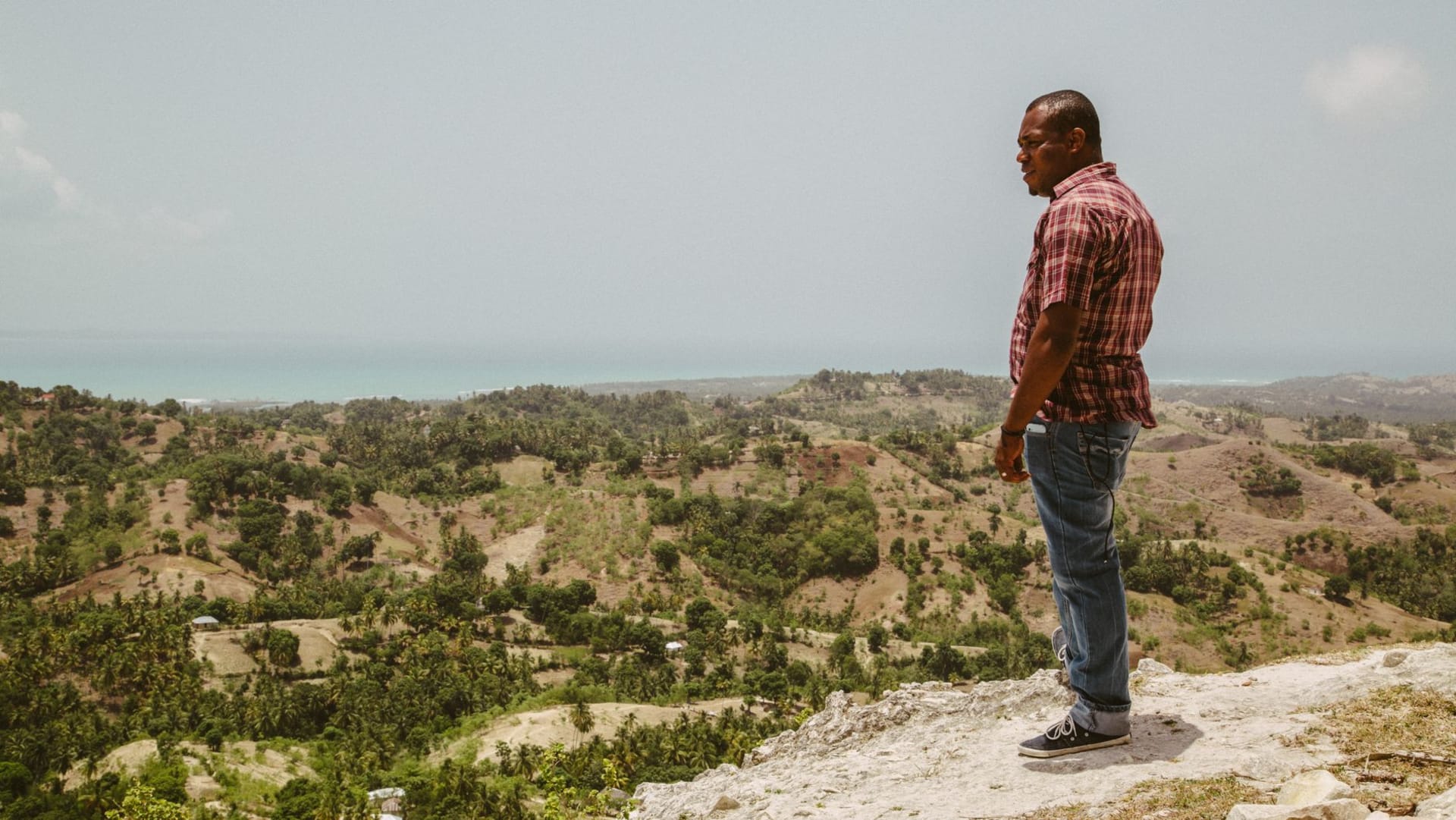
Bassin Bleu
"I've swum in a lot of water. Bassin Bleu made all the previous water feel like a rehearsal."
Nobody warned me about the ropes. The guide I’d hired in Jacmel — a young man named Réginald who had grown up near the pools and spoke the kind of English you learn from years of directing confused tourists — mentioned them only when we arrived at the first descent and I saw a knotted rope disappearing over a rock edge into what appeared to be darkness. “You hold here,” he said, demonstrating. “Your feet find the wall.” He made it look entirely natural. I followed with considerably less grace and landed on a ledge above the first pool that smelled of minerals and wet stone and something ancient.
Bassin Bleu sits about eleven kilometers from Jacmel, reached by a combination of dirt road and then a trail on foot through the jungle. The hike in takes about forty-five minutes on a path that crosses streams and passes through banana plantations, and the humidity climbs steadily as you descend toward the pools. You hear the water before you see it — a rushing sound that could be a river, then reveals itself as the cascade feeding into the first pool.
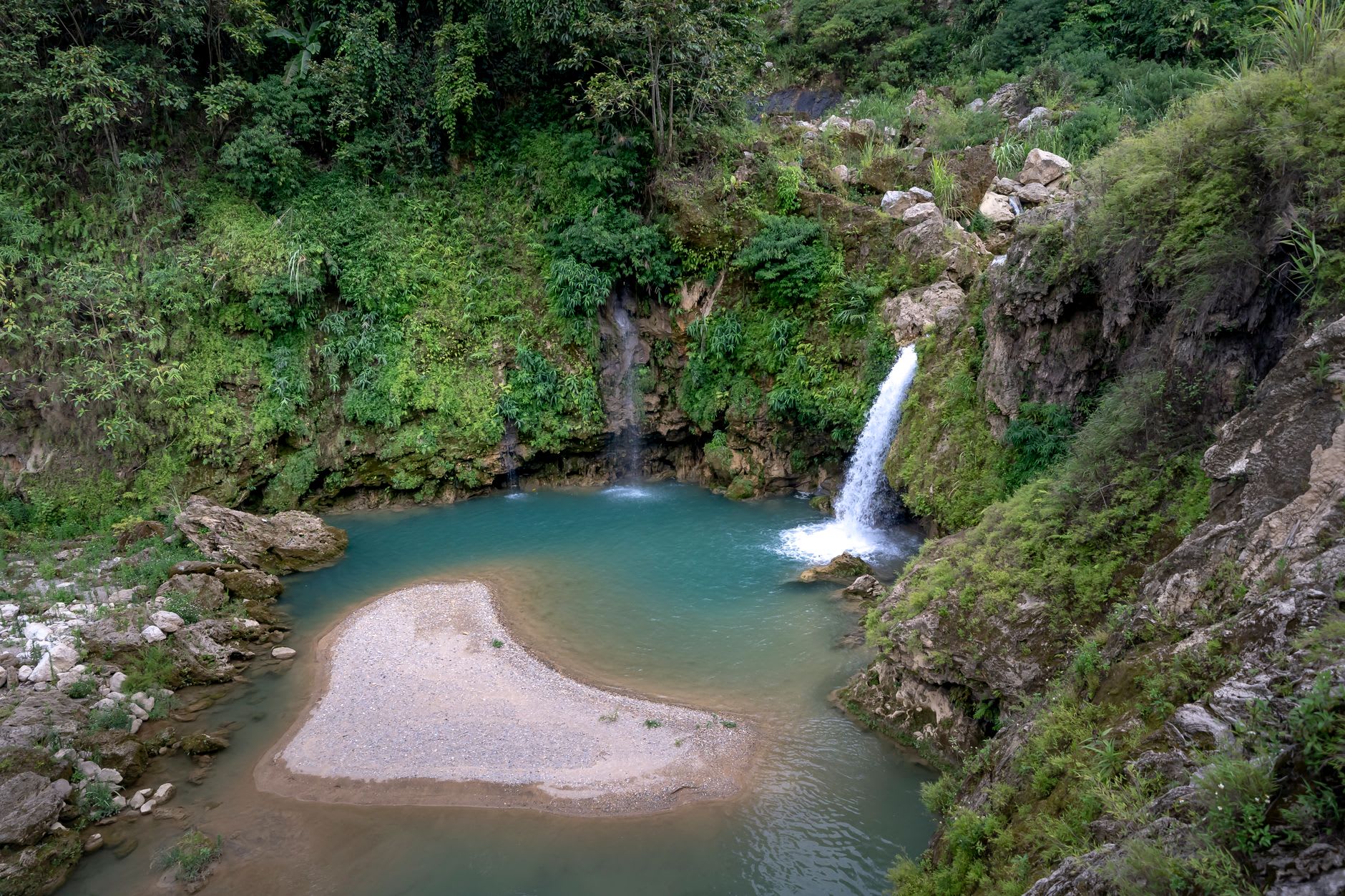
There are three pools, each connected by short waterfalls and each requiring a slightly more demanding scramble to reach. The water is a color that photographs cannot accurately represent — not turquoise, not teal, not the blue of the Caribbean Sea, but something opaque and deep, a cobalt that seems lit from below. Locals call it La Sirène’s water, attributing it to the Vodou lwa of the sea, and standing at the edge of the first pool looking into it, I found I had no better explanation. The color comes from the limestone geology and the particular angle of light through the jungle canopy, but knowing the mechanics of something does not prevent it from feeling miraculous.
The swim in the main pool is cold — significantly colder than the sea — and the shock of it when you drop from the edge is real and clarifying. Réginald waited on a rock with the patience of a man who had watched this expression cross foreign faces hundreds of times. Other visitors were there: a couple from Port-au-Prince, two Haitian university students who had driven down specifically to swim. The pools are known to Haitians as a weekend destination, and there is something satisfying about visiting a place that functions as a local pleasure rather than a managed attraction.
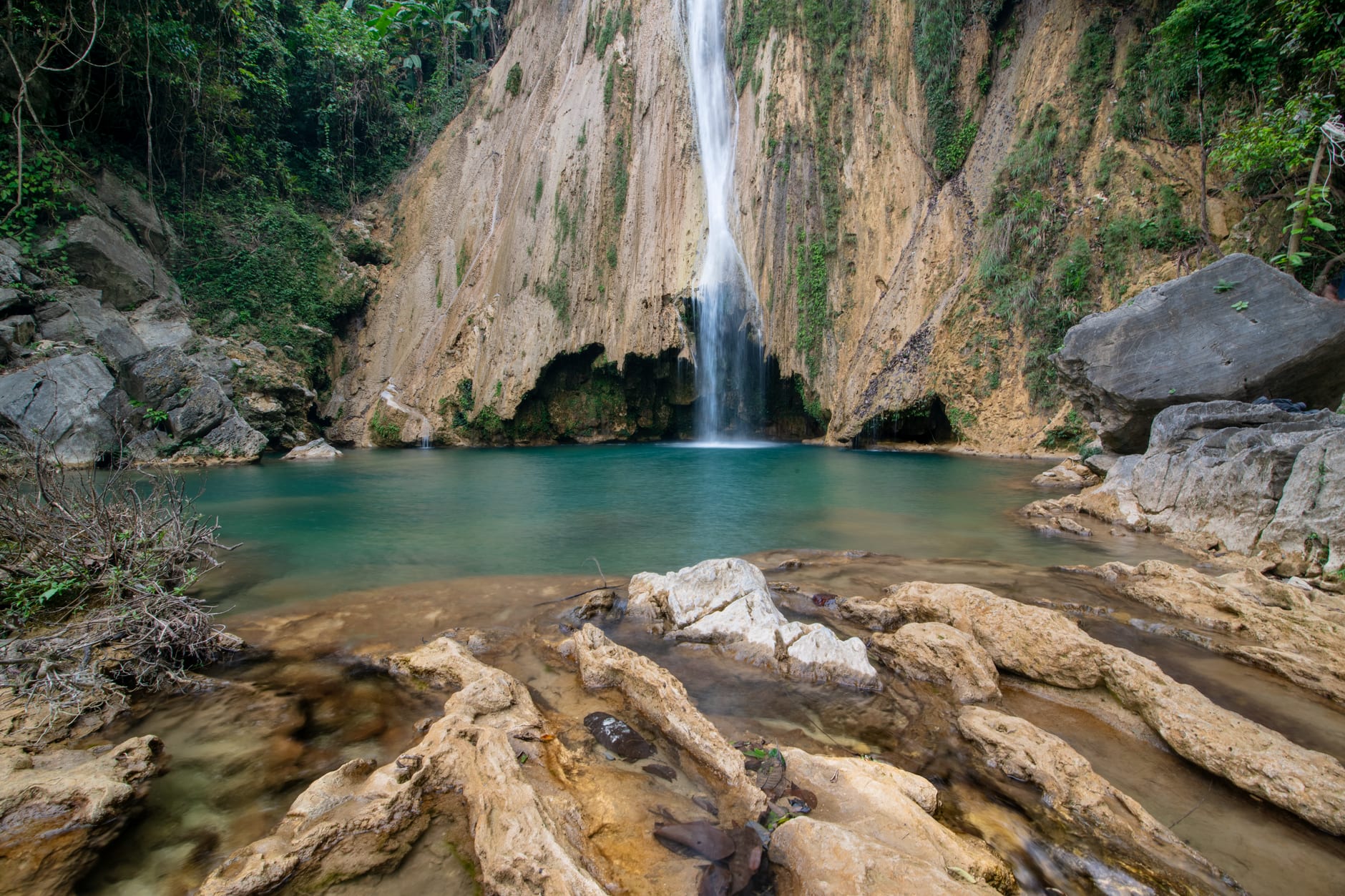
Getting back out required the ropes again, which on the ascent were more demanding than on the descent — arms burning, wet sandals slipping on stone, Réginald offering useful commentary from above. By the time I got back to the trail I was soaked and laughing at myself, which felt like the correct outcome. We ate lunch at a small place near the road on the way back to Jacmel: rice and beans, fried fish pulled from the river that morning, plantain so sweet it tasted like a mistake in the best way. Réginald told me about his brother who lives in Miami and calls every week to say he’s coming back and then doesn’t. “He’ll come,” Réginald said. “Once you know about the pools, you always come back.”
When to go: The dry season (November through March) is best — the trail is manageable, the water is at its clearest, and the ropes are less terrifying when everything is not also soaking wet. Avoid the rainy season, when flash flooding can close the access trail entirely. Start the hike before noon to have the pools to yourself for at least part of the visit.