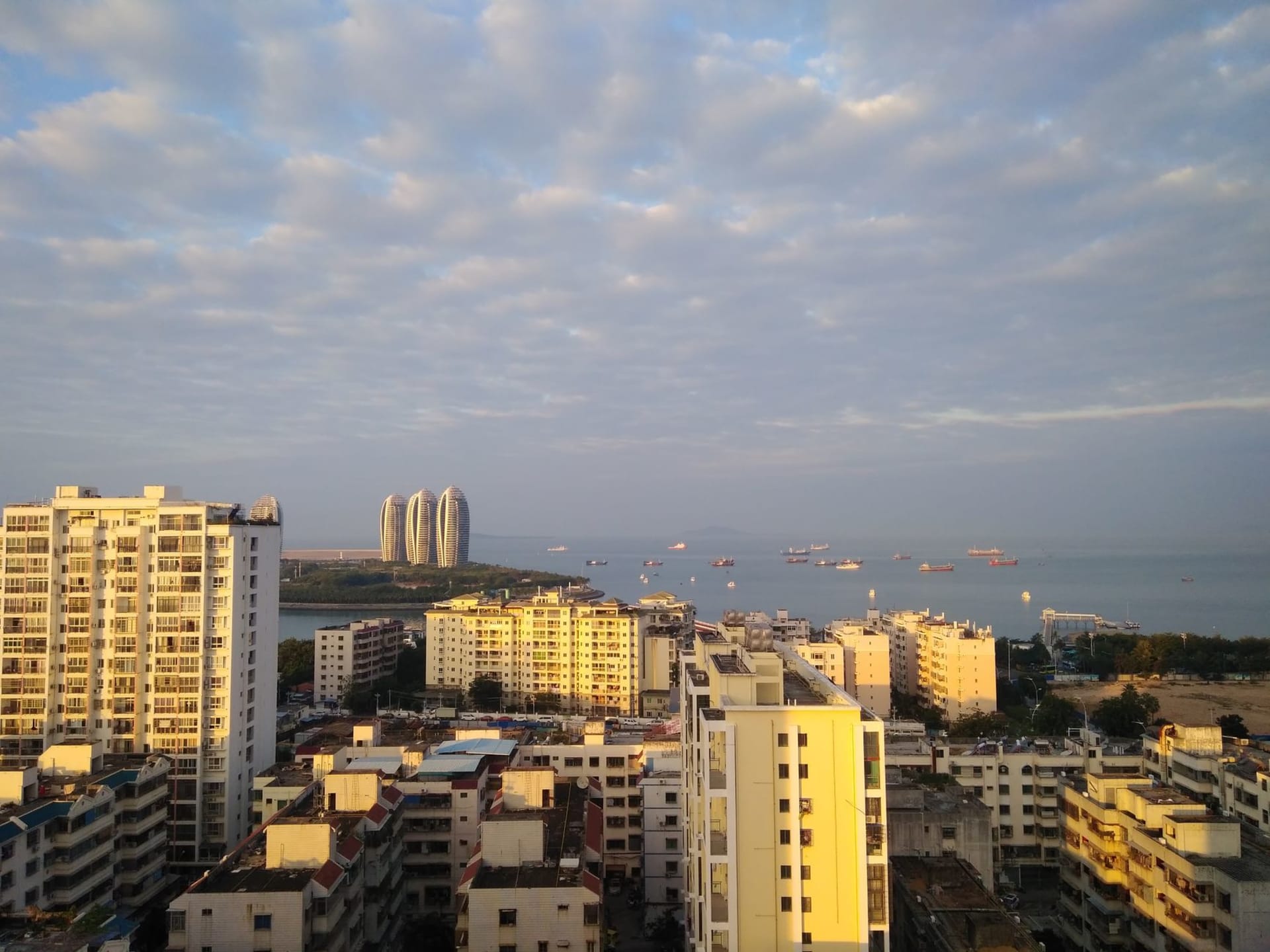
Haikou
"Everyone flies straight through Haikou to reach Sanya's beaches. We stayed, and got the better island."
Hainan's overlooked capital, where shuttered overseas-Chinese arcades, volcanic craters and serious coffee make a far stranger city than the beach resorts to the south.

Most people treat Haikou as a corridor — an airport, a train transfer, a name on a boarding pass between somewhere else and the resort sand of Sanya four hours south. Lia and I had two days to kill while waiting on a ferry booking that kept slipping, and we spent them walking a city that almost nobody we met seemed to think was worth walking. They were wrong.
The arcades nobody photographs
The old quarter around Bo’ai Road and Zhongshan Road is built from qilou — arcaded shophouses raised by Hainanese who went off to Singapore, Malaysia and Vietnam, made money, and came home to build the streets they had seen abroad. The result is a few blocks of crumbling Southeast Asian grandeur: plaster garlands, shuttered upper windows, columns furred with a century of damp. Some have been restored into tidy postcard versions of themselves. The ones I liked were the unrestored stretches, where a hardware shop and a noodle stall and a shuttered ruin sit shoulder to shoulder, ferns growing out of the cornices.

We drank coffee here, repeatedly, because Hainan does coffee in a way the rest of China largely does not — a legacy of those same returnees, who brought back the bean along with the architecture. The old-men teahouses serve it dark, strong and oversweetened with condensed milk, alongside small dishes you keep ordering until you have accidentally eaten lunch. Lia, who treats every café as a research project, declared one of them the best she’d had since Mexico, which from her is close to a knighthood.
Volcanoes on the edge of town
What sold me on Haikou, though, was the ground it stands on. Half an hour south of the centre is the Leiqiong volcanic field — a cluster of dormant craters you can walk into, the most accessible being Ma’anling. We climbed the rim in the late afternoon, the city haze below us and the crater throat green and silent, lined with trees rooting straight into old lava. Nearby villages are built entirely from black volcanic stone: walls, lanes, pig pens, all the same dark porous rock, looking less like construction than something the land grew.

Back in town that evening we ate at a roadside place where the speciality was Wenchang chicken — poached, cooled, served with ginger and rice cooked in its fat — and watched a city that has no need to perform for tourists go about its ordinary tropical night. Scooters, durian sellers, the smell of frangipani and exhaust. Haikou is humid, slightly battered, and entirely unbothered by what you think of it. That indifference is exactly what makes it worth two days.
When to go: October to April for the dry, warmer-but-bearable season. Avoid the late-summer typhoon months unless you enjoy watching rain move sideways. The old streets are best in the soft hour before sunset, when the arcades glow and the heat finally lets go.
Keep exploring
More from Hainan Island
 hainan-island
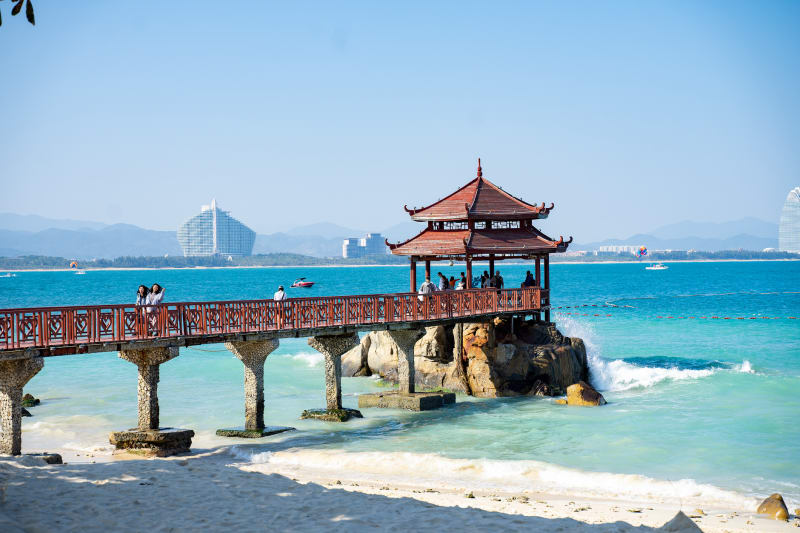
 Haitang Bay
Hainan's newest resort frontier — a genuinely beautiful beach and the world's largest duty-free complex sharing a shoreline in surreal proximity.
Explore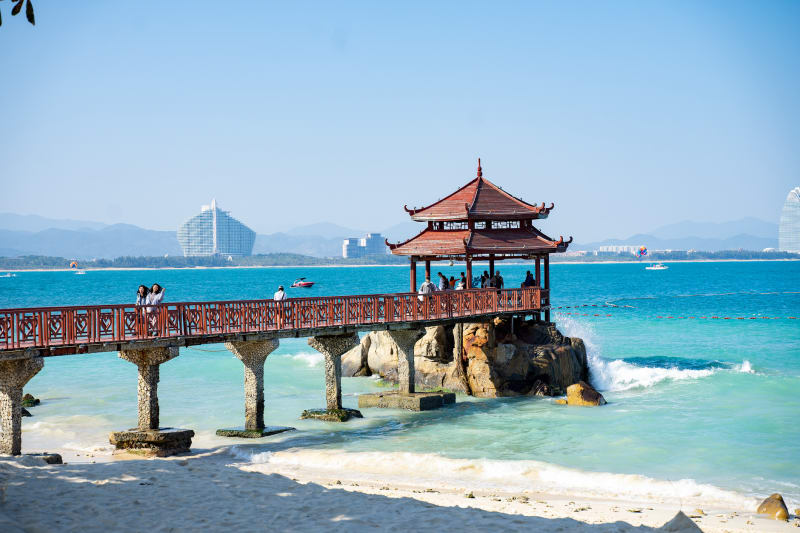 hainan-island
 Nanshan
A vast Buddhist cultural complex on Hainan's southern tip, where a 108-metre goddess rising from the sea is more affecting than it has any right to be.
Explore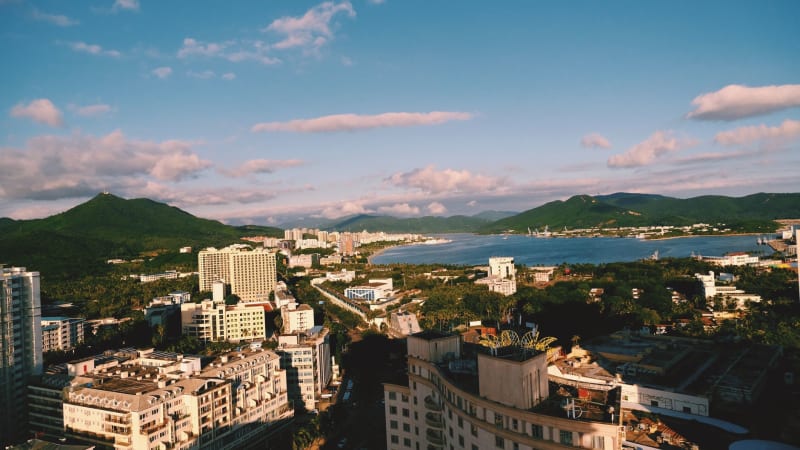 hainan-island
 Sanya Bay
The local side of Sanya — an evening promenade where birdcages swing and hotpot smoke drifts out over the water.
Explore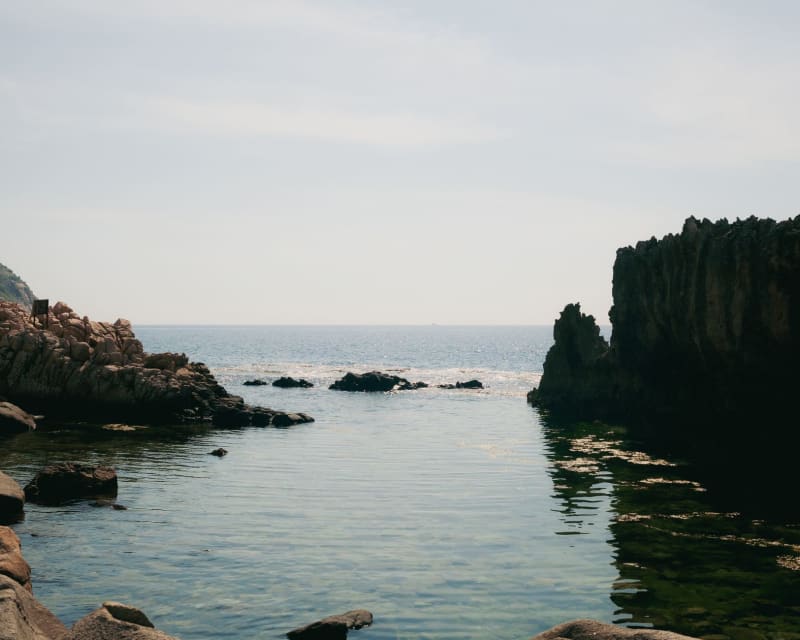 hainan-island
 Shimei Bay
Volcanic black rock and open South China Sea swell where Hainan's surf culture quietly took root and the light on the water shifts all afternoon.
Explore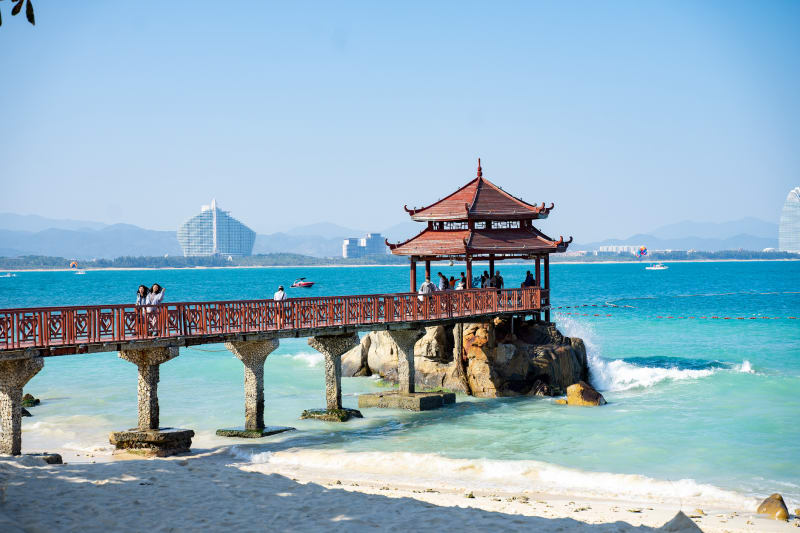 hainan-island
 Wenchang
A mid-sized Hainanese city famous for the island's most defining dish — poached chicken so precise and good it rewired my understanding of simple food.
Explore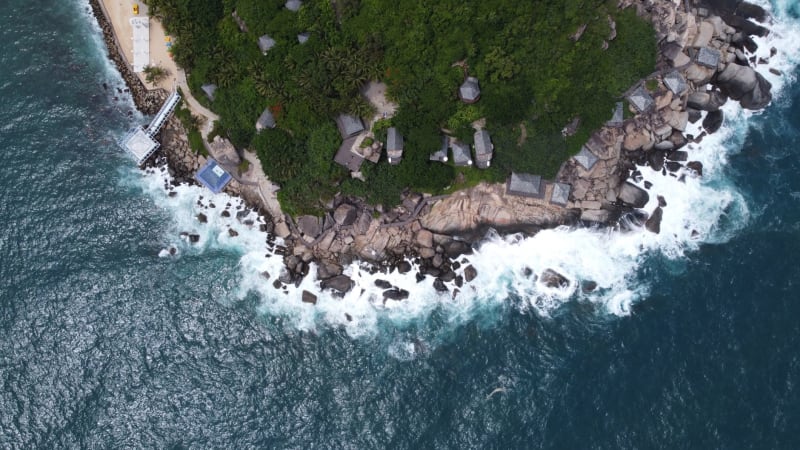 hainan-island
 Wuzhishan
Hainan's cool central highlands, where Li village life continues above the tourist radar and cloud-forest trails smell nothing like the beach below.
Explore