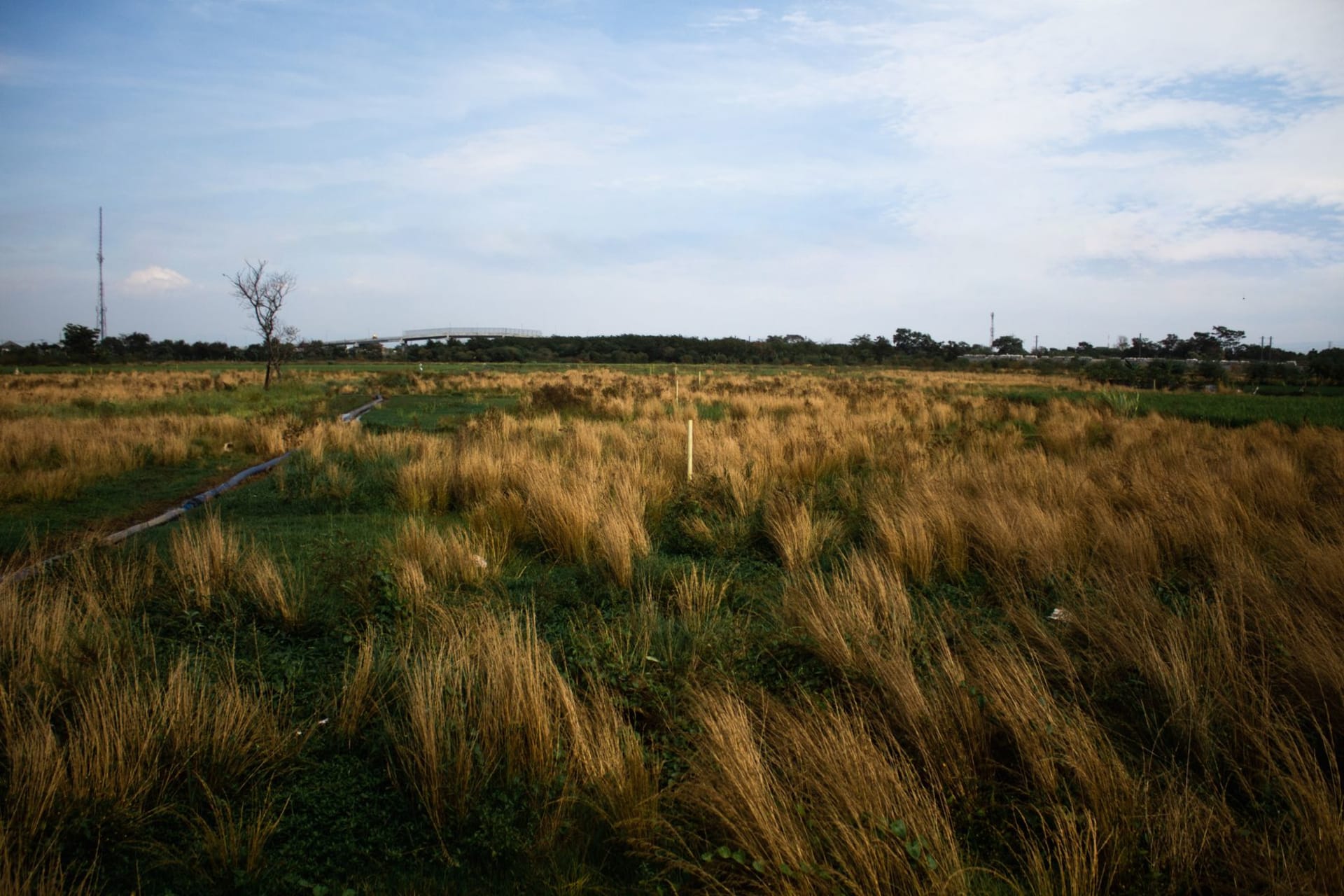
Rupununi Savannahs
"The Rupununi is the kind of place that makes you realize how much noise the modern world carries in you — until it stops."
The road from the coast to the Rupununi takes the better part of a day, if the road is passable, which in the wet season it often isn’t. I drove it in late February on a surface that alternated between packed laterite and something that aspired to be gravel, and the forest closed in from both sides so completely that the sky disappeared for stretches. Then, somewhere past the Iwokrama range, the trees thinned and the land opened and the Rupununi spread out ahead of me like a held breath finally released: grass, pale gold in the dry season heat, running flat to a horizon marked only by the blue line of the Kanuku Mountains in the far south. I pulled over and got out and stood in the road for a while. The silence was not silent — there were insects and wind and the distant percussion of a woodpecker — but it was the quietest thing I had heard in weeks.
The Rupununi is about the size of Portugal but holds perhaps twenty thousand people, most of them Wapishana and Macushi communities spread across the savannah in villages connected by red dirt tracks. The lodge I stayed at was run by a Wapishana family — the same family that had been tracking wildlife in this river bend for three generations. My guide, Denzil, was twenty-six and had the ecological knowledge of someone who had been paying attention to this specific square of earth since childhood, which he had. He pointed out capybara grazing in the oxbow lake at dusk, a harpy eagle sitting impossibly still in a dead tree above the river, and a pair of giant river otters whose territory covered several kilometres of the Rupununi River and who regarded our boat with the indignant suspicion of landowners disturbed by trespassers.

Giant anteaters were the thing I most wanted to see and couldn’t quite believe I would. The third morning, before six, Denzil drove me to an area of higher ground where the termite mounds stood two metres tall in the grey pre-dawn light. We waited. The anteater came out of the low scrub moving with that strange rolling gait that looks leisurely until you see it cover ground — front claws folded under, snout swinging low, the enormous bushy tail carried like a flag. It tore open a termite mound in seconds with those claws. We watched it feed for twenty minutes, close enough that I could hear the soft snuffling sounds it made as it worked. When it finally moved off into the grass it seemed to vanish rather than walk away.
The night sky in the Rupununi is something I was not prepared for. Away from any town, no light pollution for hundreds of kilometres in any direction, the Milky Way was so dense it looked structural — like a cloud that had forgotten to be a cloud. I lay on my back on the wooden deck of the lodge at ten at night and listened to the frogs around the creek and watched satellites drift through constellations I was slowly learning to name. There are few places left in South America where darkness still means darkness.

The food at the lodge was the kind of cooking that makes no claims. Cassava bread baked on a clay griddle over a wood fire, stewed black-eyed peas with salt fish, river fish fried in a pan until the skin crisped. Every meal was eaten at a wooden table under a ceiling fan while chickens walked under the floorboards and the sound of the creek ran underneath everything.
When to go: August through September is the best window — the second dry season, when roads are firm, wildlife concentrates around remaining water sources, and the heat is fierce but bearable. February through April (the short dry) also works well. Avoid the wet seasons if you need road access: the Lethem road becomes impassable and even air travel to the interior is weather-dependent.