Americas
Guyana
"I came for the waterfall and left rearranged by the silence of it all."
I flew into Georgetown on a small regional plane and the first thing I noticed, pressing my face against the scratched window, was the green. Not the polite green of a national park buffer zone or a managed reserve — the green of something genuinely untouched. Ninety percent of Guyana is forest, and from the air that number looks like an understatement. By the time we landed I already felt like I had arrived somewhere different in kind, not just in degree, from everywhere else I had been in South America.
Georgetown itself is a city that takes some decoding. The wooden colonial architecture — painted in fading pastels, raised on stilts above flood level — gives it a faded, equatorial charm that I found myself drawn to once I stopped looking for things that weren’t there. The Stabroek Market is genuinely alive, the kind of market where you go in for one thing and come out two hours later having eaten roti and learned three names. The food tracks Caribbean and East Indian — dhal puri wraps, pepper pot on Sundays, cook-up rice that lands like a hug. I ate well in Guyana in a way I had not expected.
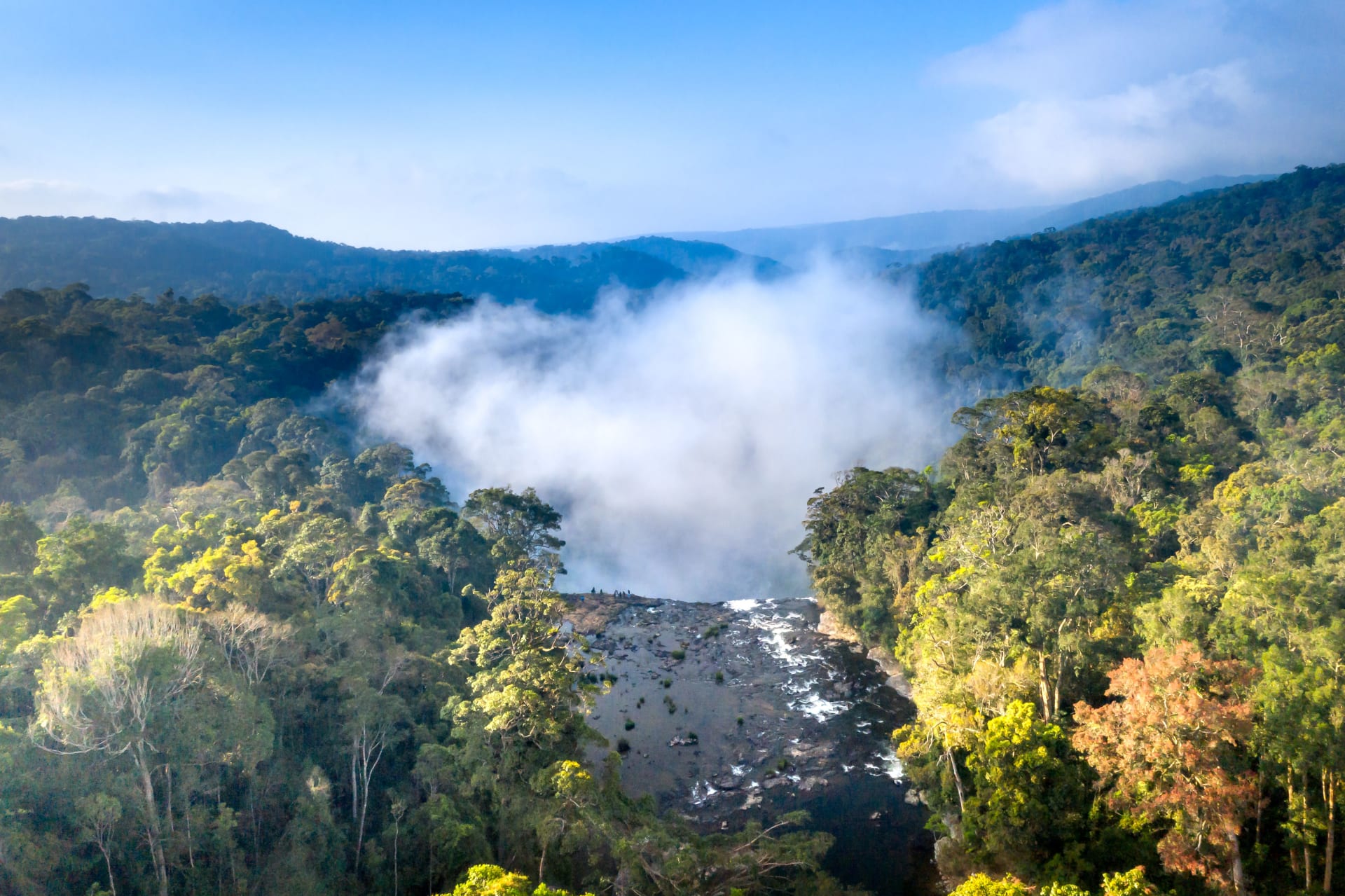
But the country’s soul is in the interior, and the interior requires some commitment. Kaieteur Falls — four times the height of Niagara, surrounded by nothing but tepui plateau and cloud forest — is the kind of natural phenomenon that makes your sense of scale temporarily malfunction. I stood at the lip of it for a long time. The mist soaked through my shirt. Golden rocket frogs sat on bromeliads a few feet from the edge as if the whole spectacle were simply Tuesday. Further in, the Rupununi savannahs open into something else entirely: giant anteaters, harpy eagles, black caiman in the oxbow lakes, and Amerindian communities where the lodge owners are also your guide, your cook, and the person who wakes you at 5am because the tapir came back to the river.
When to go: February through April is the short dry season — the most reliable window for interior travel and Kaieteur visits. August through September offers a second, longer dry stretch. Avoid the rainy seasons (May–July and November–January) if you need bush roads to be passable, though the rivers run full and dramatic after rain.
What most guides get wrong: They frame Guyana as a destination exclusively for hardcore ecotourism or birdwatching obsessives. That misses the point. The reason to come is not a checklist — it is the experience of being somewhere that has not yet been organized for your convenience. There are no crowds at Kaieteur. No gift shop. No viewpoint with railings and a QR code. Just the waterfall and the plateau and the sound of falling water that you feel in your sternum. In a world where most places have been smoothed into accessibility, Guyana is still rough in all the right places.