
Orinduik Falls
"Everything about Orinduik is the opposite of Kaieteur — warm, shallow, amber, utterly inviting — and somehow just as astonishing."
Most people come to Orinduik on the same day they visit Kaieteur, and I understand the logic — both are reachable from Georgetown by small plane — but I think it undersells both places. Kaieteur wants you raw and quiet. Orinduik wants you in the water. The two are different enough in character that moving between them on the same morning, on the same adrenaline, is a bit like reading two completely different poems at the same sitting. Each one deserves its own time.
I flew to Orinduik alone, on a Thursday, and landed on a grass airstrip on the Pakaraima plateau with three other passengers and one pilot who immediately stretched out in the plane’s shade and went to sleep. The walk to the falls takes ten minutes through low savannah-like grassland — the plateau vegetation is stunted and strange up here, shaped by thin soil and wind — and then you hear the water before you see it, and then the falls appear around a bend of the Ireng River and the first thing you notice is the colour. Not the white of Kaieteur. A warm, red-orange tumbling over terraces of jasper, the water itself turned amber by the tannins and the stone, and below each step of the falls a clear pool that glows in the afternoon light like something out of a mineral collection.
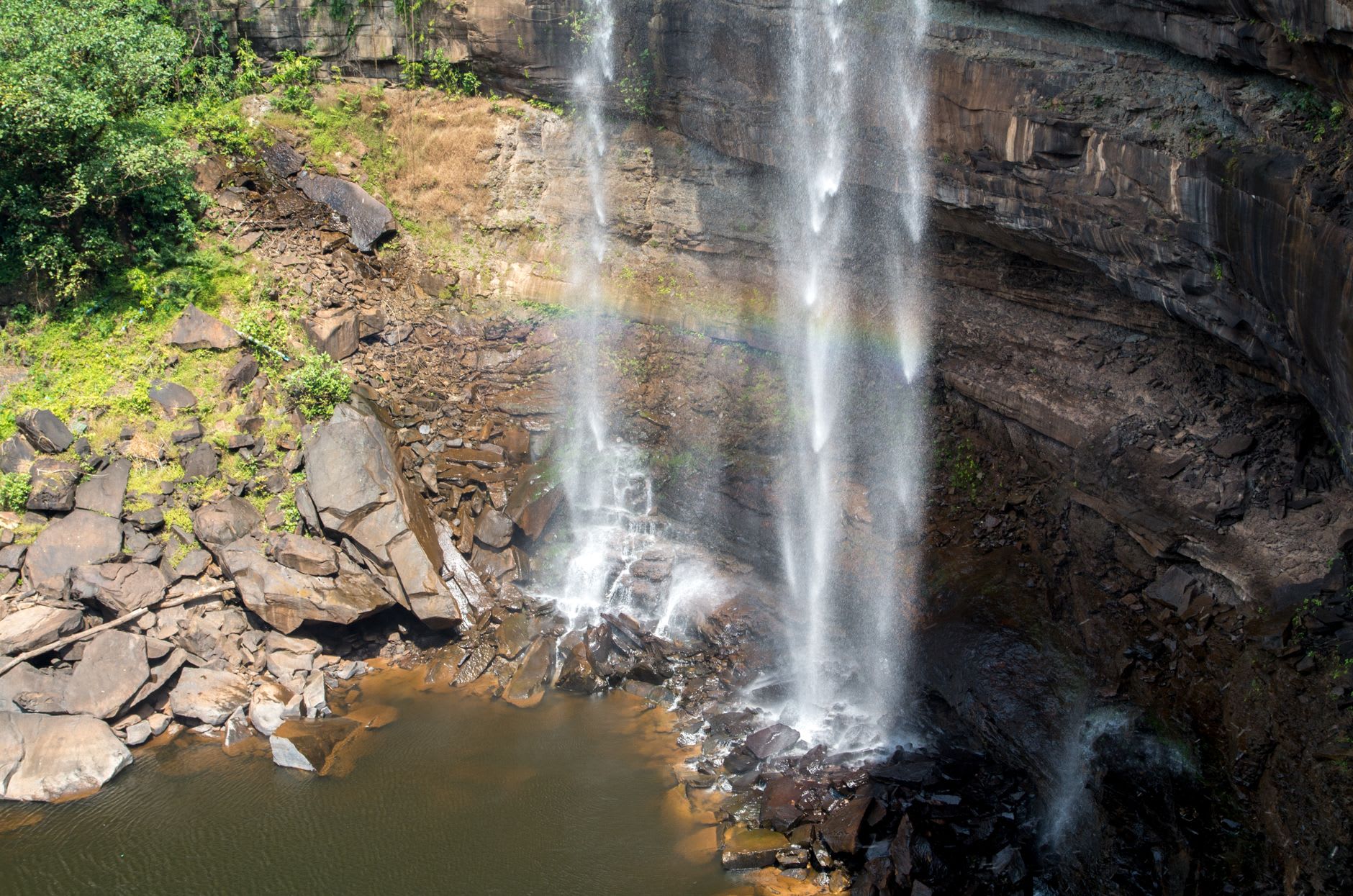
You can swim. That was the thing that reset my whole relationship to this place. After Kaieteur — magnificent, mist-soaked, utterly untouchable — Orinduik is where the water reaches out for you. I climbed the jasper terraces carefully, the rock rougher and more grippy than it looked, and found a pool at the middle level that was chest-deep and warm — the plateau sun heats the shallow water quickly — and completely clear. I could see my feet on the orange rock floor. The Brazil border runs along the Ireng River, and on the far bank were the low hills of Roraima state, maybe a hundred metres away, close enough that a shout might carry. A Brazilian family had waded across — with the permission of the park ranger, apparently this was a known arrangement — and we nodded at each other in the pool with the goodwill of people sharing something unexpected.
The jasper itself is the detail I keep returning to. It is not a single colour — it ranges through rust and ochre and burnt sienna and in places a dark chocolate brown, and the water running over it shows each layer differently. The same falls in the morning light are orange. In the afternoon they are gold. I stayed until the pilot stirred from his shade and called us back, which was not soon enough.

There is a small food stand near the airstrip, operated by a Patamona woman who makes excellent black pepper chicken with rice and beans and sells cold drinks from a cooler powered by a small solar panel. The prices are written on a piece of cardboard in marker. I ate in the shade of a tree and watched a group of red-bellied macaws work a stand of palm trees across the river and thought: this is the right speed for a Thursday afternoon.
When to go: Orinduik is typically visited as a day trip from Georgetown, alone or combined with Kaieteur (the standard tour stops at Kaieteur first, then Orinduik). The dry season (February through April, August through September) gives the best flying weather and the most predictable airstrip conditions. The falls are beautiful in the wet season too when flow is higher, but the plateau can be cloud-covered and the landing strip soft after heavy rain.