
Iwokrama Rainforest
"Standing on the canopy walkway, I stopped trying to identify birds and just let the forest do what it does — which is everything, simultaneously."
The canopy walkway at Iwokrama is thirty metres above the forest floor, and getting up there requires a climb that your legs will remember for two days. I went up in the early morning, when the mist was still moving through the crowns and the light came in at a low angle that turned individual leaves into small lanterns. The walkway itself is a suspension bridge of cables and wooden planks that sways gently when you walk and with rather more enthusiasm when a larger animal uses it — the night before, my guide told me, a kinkajou had crossed it at 3am. I gripped the cables and walked slowly and tried not to be ridiculous about the height, which I mostly succeeded at.
From up there, the forest is a different country. The canopy is not the flat green surface you imagine from an aerial photograph — it is massively three-dimensional, a topography of crowns at different heights, with emergent trees poking twenty metres above their neighbours like watchtowers. Spider monkeys moved through one of those emergents while I watched, travelling hand over hand with the casual efficiency of commuters who have made this journey ten thousand times. Red howler monkeys called from somewhere to the south, a sound that carries for kilometres and that, before I knew what it was, made me think of something between a lion and a storm.
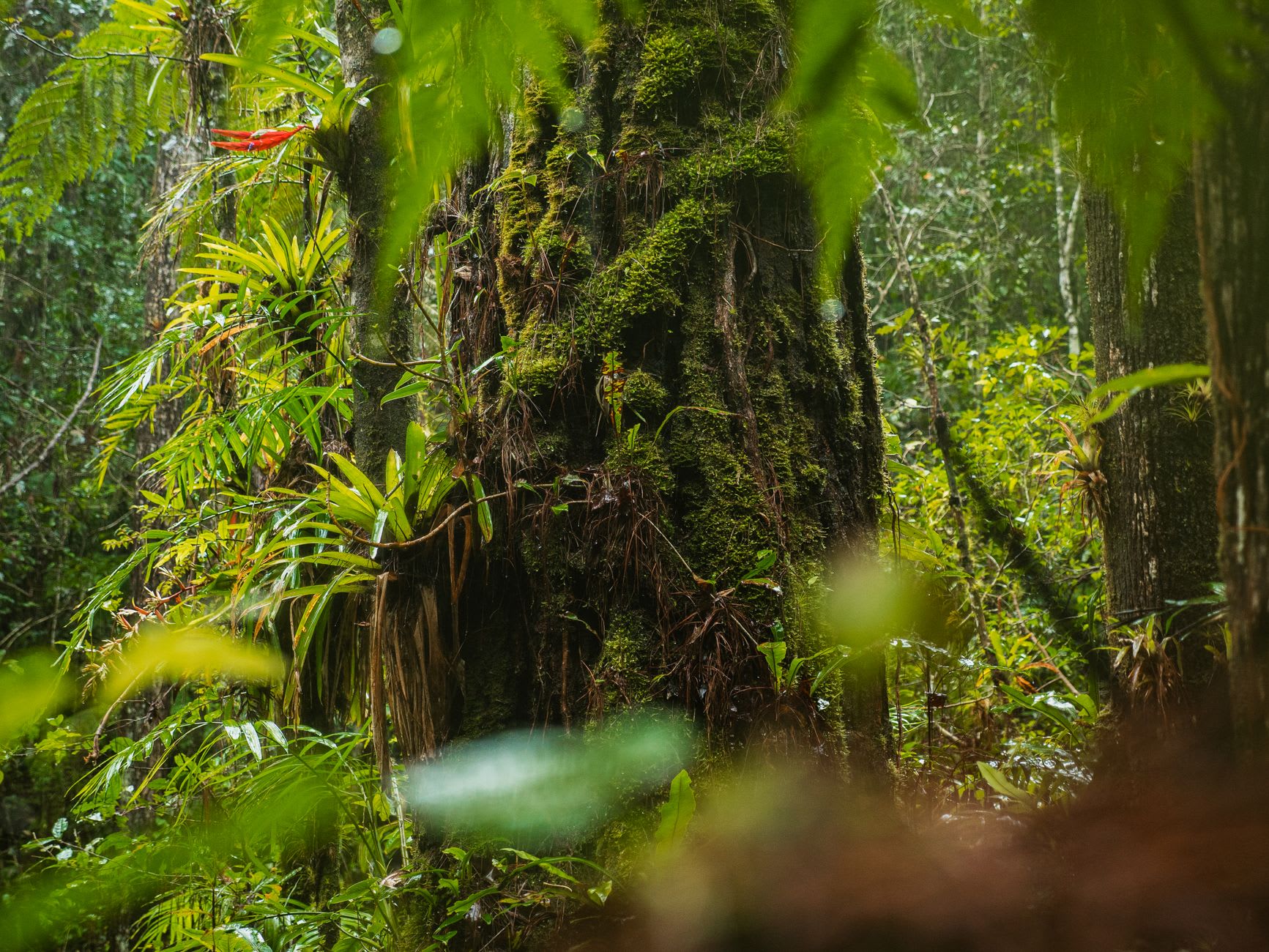
Iwokrama covers 371,000 hectares in the centre of Guyana. It was established in 1996 as an international centre for rainforest conservation and sustainable development, and it is one of perhaps four remaining blocks of pristine tropical rainforest large enough to be ecologically self-sustaining on the continent. What that means in practice is that nothing here is fenced or managed into tidiness. The rivers run dark with tannins from the forest litter. The arapaima — prehistoric freshwater fish that can reach two metres and breathe air — still move through the Essequibo tributaries. The trails are maintained but not manicured. I tripped on a root my first afternoon and found a column of army ants three centimetres from my face when I looked up from where I’d fallen. The forest was supremely unconcerned with my comfort.
The Iwokrama River Lodge sits on the Essequibo and its communal table becomes, each evening, a kind of natural history seminar. The scientists, rangers, and conservation workers who rotate through have the habit of talking about what they’ve seen with the unselfconscious intensity of people who have found the thing they are supposed to be doing. I stayed three nights and by the end I was waking at 4:30 voluntarily, eager to be out before the light changed.
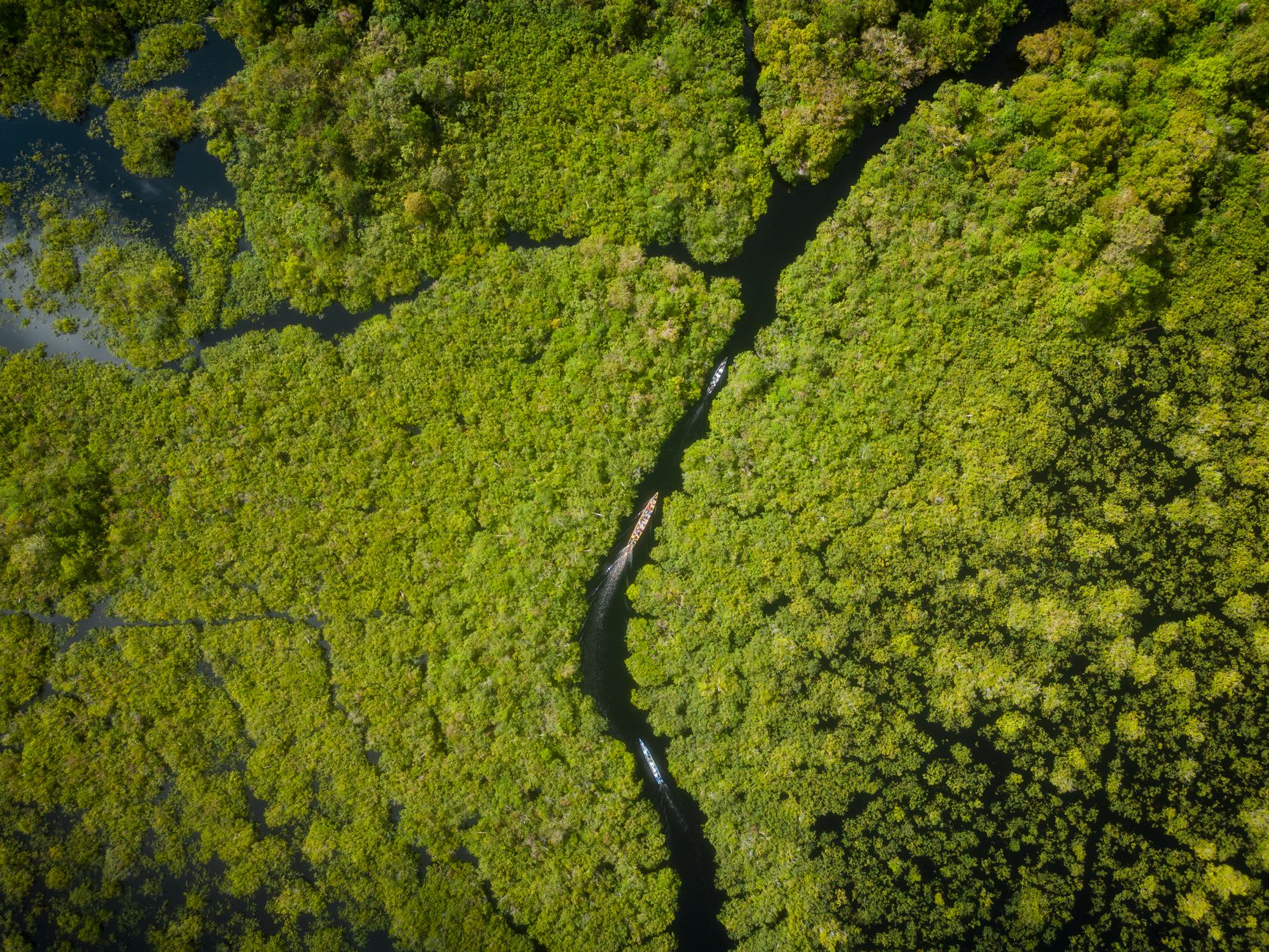
The night walks were the thing that most rearranged my sense of the forest. In daylight the undergrowth is dense and green and impenetrable. At night, with a headlamp, it becomes a series of eyes — the red tapetum of spiders, the yellow glow of caimans in the creek shallows, the unnerving blue-green of some fungus I never identified that pulsed with bioluminescence on a rotting log. The guide moved his torch slowly and narrated in a low voice and I followed along trying to match his quiet, which I couldn’t, because every stick I stepped on sounded like a pistol shot.
When to go: February through April is optimal — the dry season makes trails passable and wildlife concentrates near water. The canopy walkway is operational year-round but can be closed after heavy rain. Book the Iwokrama River Lodge well in advance; capacity is limited by design, and the place fills with serious naturalists and researchers who plan months ahead.