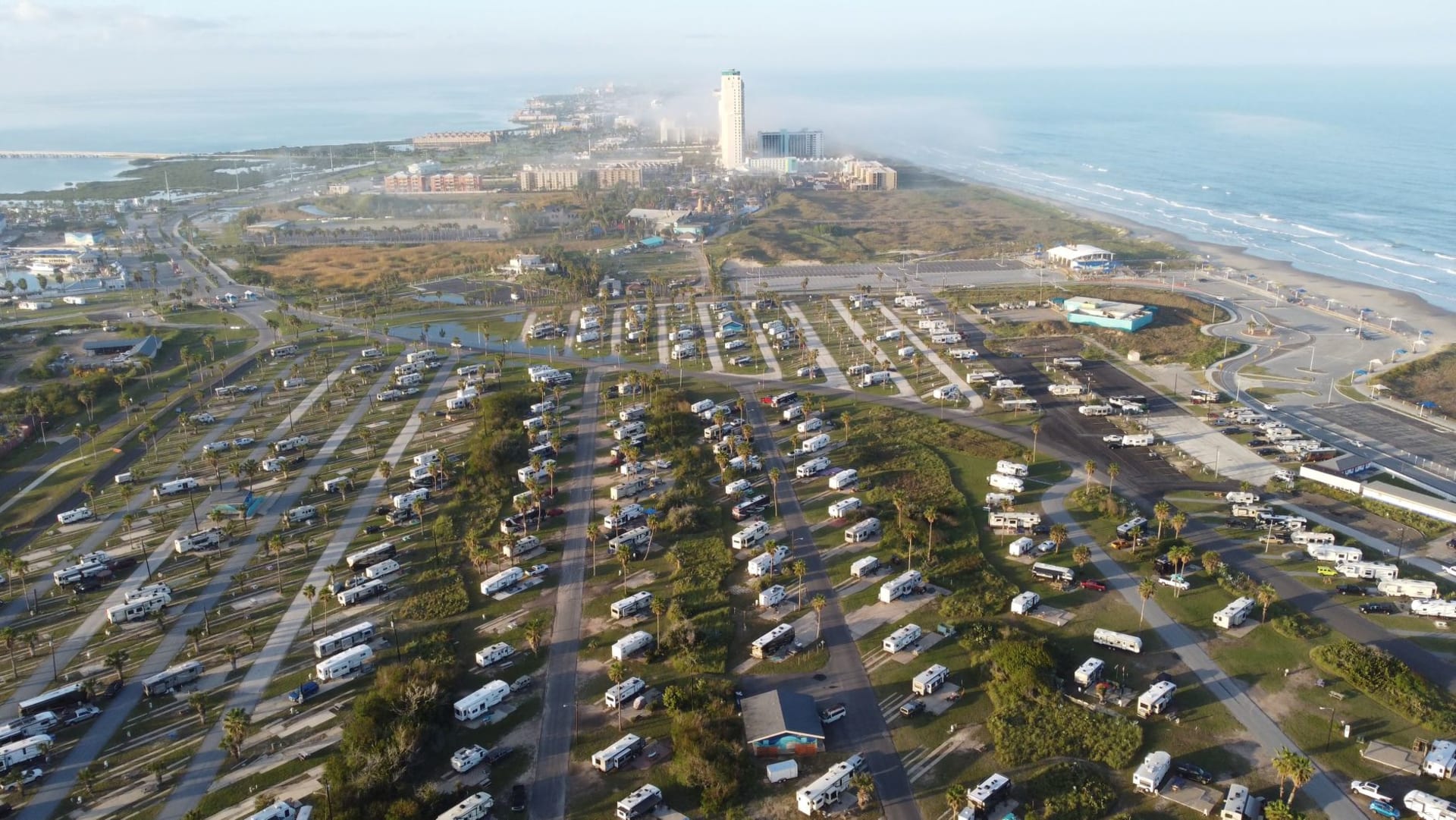
Padre Island
"I drove sixty miles down that beach without passing another car — the Gulf on one side, the wind on the other, and nothing else."
The thing about Padre Island National Seashore is the scale of the emptiness. I had been expecting a nice beach. What I found was something that felt more like a concept of beach taken to its logical extreme — seventy miles of undeveloped barrier island, the longest stretch of undeveloped seashore in the United States, running south from Corpus Christi in a thin white line between the Gulf of Mexico and the Laguna Madre. I parked my car at the visitor center and walked south along the water and within twenty minutes there was no one in sight in either direction. The sound was wind and wave, the smell was salt and something warm and slightly organic, and the only prints in the wet sand were mine and a ghost crab’s.
The Kemp’s ridley sea turtle comes here to nest — this is the primary nesting beach for the world’s most endangered sea turtle, and from April through July, nests are marked and monitored by the National Park Service staff. I arrived in May and witnessed the kind of small-scale drama that makes up for a lot of birdwatching patience: a ranger leading a group of maybe fifteen people at a careful distance from a freshly deposited nest, counting eggs, taking measurements, explaining in a quiet voice what the number meant relative to the population data from previous years. There was a quality of genuine scientific care to the whole operation that I found unexpectedly moving.
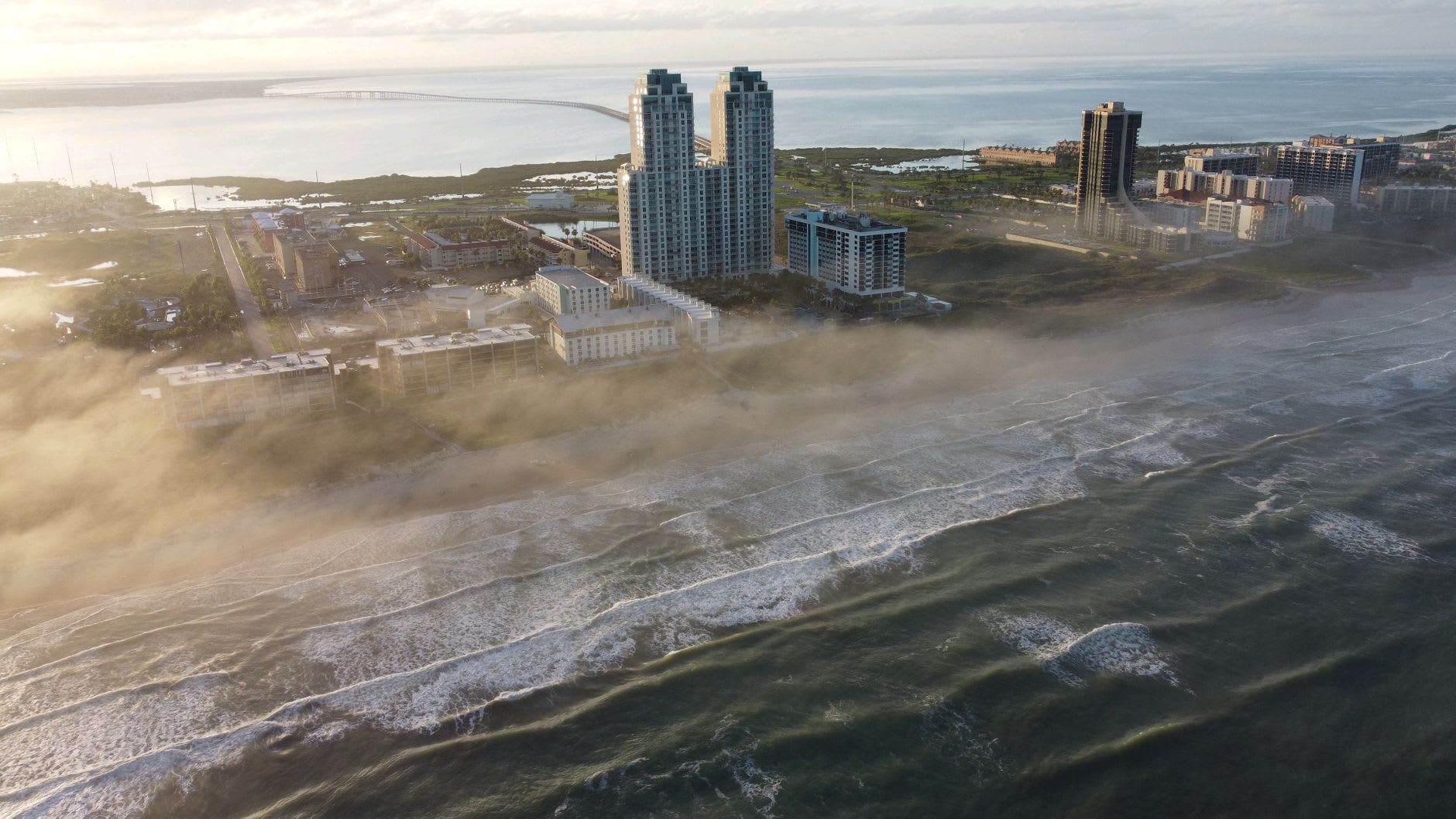
The birding on the island, particularly in spring and fall, is extraordinary. Padre sits on the Central Flyway and acts as a rest stop for millions of migratory birds moving between their breeding grounds in Canada and their wintering territory in Mexico and Central America. In April the shrubby interior of the island can be so full of warblers and tanagers that you stop walking and just stand in the middle of it. I have been birding since I was a teenager in France and I have never experienced anything quite like standing in the lee of a dune while a fallout of migrating birds lands around me — the trees and shrubs simply filling with color and motion as a cold front has pushed them down to the coast overnight.
The south end of the island, accessible only by four-wheel drive on the beach, stays genuinely wild. The road — such as it is — is the beach itself, and you navigate by feel, staying in the tire tracks, watching for soft sand. I camped there two nights at a site with no facilities, the wind loud enough that I could hear it in my sleep, the stars between the gusts so dense and low that the Gulf seemed to reflect them.
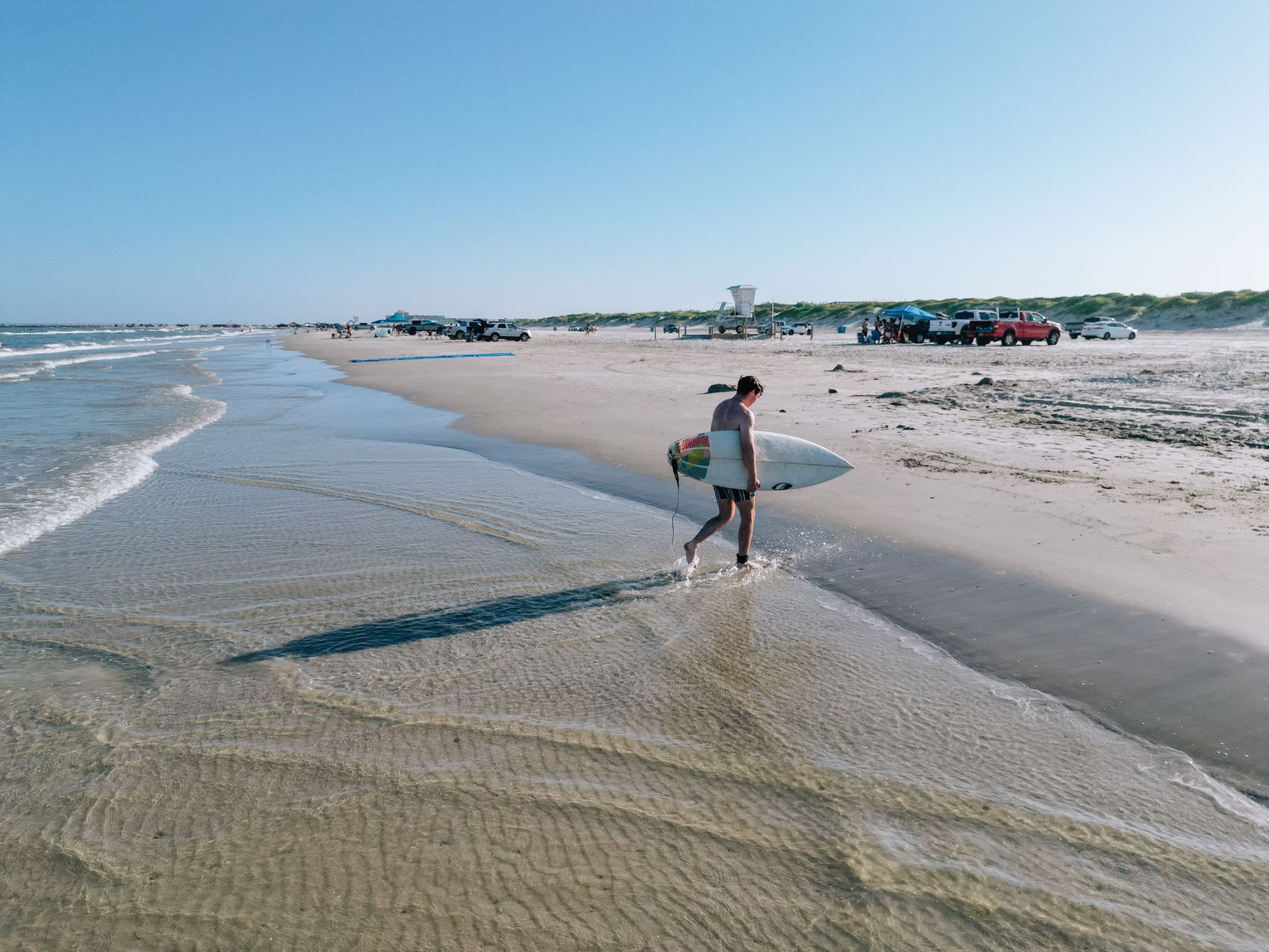
When to go: April and May for migratory birds and sea turtle nesting. October and November for cooler weather and the fall bird migration. Summer is swimmable but windy and the mosquitoes can be ferocious inland. A high-clearance vehicle with four-wheel drive is necessary for anything south of the visitor center.