
New Orleans
"The second line went around a corner and I followed it for three blocks before realising I was completely lost."
I arrived on a Tuesday in August, which everyone had told me was a mistake. They were right about the heat — it came at you from the sidewalk as much as from the sky, thick and wet and almost fragrant, layering the smell of the Mississippi river over something older and harder to name. I bought a cold Abita at a bar on Toulouse Street that had no front wall, just an open gap where a door might have been, and I stood there watching the street breathe. Then the second line materialized out of nowhere: brass band first, then umbrellas spinning in the hands of people who appeared to be in the middle of their ordinary Tuesday, a cluster of dancers improvising in the intersection. It lasted maybe eight minutes. Then it turned a corner and was gone, and the street went back to being a street.
That first afternoon set the terms for everything that followed. New Orleans does not announce itself — it interrupts. The French Quarter’s cast-iron balconies drip with ferns and the light in the late afternoon turns the plaster facades of the old Creole buildings a particular gold that I have not seen duplicated anywhere else. I spent a morning walking the Tremé district, America’s oldest Black neighborhood, where the shotgun houses sit low and close to the street and the sound of a trumpet practicing somewhere inside — scales, then something more ambitious — leaked out into the still air.
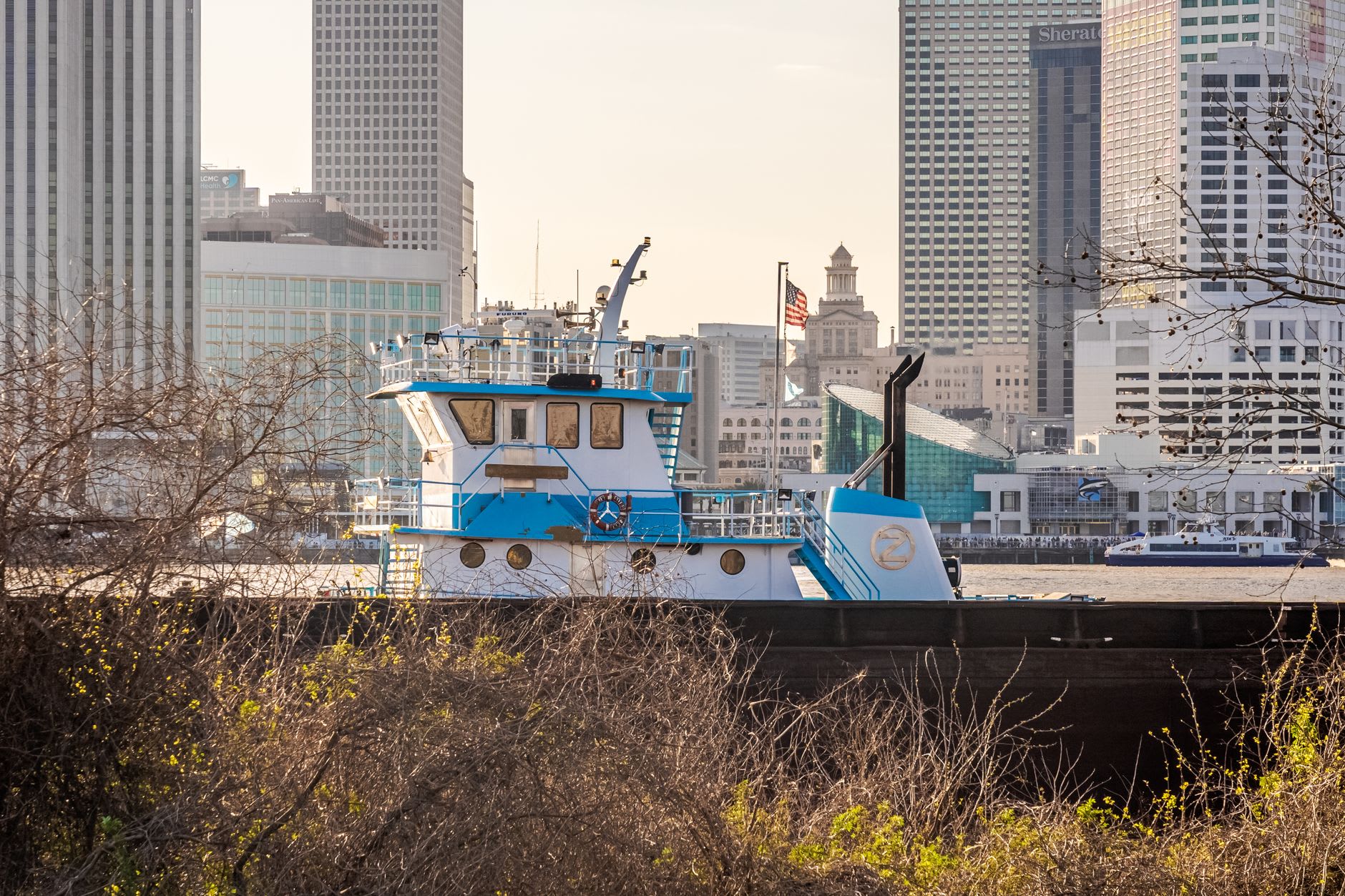
The food here is the most serious cooking in America that takes itself the least seriously. I ate gumbo z’herbes from a paper cup at a church kitchen near Congo Square. I ate a shrimp po’boy at a place on Magazine Street that has been making them the same way since 1959 — the bread engineered to shatter at the first bite, the shrimp dressed simply with lettuce and remoulade, enough to make the idea of a sandwich somewhere else feel vaguely abstract. On a Friday night I found a crawfish boil at a house in Uptown where I didn’t know the hosts, got introduced as “the French guy who followed a second line,” and ate for two hours from a table covered in newspaper, pulling tails with my hands while a man named Darnell explained to me in great detail exactly why the Saints’ offensive line was failing.

The cemeteries deserve more time than most visitors give them. The Cities of the Dead — where the dead are buried above ground because the water table makes underground burial impossible — are proper neighborhoods in miniature, the whitewashed tombs arranged in rows like very small houses. St. Louis Cemetery No. 1 in the morning, before the tour groups, is about as quiet as New Orleans gets, and the quality of that quiet is different from ordinary silence: it is a city of one million holding its breath.
When to go: October through February is the sweet spot. The heat breaks in October, and the city runs on full power through Mardi Gras season (which begins January 6th, not just the final weekend). Avoid July and August unless you have specifically come to suffer alongside everyone else — there is a perverse solidarity in it, and the tourist crowds thin dramatically.