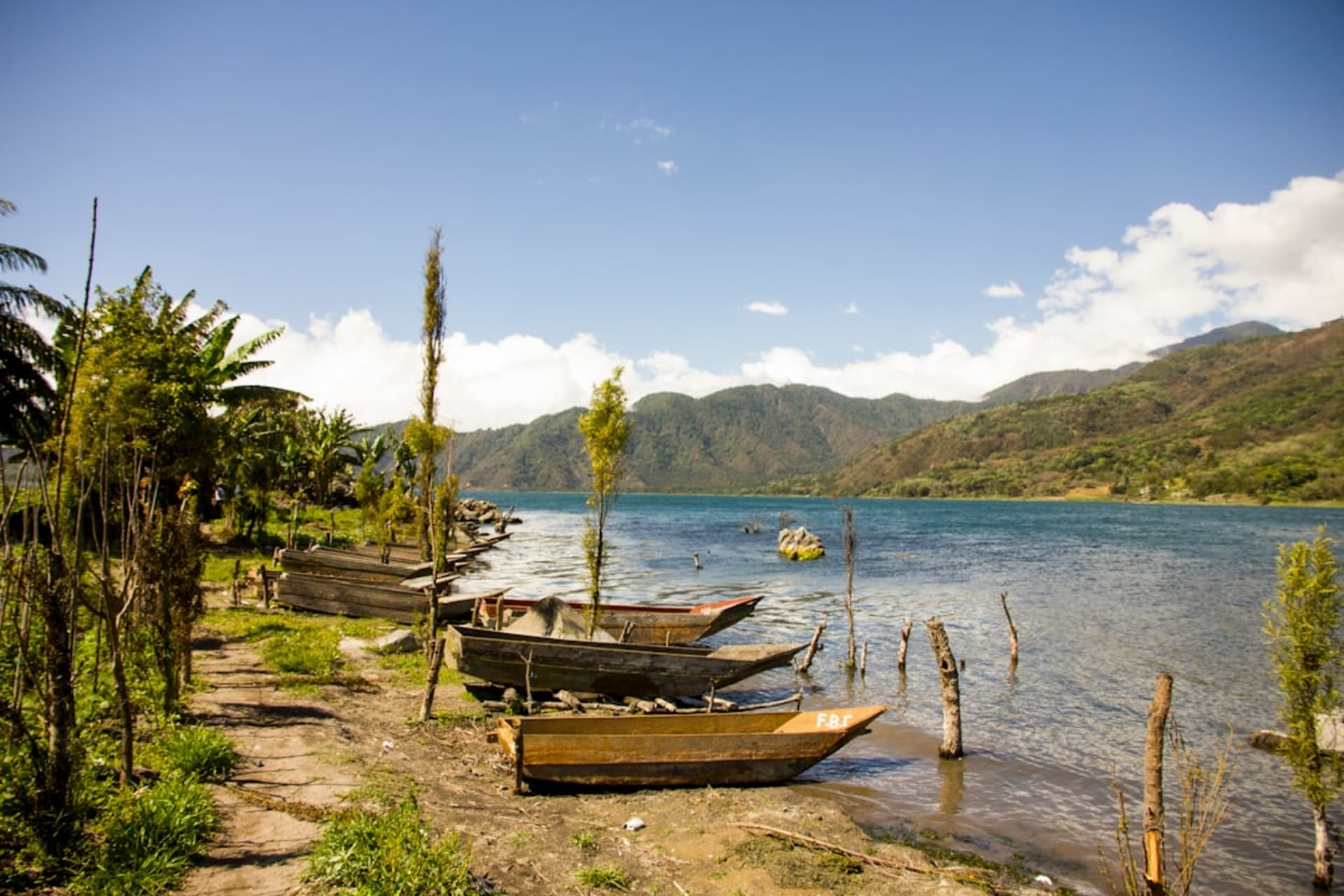
San Pedro La Laguna
"I came to San Pedro for a week of Spanish lessons and stayed a month because leaving felt like admitting defeat."
A backpacker town stacked up the flank of its own volcano, where Spanish classes, hostel bars, and a brutal sunrise hike compete for your week.
I stepped off the lancha at the Pedro dock with a plan to study Spanish for five days. I left twenty-six days later, considerably more fluent and considerably less rich, because San Pedro La Laguna does that to people. The town climbs the lower slopes of Volcán San Pedro in a tangle of two zones that don’t quite talk to each other — the traditional Tz’utujil center up the hill, where life continues much as it has for generations, and the gringo strip down by the water, wall-to-wall hostels, banana pancake breakfasts, and bars that host trivia night in three languages.
Spanish school as a way of life
The language schools are the real economy here, and there are a dozen of them within a five-minute walk of each other, each offering one-on-one lessons for a fraction of what you’d pay in Antigua. Mine was a plastic table on a rooftop, four hours a day, my teacher a woman named Rosa who corrected my subjunctive with the patience of someone who’d done this ten thousand times. Evenings dissolved into the same loose routine as everyone else’s: a swim off a dock, a shared dinner with whoever else was staying at the hostel, a slow beer watching the light change on Tolimán across the water. I’ve rarely felt time move so strangely — fast in retrospect, glacial in the moment.
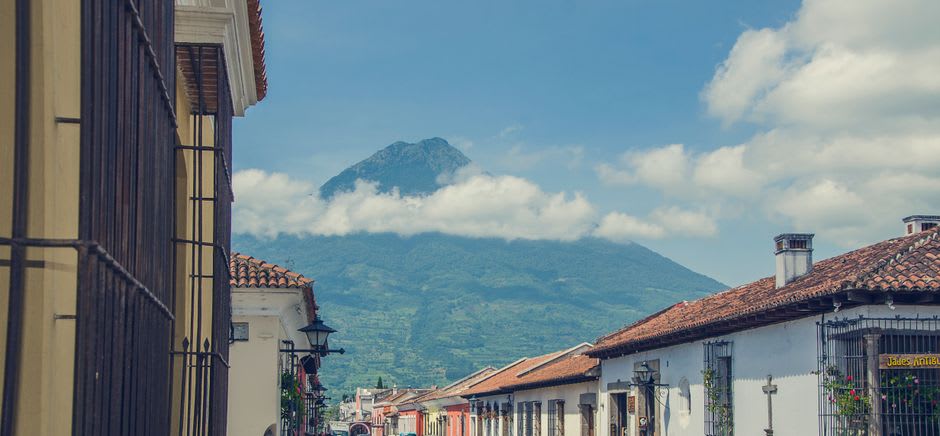
The volcano, at 4am, against your better judgment
Everyone eventually does the hike. Volcán San Pedro is a genuinely brutal climb — three to four hours straight up through cloud forest, starting before dawn so you summit ahead of the clouds rolling in. I went with a guide named Diego and two Israelis I’d met at the hostel bar the night before, which in retrospect was not the ideal pre-hike preparation. We were wrecked by hour two. But the top delivers exactly what it promises: the entire lake spread out below, three volcanoes, a dozen villages, the Xocomil wind not yet awake to disturb the water’s mirror surface. Nobody talked much on the way down. There wasn’t much to add.
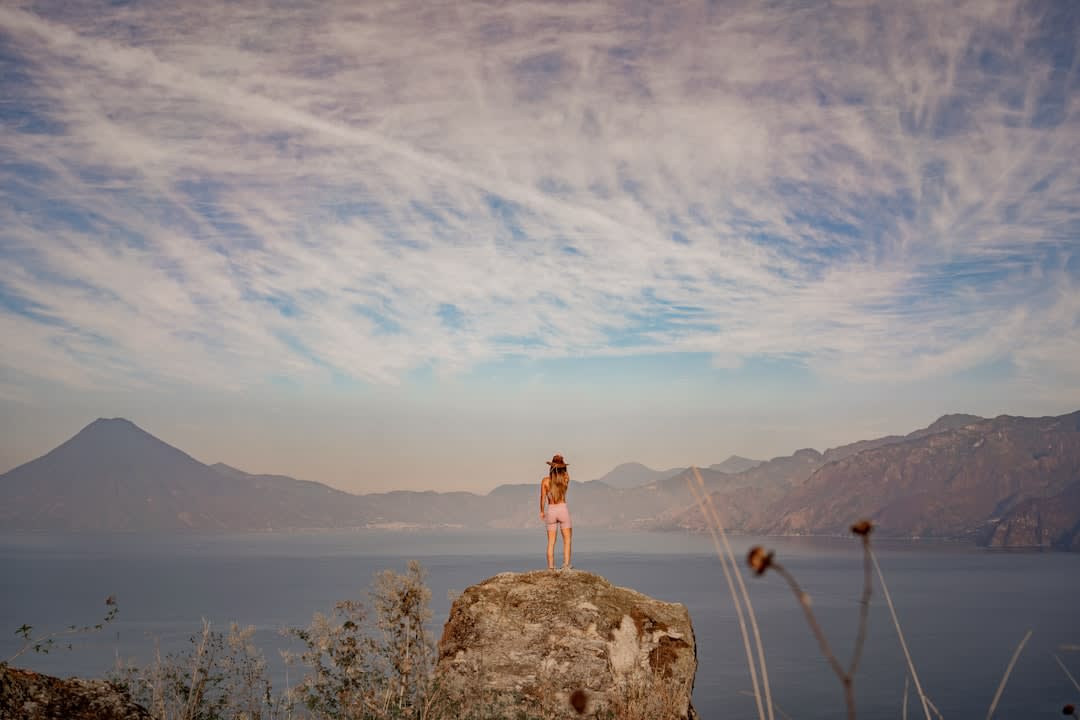
The town’s reputation as a party stop is deserved but incomplete — yes, there are nights that get loose, but there’s also a genuine, semi-permanent community of people who came for a week and never quite finished leaving. I understood them completely by the time I finally packed my bag.
When to go: December to March for the clearest volcano-hike mornings; book the climb the night before and confirm your guide, since routes shift with recent safety conditions on the trail.