Quiriguá
"A UNESCO World Heritage Site sitting in the shade of banana trees, and hardly anyone stops to see it."
A UNESCO Maya site hidden inside a working banana plantation, home to the tallest carved stelae in the Maya world and a collection of strange zoomorphic boulders.
You smell Quiriguá before you understand it — the sweet, slightly fermented scent of a working banana plantation that surrounds the ruins on every side. I nearly drove past the turnoff twice, because there’s nothing about the road that suggests you’re about to enter a UNESCO World Heritage Site; it looks like an access track for agricultural workers, which, in a sense, it is. The park itself is a modest clearing carved out of Del Monte’s banana operation, and the contrast is the first thing that gets you: ancient stone giants standing at attention in rows, palm fronds rustling behind them, workers on bicycles passing just outside the fence on their way to the next field.
Stone giants taller than anything else the Maya carved
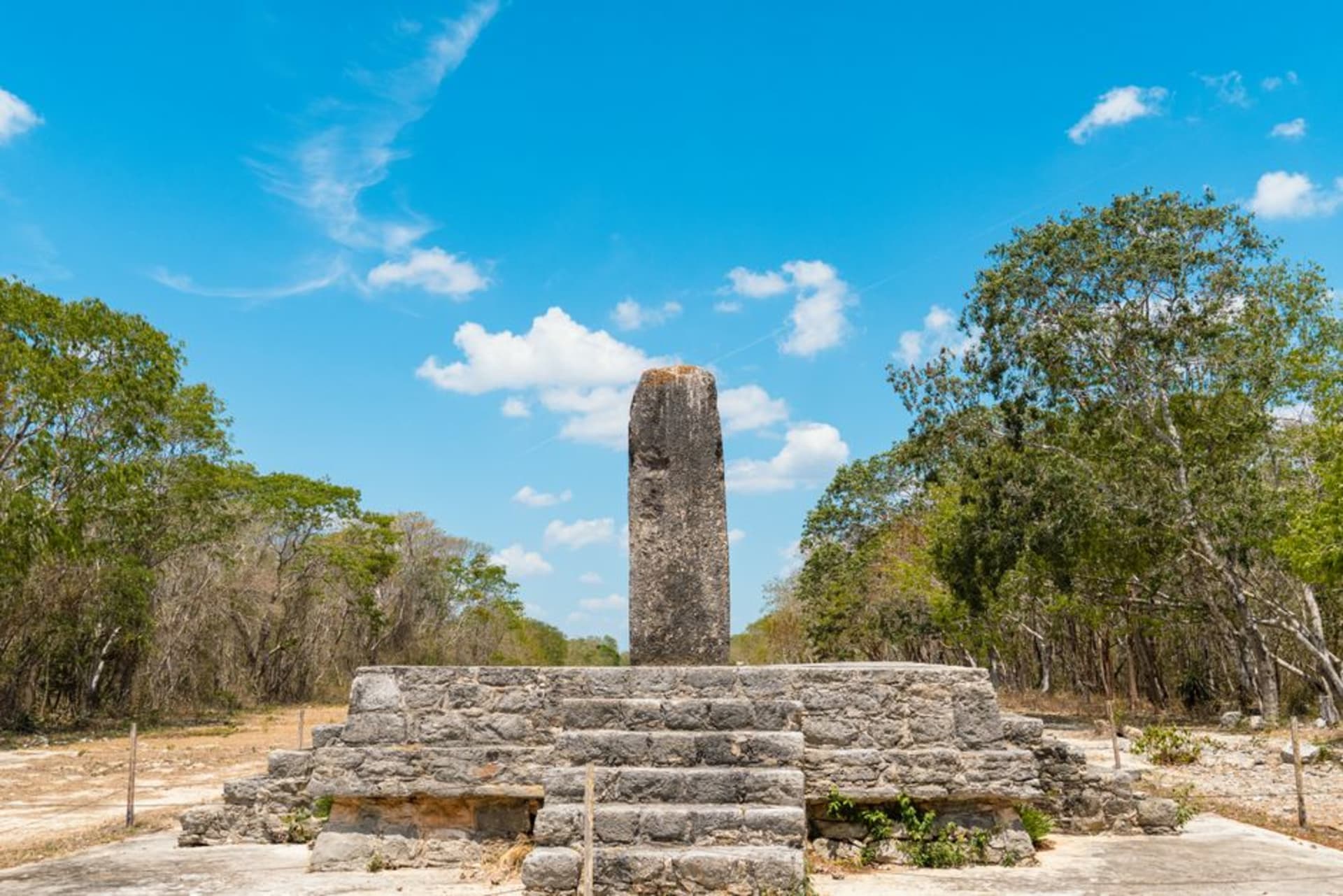
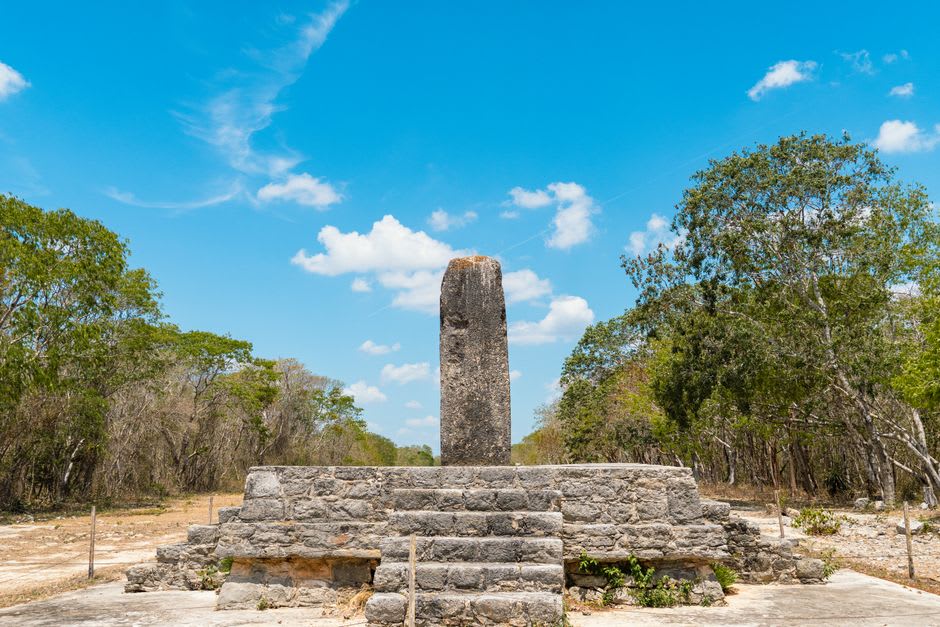
Quiriguá’s stelae are its reason for being. Stela E, at over ten meters, is the tallest carved monument the ancient Maya ever raised — taller than anything at Tikal or Copán, taller than anything found anywhere else in the Maya world. Carved from sandstone quarried nearby, they depict Quiriguá’s rulers, above all K’ak’ Tiliw Chan Yopaat, the king who famously captured and beheaded the ruler of neighboring Copán in 738 AD, a political upset that put this otherwise minor city on the map for a generation. Standing at the base of Stela E, craning my neck the way you would at a skyscraper, I kept thinking about the logistics — how do you even quarry, transport, and raise a single block of stone this size without a wheel or a draft animal.
The zoomorphs — boulders carved into monsters
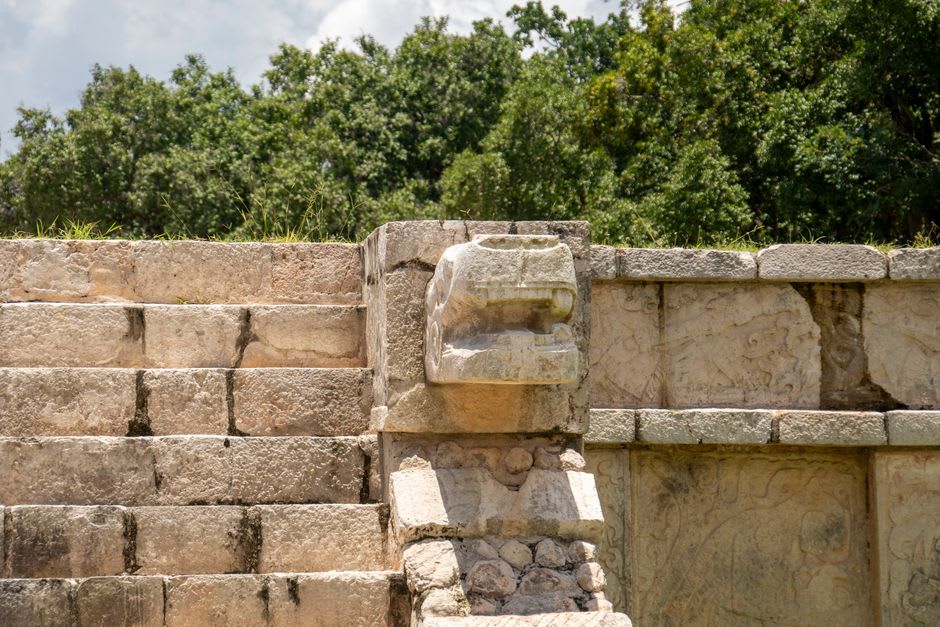
Beyond the stelae, Quiriguá has something I haven’t seen replicated anywhere else in Guatemala: the zoomorphs, massive boulders carved into the shapes of mythological creatures, jaguar-toads and turtle-dragons with human faces peering out of their carved mouths. Zoomorph P, nicknamed the Great Turtle, is covered edge to edge in glyphs and imagery so dense it takes real patience to pick out individual figures. My guide, an older man named Efraín who’d worked the plantation before switching to guiding tourists, ran his hand along one groove and said his grandfather used to tell him these boulders “still breathed” at night. I don’t believe that, exactly, but standing alone with them as dusk fell and the cicadas ramped up, I understood the impulse.
When to go: Any time of year works since it’s a low-lying, easy site, but aim for early morning before the heat and humidity of the banana lowlands really settle in. It pairs naturally with a stop at Copán across the Honduran border.