La Soufrière
"Standing at the crater smelling of sulfur, soaked through — this is what Guadeloupe actually is."
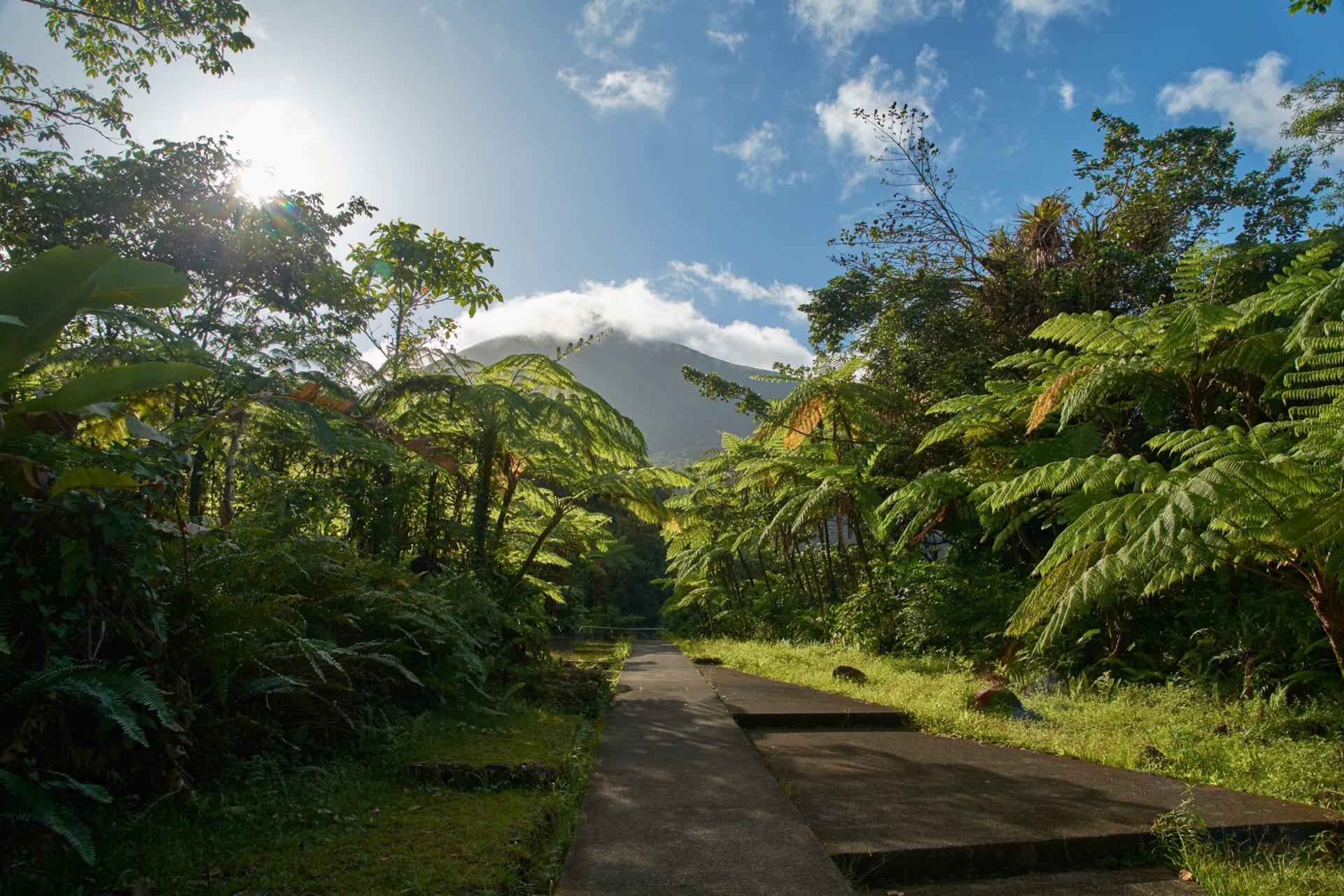
The drive up from Saint-Claude starts innocuously enough, past banana plantations and roadside stands selling rum and vanilla. Then the road begins to climb and the vegetation intensifies, becoming something almost aggressive in its greenness — ferns the size of small trees, bromeliads fat with trapped rainwater, the canopy closing overhead until the sky is just a suggestion of light filtering down. I had rented the cheapest car on the island and it was audibly unhappy with the gradient. By the time I reached the parking area at the trailhead, the temperature had dropped eight degrees and everything smelled of rain and deep soil, even though it hadn’t rained in hours.
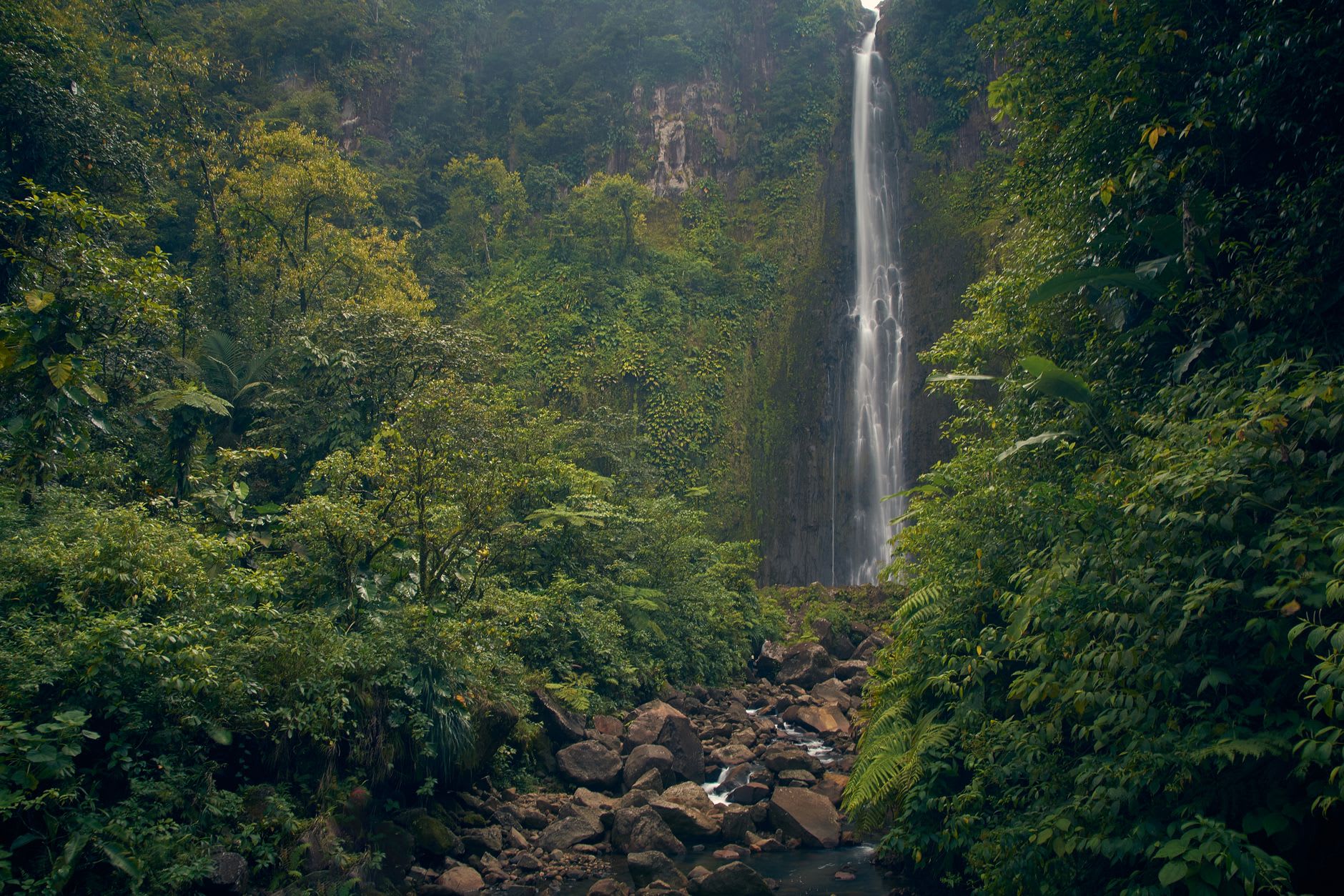
The hike to the crater takes about an hour and a half if you don’t rush, which you shouldn’t. The trail cuts through cloud forest that has the quality of a greenhouse pushed past its design limits — everything wet, everything growing into everything else, the path itself more mud than track. The sulfur smell begins about twenty minutes before you reach the summit, working its way in subtly and then not subtly at all, until it’s all you can smell and you’ve stopped noticing it. The terrain shifts near the top to bare volcanic rock, pale and cracked, with steam venting from fissures in the ground and the occasional mud pool bubbling at the trailside. It looks like something from before the planet figured itself out.
At the crater rim, on the day I went, the clouds were moving fast enough that you’d get three or four seconds of visibility out over the southern tip of Basse-Terre and the sea beyond before the white came back in. Those three or four seconds were enough. The volcano is not dramatic in the way that volcanoes in films are dramatic — it doesn’t glow or rumble — but it is very clearly alive, in the sense that it is doing something. The ground has a warmth to it. The last major eruption was 1976, and La Soufrière has been grumbling steadily enough in recent years that volcanologists keep close watch. Standing there, you understand why.

On the way back down, I stopped at the hot spring pools at Matouba — thermal water the color of weak tea that seeps from the volcanic ground into a series of rock basins. A family had set up towels and a picnic. Children were testing the temperature with their feet. The whole scene had an air of Sunday afternoon contentment that felt like a deliberate counterpoint to the strangeness of the crater above. I drove back down to the coast smelling unmistakably of sulfur, and didn’t shower for a while because I wanted to hold onto the reminder.
When to go: The dry season (December through April) gives the best chance of clear views from the summit, but the crater is perpetually cloud-wrapped, so you might not get visibility regardless of when you go. Start early — I left the parking lot at 6:45am and had the trail almost to myself. Avoid hiking during or immediately after heavy rain, when the path turns treacherous and the steam vents are at their most active.