Caribbean
Guadeloupe
"More volcano than beach, more market than resort — this is France, reimagined."
I arrived in Pointe-à-Pitre on a Tuesday morning and the heat hit me before I even cleared the jetway. After years of traveling through Mexico, I thought I was done being surprised by tropical airports, but Guadeloupe managed it anyway — the moment I stepped out of the terminal, a vendor was selling fresh coconuts ten meters from a boulangerie doing a brisk trade in croissants. That contrast, casual and unannounced, turned out to be the defining texture of the whole island.
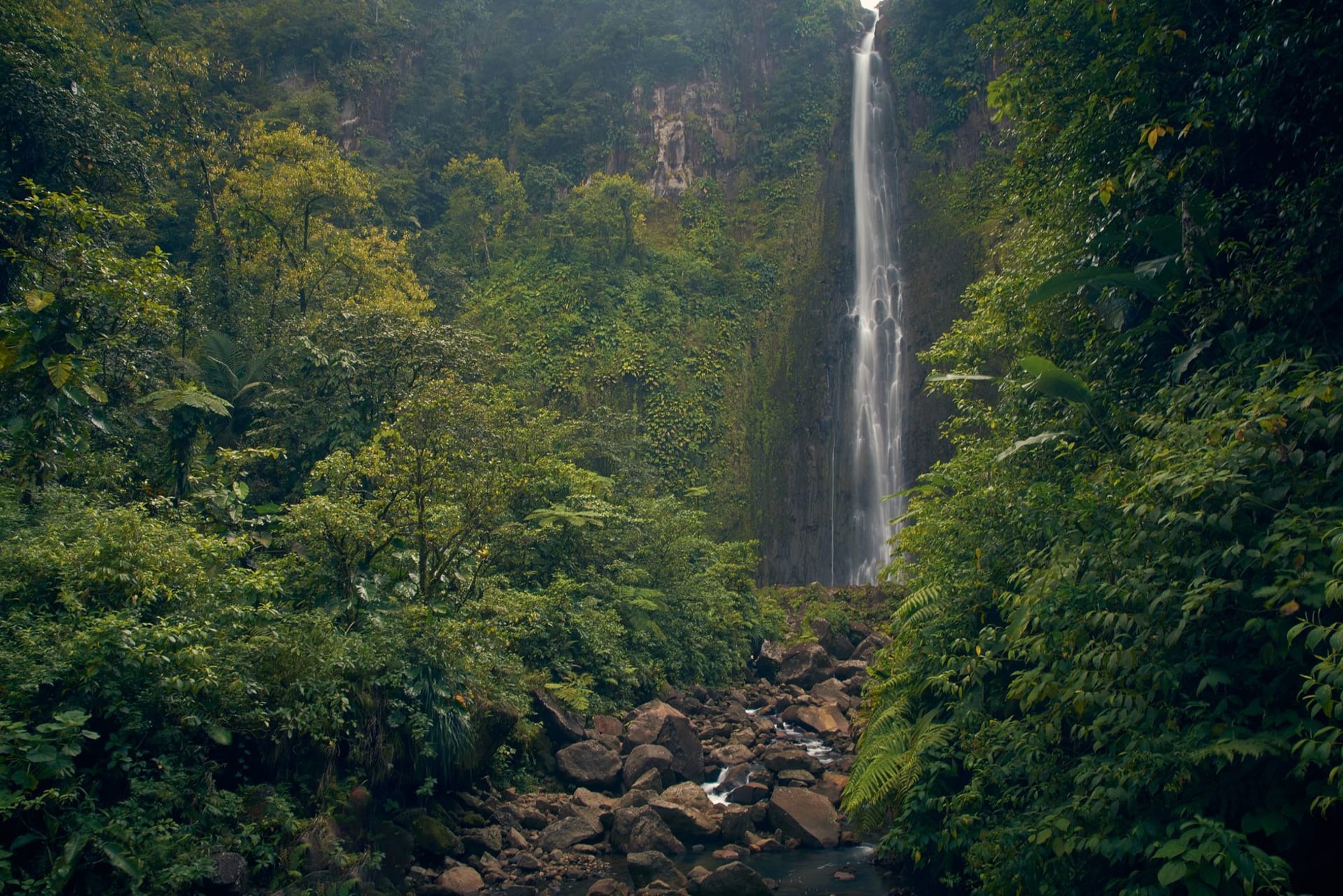
Guadeloupe is technically two islands shaped like a butterfly: Basse-Terre to the west, which is where the volcano and the serious jungle live, and Grande-Terre to the east, flat and cane-field-covered with the beaches most people come for. Most visitors plant themselves on Grande-Terre and barely cross the bridge. That’s a mistake. Basse-Terre holds the Chutes du Carbet — waterfalls that fall two and three hundred meters through a rainforest so dense and green it feels almost aggressive — and La Soufrière, an active volcano you can walk to the crater of in a morning. The air up there smells of sulfur and wet earth in a way that stays in your clothes for days. I mean that as a compliment.
The food is the other thing nobody prepares you for. Guadeloupean cuisine is Creole, and Creole here means something specific: accras de morue, those small salt cod fritters eaten hot out of paper at the side of the road; colombo d’agneau, a lamb stew with a spice blend the island brought back from indentured workers who came from South Asia in the 19th century; ti punch mixed at the bar with barely any ice and no apology about it. The market in Basse-Terre town — the actual city of Basse-Terre, which most tourists skip for Pointe-à-Pitre — has vendors who’ve been selling the same spice mixes and dried chillies at the same stalls for decades. I ate there every morning I could.
When to go: December through April is the dry season and the most comfortable for hiking — the trails into the rainforest are muddy year-round but manageable. June through November is hurricane season, with the real risk concentrated July through September. If you go in the wet season (May–June or October–November), the waterfalls are more dramatic and the island is less crowded. Avoid the last two weeks of July when French summer holiday crowds arrive in force.
What most guides get wrong: They sell Guadeloupe as a beach destination with a volcano thrown in. It’s the opposite — it’s a wild, volcanic, deeply French Caribbean island that happens to have some decent beaches. The standard itinerary has you spending three days on the sand in Saint-François and one afternoon at Chutes du Carbet like a checkbox. Flip that. Rent a car, stay in Basse-Terre for most of your trip, eat at the small Creole restaurants inland where the menu is written on a blackboard and the rum is poured generously, and treat the beach as the footnote.