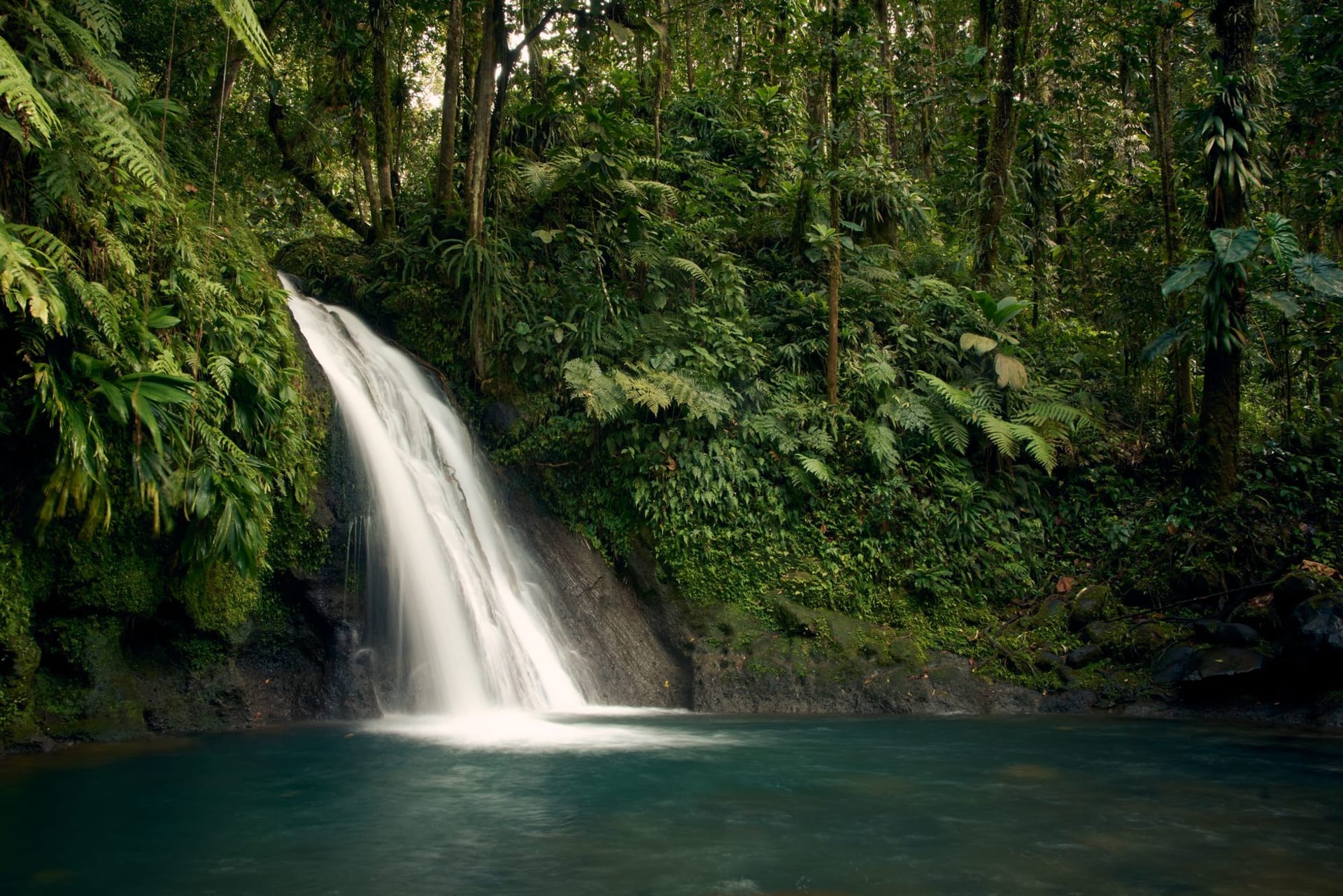
Chutes du Carbet
"The sound of the Carbet falls reached me long before I could see them — that roar through the jungle is its own kind of welcome."
I heard the falls before I had any visual evidence of them. The sound builds slowly as you push deeper into the national park — a low frequency rumble that you first mistake for distant traffic or wind and then, as the trail curves into the green, realize is something much older than either. The path from the car park at Grand-Étang is not difficult but it is uncompromising: the mud is deep in places, the roots cross the trail in configurations designed to catch the inattentive, and the humidity is the kind that makes breathing feel slightly effortful. None of that matters once you clear the last stand of bamboo and the second Chute du Carbet opens in front of you, two hundred and ten meters of water falling unbroken from an overhang into a pool so white with agitation that it seems to generate its own light.
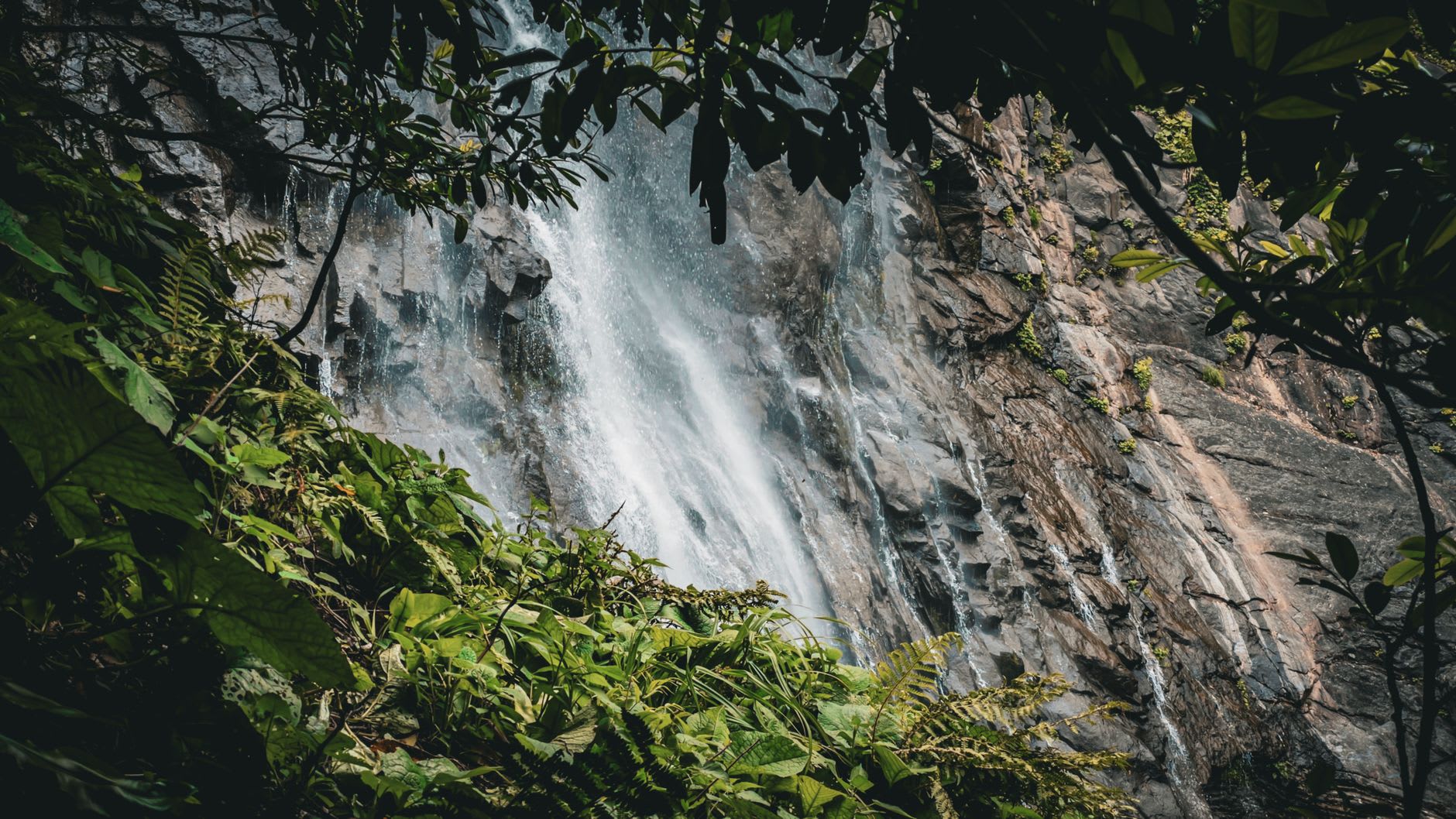
The scale takes a moment to land. I stood at the railing and watched a family of four — parents, two small children — all staring upward in complete silence, necks craned, the children for once not distracted by anything because nothing could compete with this. The spray reached us from thirty meters away, a fine mist that was almost cold, which felt like a gift given the heat of the climb. I had brought a sandwich in my bag and found I had no interest in eating it. The waterfall was not interested in allowing for anything as mundane as lunch.
Columbus is said to have described these falls in his log from 1493, when he sailed close enough to Basse-Terre to hear them from the water — which, standing at the base, I find entirely plausible. The national park around them is the most serious jungle I’ve encountered outside of Central America: a tangle of heliconia and tree ferns and wild anthuriums, birds that stay hidden but make their presence loudly known, and the permanent impression that the forest is actively growing into any space that pauses long enough to allow it. I watched a leaf the size of a dinner tray catch a beam of sunlight for three full seconds, then disappear back into shade, and thought that was probably enough for one day.
The third waterfall — the one you reach first, chronologically, since the trail visits them in inverse numbering — is smaller and more intimate, a twenty-meter drop into a rock basin where people swim. The water was so cold it made someone nearby yelp audibly when they entered, and the rocks at the edges were coated in that particular velvet moss that suggests the water hits here with great regularity and great force. I sat for a while and let the mist settle on my arms and watched a hummingbird work its way through a stand of red impatiens by the water’s edge. The falls, in this version, were almost gentle. Almost.
When to go: The waterfalls are accessible year-round but most dramatic in the wet season (May through November), when the volume increases significantly. The trail is muddier in the rainy months but manageable in proper footwear. Go on a weekday and arrive before 9am to have the falls with something approaching solitude — by mid-morning, especially on weekends, the main viewpoint at the second fall gets crowded.