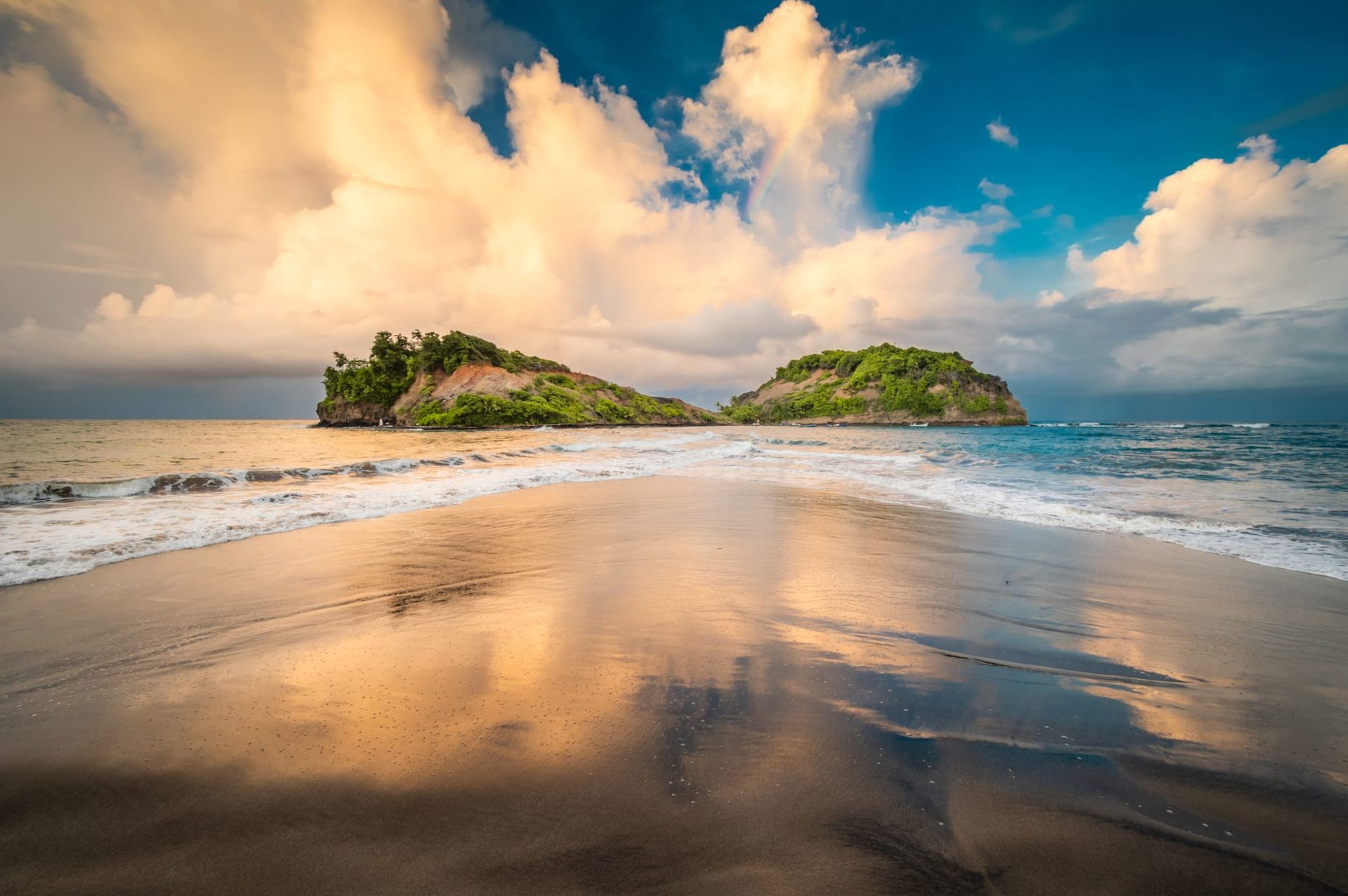
Levera Beach
"The Atlantic comes in here as though it hasn't spoken to anyone in a very long time."
Getting to Levera requires a commitment. You drive north through the spice interior, past the nutmeg estates in St. Patrick’s parish and the low-growing cocoa trees with their strange hanging pods, and then the road narrows and the forest closes in and you get the feeling you are heading somewhere that does not especially want to be found. The last stretch drops down toward the sea and delivers you into a landscape I was not ready for: a long arc of dark-fringed beach backed by mangrove lagoon, the Atlantic running in hard from the open ocean, and not another person in sight.
Levera sits inside a national park that protects both the beach and the lagoon behind it. The lagoon is calm and bird-thick — frigate birds circling, herons standing with their preposterous patience at the mangrove roots, the occasional flash of a kingfisher. The beach itself is the contrast: wide and exposed, the sand here not the fine white of the south but coarser and darker, and the waves that come in off the open Atlantic are genuine waves, the kind that want your full attention. I swam for about twenty minutes and respected the water enormously.

The reason Levera matters most is the turtles. Between April and July, leatherback sea turtles come to this beach to nest — some of the largest in the world, creatures that can weigh over five hundred kilos, dragging themselves up the sand in the dark to lay their eggs. The nesting program here is run with serious care; there are rangers and a booking system, and you go at night with guides who know which spots are active. I came in late May. We waited in the dark for about two hours, no phones out, voices low. When the turtle finally came in from the surf and began its slow work above the tideline, the sound of it — the breathing, the scraping of the sand — was so intimate and enormous at the same time that I had no idea what expression to wear.
The broader national park also protects offshore — Levera sits near a cluster of small rocky islets called the Sandy Island and Levera group, and the snorkelling around the inner reef is good enough to justify bringing a mask even if you have no formal diving plans. The coral here has not been subject to the same pressures as more accessible sites, and the fish life reflects that: parrotfish in absurd colours, schools of blue tang, the occasional barracuda tracking at the edge of visibility.

There is nothing to eat or drink at Levera, which is part of its integrity. I brought food from Sauteurs, the nearest town, and ate it on the beach in the early afternoon with the wind coming off the water and the frigate birds working overhead. A couple of local families arrived mid-afternoon — children immediately running for the surf, adults setting up chairs with the efficiency of people who come regularly. One of the fathers told me he grew up driving here on Sundays and still does, thirty years later. He said the beach has not changed. He said it in a way that made clear he considers that a victory.
When to go: April through July for leatherback nesting — book a turtle watching tour through the Grenada Tourism Authority or the Levera ranger station. The dry season months of January through May offer the clearest skies and calmest approaches to the offshore snorkelling. The park can be muddy and difficult to access after heavy rain.