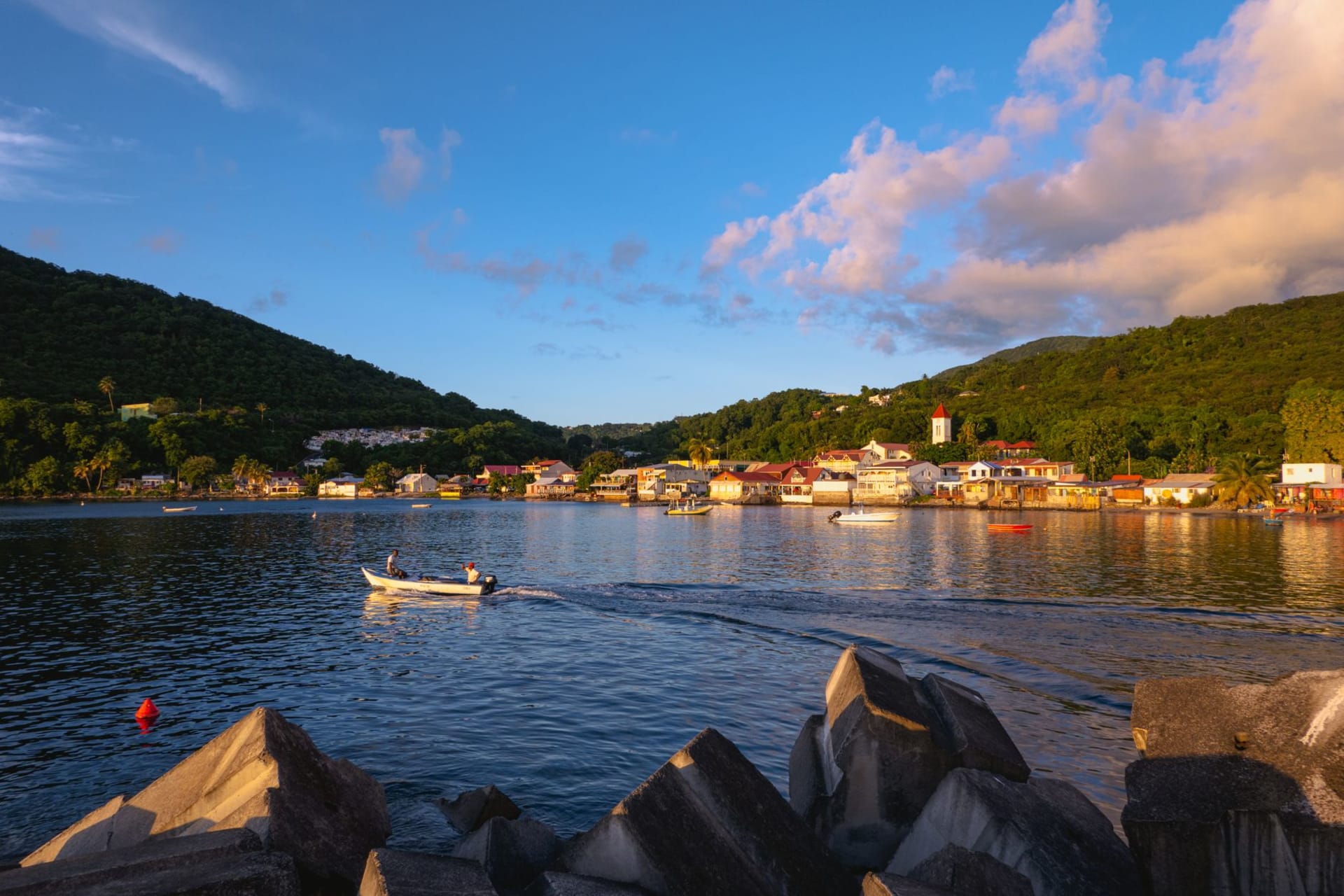
You cross the island to reach Grenville — through the central ridge, past the nutmeg and cocoa interior, and down the eastern slope to the Atlantic coast — and the crossing takes about thirty-five minutes but feels longer because the landscape changes three times. By the time the road drops into Grenville, you are somewhere else entirely from the resort coast. The light here is different, harder, the sea not the placid turquoise of the southwest but the darker, choppier Atlantic, and the town has a different rhythm: working, unhurried, not organized around visitors.
Grenville is Grenada’s second city, which is a title that requires some translation. It is small and quiet, the streets following an informal grid that seems to expand and contract depending on which part you are in. The waterfront is functional rather than scenic — boats, nets, a fuel depot, the practical architecture of a place that earns its living from the sea. The Saturday market is worth the trip alone: an open-air structure packed with vendors selling provisions, spices, and produce from the windward side of the island. The stalls here lean more local than the St. George’s market — less toward tourist-friendly bags of mixed spices and more toward raw materials, the kind of volume purchasing that assumes you know what you are doing with it.

The nutmeg receiving station on the edge of town is the thing that sticks with me most. This is part of the Grenada Co-operative Nutmeg Association’s network — the infrastructure that for decades managed the collective export of the island’s most important crop — and the smell alone is worth the stop. Walking into the processing area (they are generally happy for curious visitors) is like walking into a very large, very warm spice jar. Workers sort nutmeg by grade on long tables, moving with practiced speed, the sound of the seeds against the wooden surfaces constant and rhythmic. I spent an hour watching and asking questions and left smelling like a Christmas pastry.
The fish market runs earlier than I expected. I was there by six-thirty one morning — the drive from St. George’s had me on the road before five — and the boats were already in, the catch being sorted and sold on the dock with rapid informality. Kingfish and tuna and snapper, some of it sold whole and still dripping, some of it filleted on the spot with knives that moved with unnerving speed. A woman running a small food stall at the edge of the market was already frying fish at that hour, and I had a breakfast of fried snapper and bake — a soft fried bread — that cost almost nothing and tasted like the best thing I had eaten in days.
Grenville is also called Rainbow City locally, a name given with some affection for the colourful buildings that line the main streets — painted in combinations that would never get past a planning committee in a European city but here look entirely natural, even necessary. A salmon-pink rum shop next to a turquoise hardware store next to a yellow government building. The aesthetic logic is its own.

There is not much in the way of formal tourism infrastructure here, and that is precisely the point. Grenville feeds you with the logic of a town that feeds itself first and visitors second, and the result is the kind of food that does not calculate what you expect. The provisions stalls near the bus terminal sell boiled green banana and breadfruit alongside the usual. One counter restaurant near the market had a stewed pork that was dark and aromatic and came with a pile of rice and peas that was not an afterthought.
When to go: Grenville is a year-round town, but Saturday morning is the essential visit — the market and fish dock are both at full volume. The town is most accessible in the dry season when the mountain road crossing is at its easiest. Grenville is a natural base for exploring the east coast, including the smaller Atlantic beaches that see almost no tourist traffic.