Carriacou
"Carriacou moves at the speed of a place that decided long ago it was going nowhere in a hurry."
The ferry from St. George’s to Carriacou takes about ninety minutes, and for the first forty of them you are watching Grenada shrink behind you while the open Caribbean opens ahead. Then the island reappears ahead — a low, green outline that resolves slowly into hills and a harbour and, eventually, Hillsborough, which is the capital of Carriacou in the same sense that a village has a main street: essential, unpretentious, uninterested in being more than what it is. I arrived on a Wednesday afternoon with a bag I had not bothered to fully pack, because I had heard that Carriacou was the kind of place that makes planning feel beside the point.
Hillsborough is a small waterfront town of pastel buildings and streets wide enough for two vehicles if neither of them is in a hurry. The harbour is its centre — boats unloading provisions, fishing pirogues returning with the day’s catch, the occasional sailboat crewed by people with better tans than the rest of us. There is a beach that runs south of the ferry dock, calm and swimmable, and in the late afternoon the light on the water is what I imagine painters dream about: horizontal and golden, the small ripples each catching it differently, the whole surface moving like something slow and breathing.

The thing that sets Carriacou apart from almost anywhere I have been is the boat-building tradition at Windward, a village on the northeast coast. The community at Windward has been building wooden schooners by hand for generations, using techniques brought by Scottish settlers in the eighteenth century and maintained with remarkable fidelity ever since. When I walked through the village, there were two boats in various stages of construction in open yards near the shore — ribs of local hardwood standing like the skeletons of enormous fish, men working the wood with adzes and planes, no power tools in sight. A man named Javan showed me the keelson he had been cutting for three weeks. He said it would be a boat for another four or five months. He said this calmly, without impatience, as though time worked differently here, which I had begun to suspect it did.
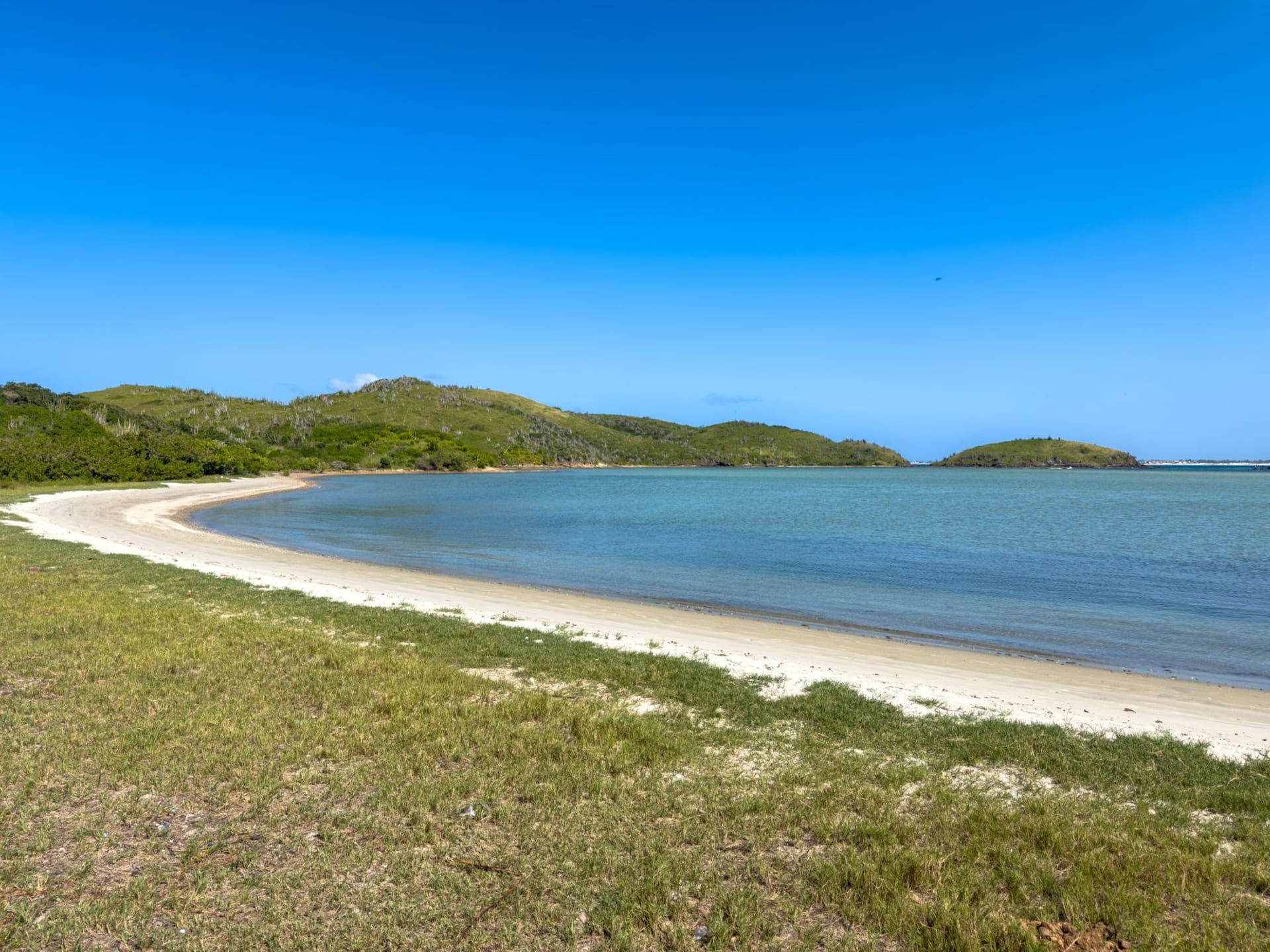
The beaches around the island are where Carriacou quietly makes its other argument. Anse La Roche, on the northwest coast, requires a walk down a hill path, and at the bottom you find a beach of white sand and turquoise water with no facilities and, on the day I visited, no other people. The water was clear enough to see the sand patterns twenty meters out. I swam for an hour, lay in the shade of a manchineel tree — carefully, the sap is caustic, the locals know to give it distance — and ate the bread and cheese I had brought from Hillsborough. It felt like finding something that had been mislaid.

The Big Drum Dance is Carriacou’s most distinctive cultural event — a ceremony rooted in West African traditions brought by enslaved people, maintained through generations as a form of ancestral connection. It is performed at significant occasions: crop gatherings, boat launches, memorial rites. I did not see a Big Drum Dance on my visit, but I was told about it with such specificity and affection by an older woman at a Hillsborough rum shop that I left feeling I understood something important about the island’s relationship to its own history. The culture here did not forget where it came from. It built boats with the same hands.
When to go: Carriacou is easiest in the dry season, January through May, when the ferry crossings are more reliably comfortable and the beaches are at their best. The Carriacou Regatta in late July/early August is a major event — traditional and racing boats from across the Caribbean, a festival atmosphere in Hillsborough — if you want the island at its most alive and social.