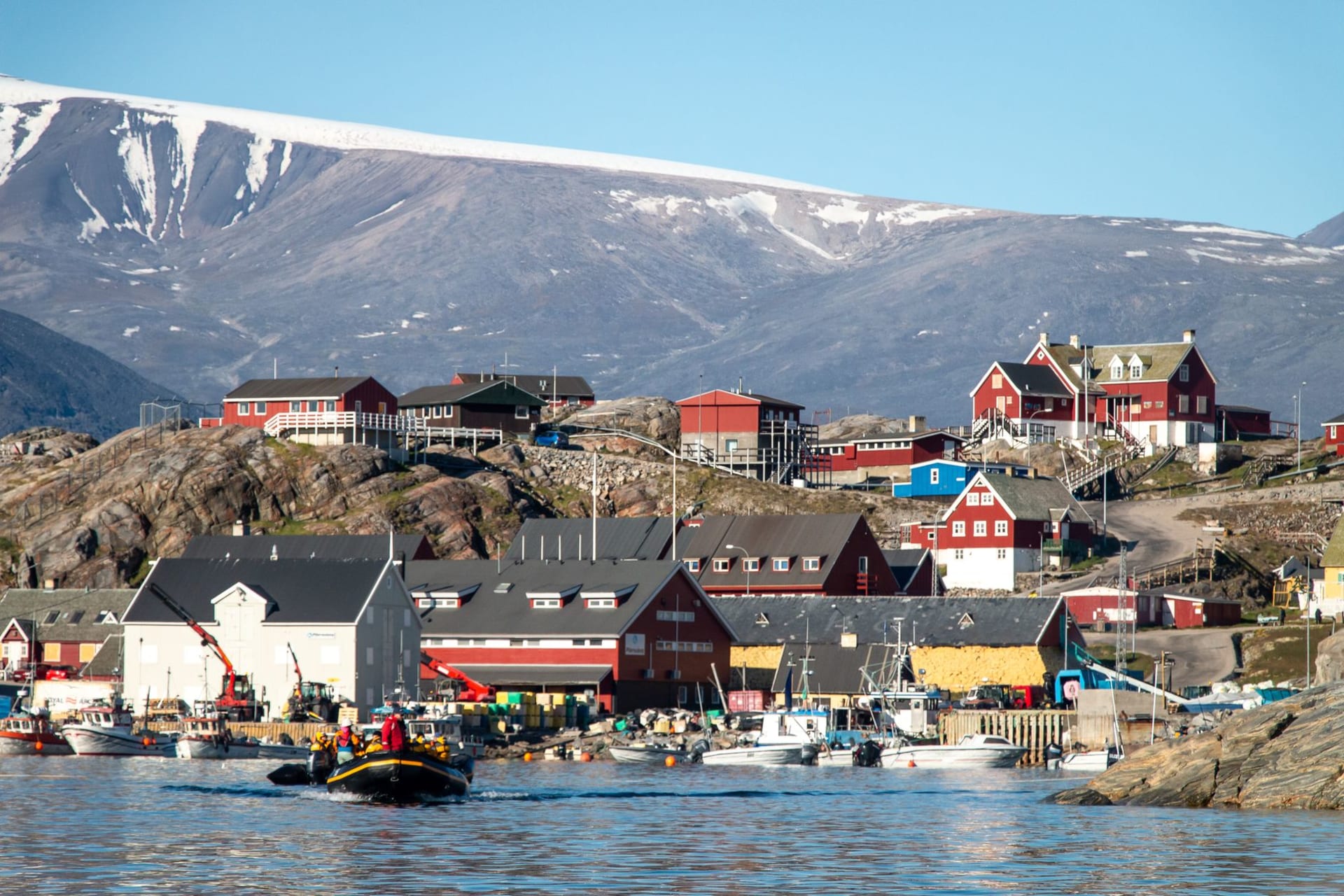
Uummannaq
"The mountain is shaped like a heart and that is not a metaphor anyone here uses because they live inside it."
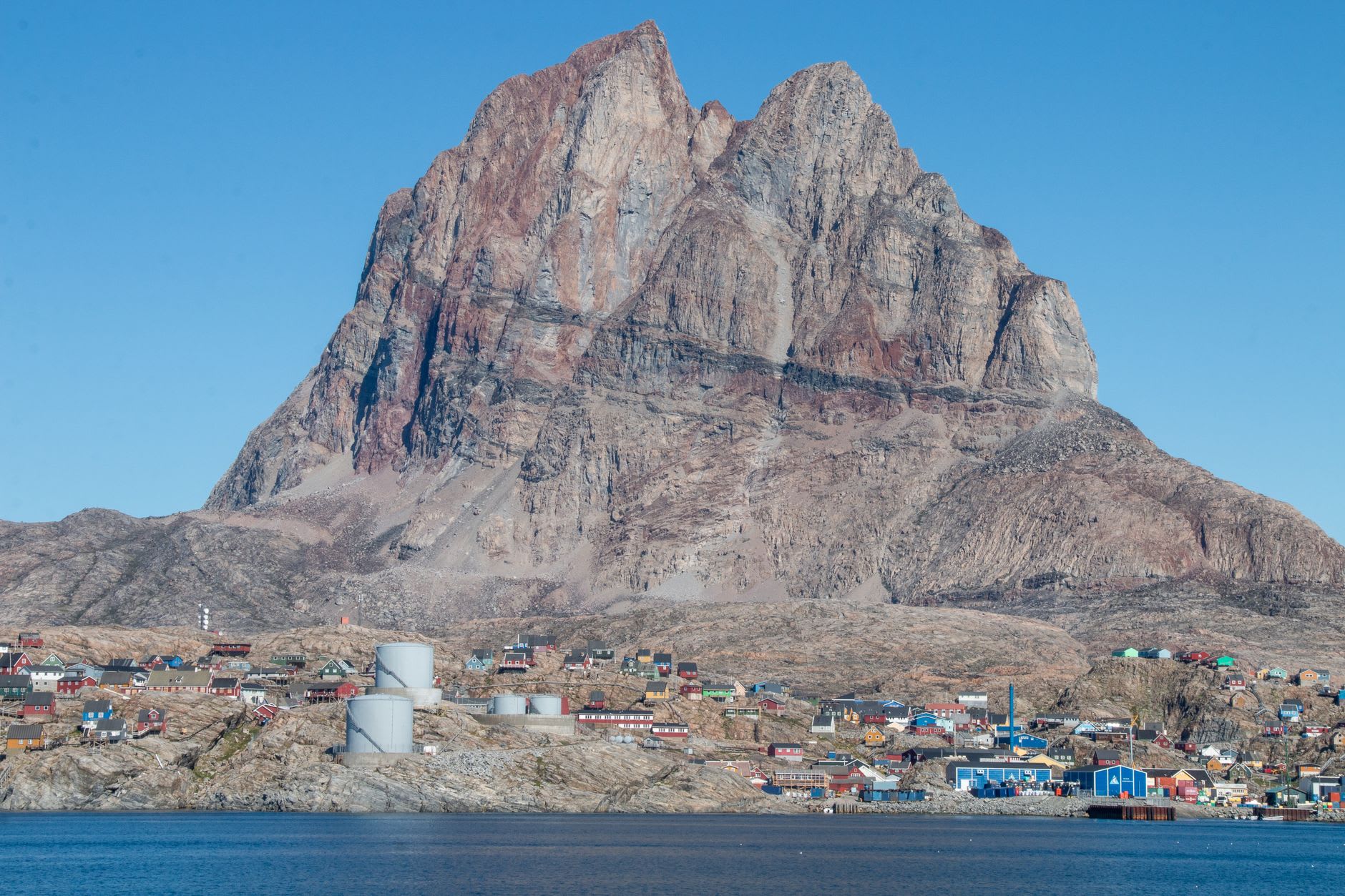
I flew into Uummannaq on a helicopter that seats six, and for fifteen minutes we flew north along a coastline I could not stop photographing through the scratched perspex window. Then the pilot banked and there it was: the island, less than a kilometre across, with its town of two hundred and fifty houses wedged into the flat ground at the base of a mountain of red gneiss rock that rises 1,170 metres directly from the water. The mountain is shaped, in profile, like a heart — Uummannaq means “place that resembles a heart” in Greenlandic — and from the air this is not a stretch of the imagination. It is a geographical fact. The helicopter settled onto the small pad at the edge of town, and I climbed out into wind that moved with real intention.
The town has a particular atmosphere among Greenlandic settlements. It is far enough north (70 degrees latitude) that the sun disappears in November and the sea ice in winter is reliable and thick, supporting dog sled travel not just in the surrounding fjords but out to the distant settlements on the mainland coast. The sled dogs are an economic fact here rather than a cultural performance — many families depend on them for winter transport and hunting. On the waterfront in February, I watched teams returning from multi-day trips across the frozen fjord system, the dogs lying down the moment they stopped, breath clouds rising, the drivers unloading meat from the sleds in the matter-of-fact way of people doing a job they have done many times.
The old stone church in the center of town — built in 1935 from local red stone, one of the oldest in North Greenland — is a place where the competing histories of Greenland compress into a small space. The Danish missionary architecture, the Greenlandic psalms sung in the local dialect, the hunting equipment stored in the entrance hall because this is also a practical community building. Next door, the museum holds the Qilakitsoq mummy display information alongside artifacts of the Thule culture, the ancestors of today’s Uummannaq residents. The juxtaposition is not comfortable and is not meant to be.
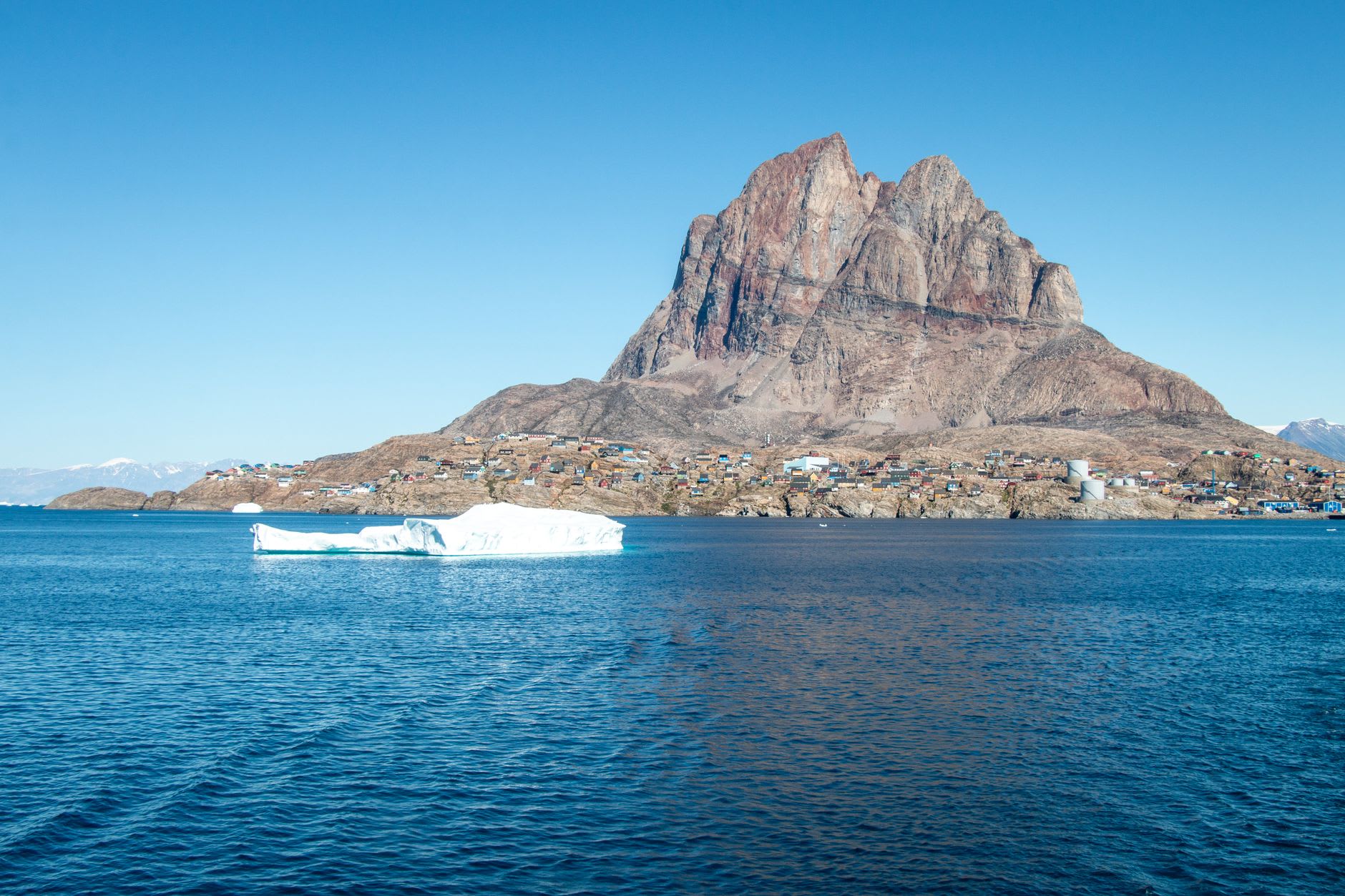
In summer, when the ice breaks and the fjord opens, the surrounding area transforms. Whale watching boats operate in the outer fjord where humpbacks and fin whales feed on the summer bloom. Kayakers paddle routes among icebergs that have calved from the Uummannaq glacier system. Hikers climb routes on the mainland coast where the views stretch south toward Disko Bay and north toward the Nuussuaq Peninsula. But what I keep returning to in memory is something simpler: standing outside the hotel after dinner, at midnight in July, in full daylight, watching the light on the mountain face turn from gold to amber while a child played on a bike in the road below and a sled dog team on the hill above us raised a collective howl at something I could not see. The mountain shaped like a heart, the town packed beneath it like an offering.
When to go: February and March for dog sledding on solid sea ice and extraordinary light on the red mountain faces. June and July for the midnight sun, whale watching, and kayaking among icebergs. The transition seasons (October, April) offer dramatic shifting conditions and fewer visitors. Book accommodation far in advance — Uummannaq has limited beds and demand outpaces supply during peak months.