Americas
Greenland
"The silence here is not empty — it has weight and colour."
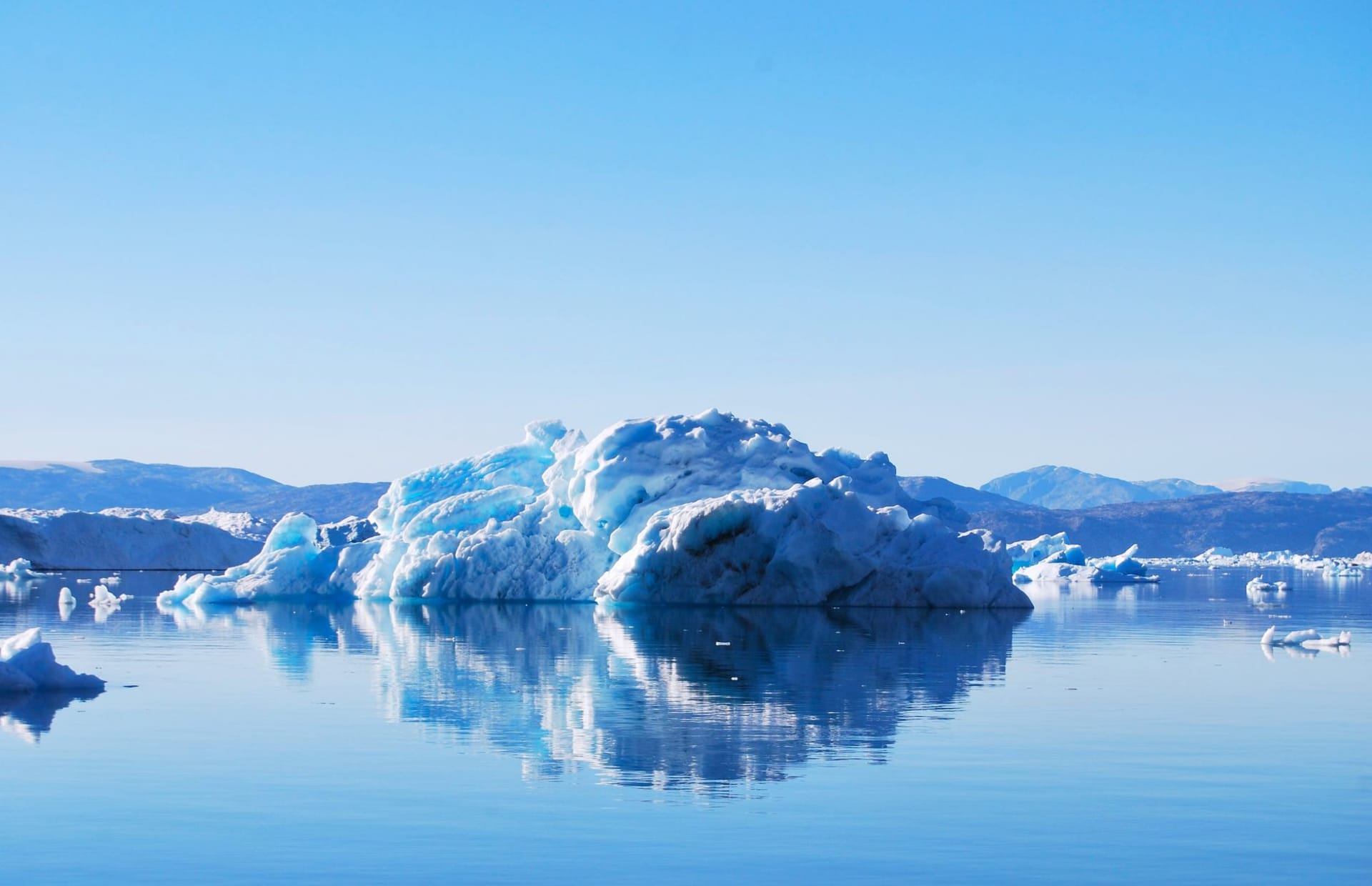
I arrived into Ilulissat on a late-July evening, and the first thing I did was walk to the edge of the Kangia icefjord and stand there for twenty minutes saying nothing. That is not something I do. I am the person who reads menus twice and narrates the journey from the back of the taxi. But the Ilulissat Icefjord has a way of editing you. It is a UNESCO site because of the sheer volume of ice calving from the Sermeq Kujalleq glacier — one of the fastest-moving glaciers on Earth — and what that means in practice is a floating graveyard of icebergs the size of apartment towers, some cobalt blue, some translucent white, grinding slowly out toward Disko Bay. The sound is low and constant: cracking, shifting, groaning. I had never heard a landscape before.
Greenland is not a destination you visit for comfort. There are no roads connecting its towns. You fly between settlements in tiny propeller planes or take the ferry in summer, and outside the towns there is essentially nothing — just ice, rock, Arctic fox, and the occasional fishing boat. The Greenlandic people, the Inuit, have lived here for roughly 4,500 years, and it shows in the food: suaasat, a traditional soup made from seal or reindeer with pearl barley, served in small restaurants where the windows fog up and everyone knows everyone. In Nuuk, the capital, I ate mattak — raw narwhal skin with a strip of blubber — at a community gathering. I will not pretend I enjoyed it, but I understood, in the way you occasionally do when traveling, that I was being let into something real.
The landscape shifts dramatically between west and east. The west coast, where most people go, has the fjords, the icebergs, the accessible hiking. The east — Tasiilaq, Tiniteqilaaq — is harder to reach and almost hallucinatory: jagged peaks rising straight from the water, icebergs grounded in every inlet, dog sledding villages where the pace of life follows the ice, not the calendar. I flew east on a clear day and watched Greenland from the air for two hours. There was nothing below but white.
When to go: June to August for hiking, boat trips among icebergs, and the midnight sun — July is peak season and genuinely warm on the west coast (15–20°C some days). March to April for dog sledding and northern lights on a stable snow base. Avoid November to February unless you have specific winter experience — the polar night and logistical complexity are not for casual travelers.
What most guides get wrong: They sell Greenland as an extreme adventure destination, which undersells it. Yes, you can hike the Arctic Circle Trail or kayak among icebergs — but the most affecting moments here are the quiet ones: sitting outside a supermarket in Ilulissat watching a fisherman unload halibut, or taking the ferry between two villages as a wall of fog rolls in off the Labrador Sea. Greenland is a place of scale and silence, and the adventure industry tends to fill both of those things with noise. Go slow. Sit with the ice.