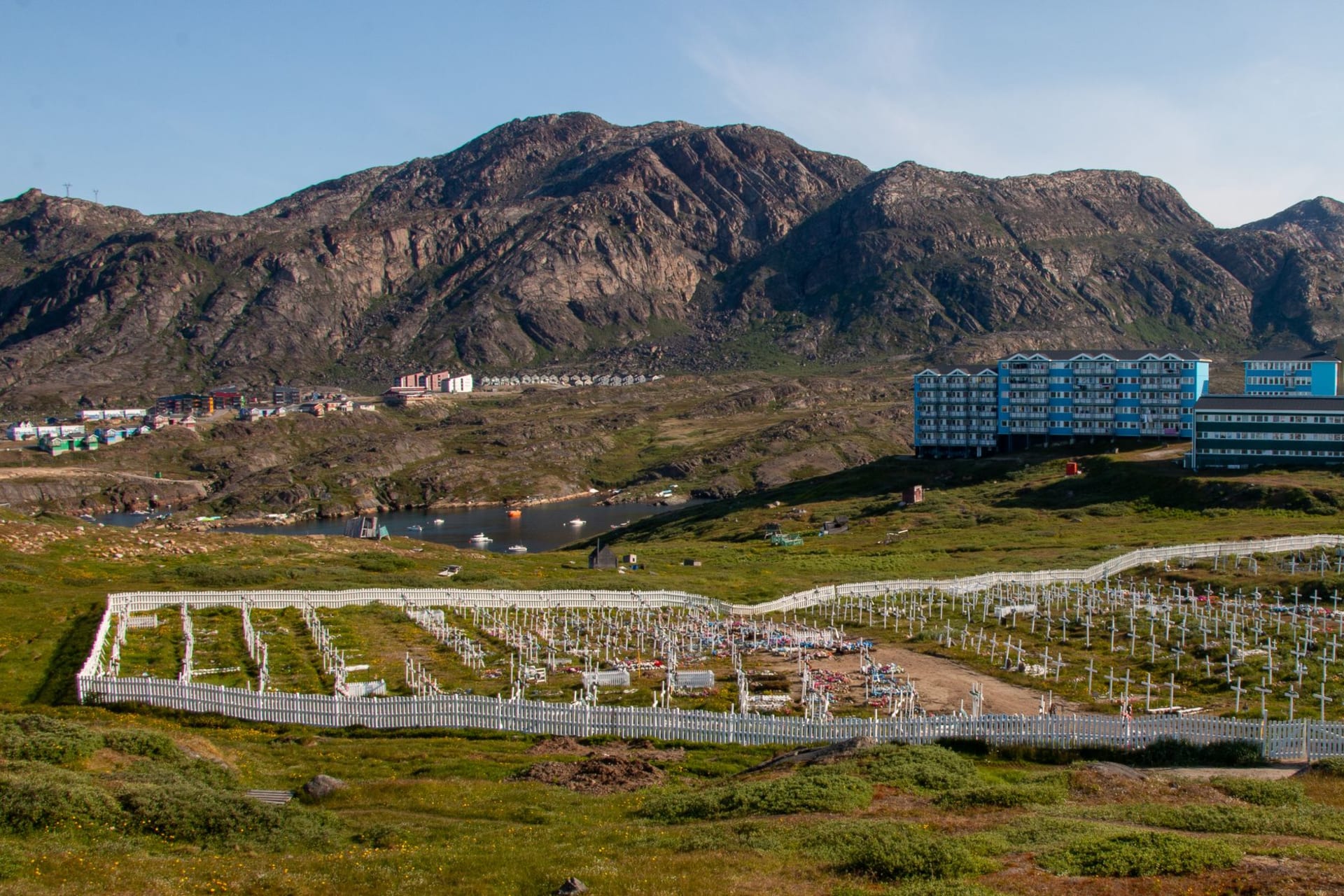
Sisimiut
"The sled dogs here are tied up six months and running the other six — the town has the same energy."
Sisimiut surprised me. I had booked it as a stopover on the way to something else, the way you do when a place has the reputation of being merely functional rather than remarkable. It is Greenland’s second-largest city, the northernmost ice-free port on the west coast, and it has a working harbor that actually works — fishing vessels, supply ships, the Arctic Umiaq ferry pulling in on its coastal route. I expected a transit town. What I found instead was a place that had developed a kind of northern confidence, an ease with itself that the more tourist-focused settlements sometimes lack.
The old town sits on a low hill above the harbor, a cluster of preserved Greenlandic and Danish colonial buildings that constitute one of the best-maintained historic quarters in the country. The Sisimiut Museum there is small but sharp — a good overview of Arctic habitation from the Saqqaq people forward, and a collection of artifacts that includes beautifully stitched traditional clothing made from seal and caribou skin. A few minutes walk from the museum, the hillside gives way to the modern town: the fish processing plant, the dog-sledding training ground, a football pitch where teenagers play in weather that would cancel most European sporting events. The sled dogs are kept on chains near the edge of town in summer, waiting. In winter they are put to work on the Kangerlussuaq marathon route, one of the world’s most extraordinary long-distance races, crossing the Arctic Circle Trail.

The Arctic Circle Trail begins — or ends — in Sisimiut, a 160-kilometre route across unmarked tundra and frozen lakes to Kangerlussuaq. In summer, hikers cache food in advance and walk for eight to ten days through landscape that sees no roads, no villages, no emergency services. I did not have time for the full trail, but I walked the first section west of town, up into the hills above the fjord, and spent an afternoon sitting on a ridge looking back at the harbor. The light at 68 degrees north in September has a horizontal quality I have only found in high latitudes — it hits everything from the side, making even ordinary rock faces look architectural. Below me, a fishing boat left a white wake across the dark water. Somewhere above the cloud layer, I knew the first northern lights of the season were forming. I could feel the season changing even as I sat there.

In town that evening, I ate at a restaurant near the harbor where the specialty was halibut cheeks — the dense, sweet flesh that gets discarded in commercial processing but saved here. They came simply pan-fried with a sauce of something acidic and local, maybe crowberries, and I ate every bite and considered ordering a second portion. The cook came out to ask how it was, and we talked for a while about the fishing, about the season. His Greenlandic was faster than my understanding, but his Danish filled the gaps, and his English filled in after that, and we managed well enough. This is how most conversations in Sisimiut go: layered, patient, ultimately generous. The town is used to visitors arriving with less than they expected and leaving with more.
When to go: September to March for northern lights — Sisimiut has some of the most reliable viewing on the west coast due to low light pollution. July and August for hiking the start of the Arctic Circle Trail and exploring the fjord by kayak. The sled dog races in late February and March draw enthusiasts from across Greenland and are worth planning around.