Disko Island
"Somewhere on this island, hot springs melt snow while icebergs float past — the geology here hasn't decided what it is."
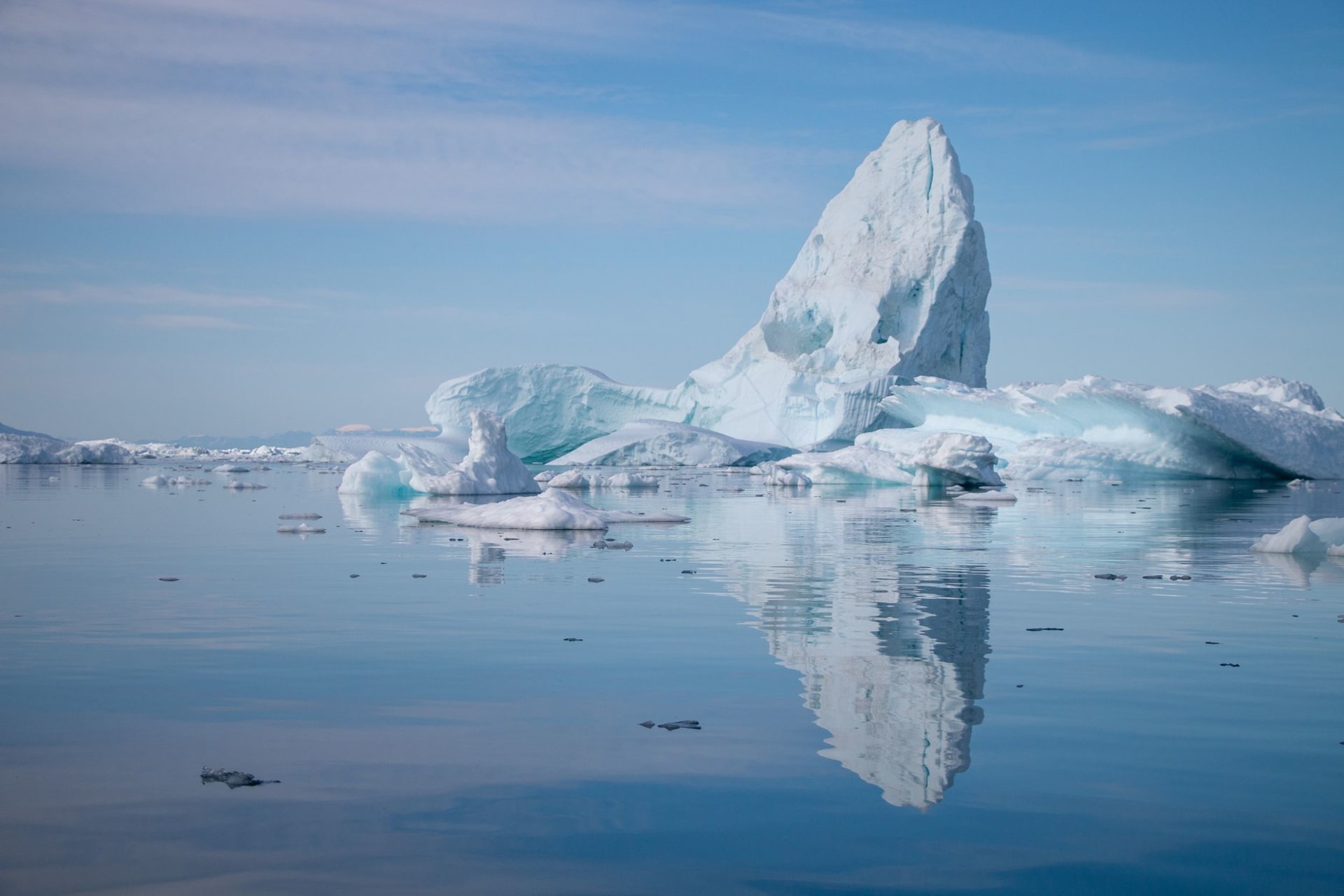
The ferry from Ilulissat takes four hours on a calm day, cutting across Disko Bay through floating ice. I stood on deck the whole time in a borrowed jacket, watching the icebergs change size as we moved among them. The captain slowed occasionally to thread a narrow channel between walls of blue-white ice, and then we would emerge into open water again and I would realize I’d been holding my breath. By the time Disko Island appeared on the horizon — a massive dark shape, its basalt peaks trailing low cloud — I had the impression of arriving somewhere that the usual Greenlandic rules did not fully apply.
Disko is geologically unlike anything else on the Greenlandic coastline. Most of the island is volcanic basalt, dark and columnar, forming cliffs that drop several hundred metres into the bay. The island sits on a geothermal zone and has hot springs near the settlement of Qeqertarsuaq, the island’s only town, where water bubbles up at temperatures warm enough to melt snow in November. Walking from the town center to the springs takes twenty minutes through tundra that transitions from permafrost to warm, moss-covered ground, and the contrast is absurd enough to feel like a stage set. Arctic flowers grow in the thermal zones that would not survive a hundred metres away. I saw a raven perching on a steaming rock and understood why the Norse thought these birds carried messages between worlds.

Qeqertarsuaq — population around 800 — is the closest thing Disko Island has to a main settlement, a small town with one hotel, one supermarket, and the Arctic Station, a research facility run by the University of Copenhagen that has been sending scientists to study the island’s peculiar ecology since 1906. The station is not a tourist attraction per se, but the researchers are often willing to talk, and some lead informal walks that are worth more than most guided experiences on the island. A marine biologist I met at the station’s dinner table explained the significance of the Disko Bay ecosystem — the concentration of nutrients, the whale feeding grounds, the reason the bay produces some of the most biodiverse Arctic waters in the world. She had been coming here for fourteen years. She still found it surprising.

Above the town, the plateau unfolds into tundra hikes that take you into the island’s interior. Musk oxen move in small groups across the high ground, their shaggy coats so dense they look painted rather than alive. I followed a trail that the station researcher had sketched on my map, up through dwarf birch scrub and then onto open rock, and spent three hours on a plateau from which the entire eastern coast of Disko Island was visible: black cliffs, white icebergs, the mainland twenty kilometers away with its own permanent ice sheet beginning just behind the mountains. The view contained everything Greenland is, concentrated and legible from a single vantage point. I ate my packed lunch with the wind in my face and did not once think about anything that was not immediately in front of me.
When to go: June and July for Arctic flowers, migratory birds, and boat trips among the icebergs of Disko Bay. August brings calmer seas and whale watching. September and October are quiet but beautiful, with low light on the basalt cliffs. The hot springs can be visited year-round but are most dramatic in winter when the surrounding snow makes the thermal zone look stranger still.