
Apostle Islands
"Inside the sea cave, the water was so green and so still I forgot for a moment there was an entire lake outside."
The Apostle Islands are reached by ferry from Bayfield, a small Wisconsin town perched on a hillside above Lake Superior like it knows exactly how good the view is. I was on the water by eight in the morning, the temperature still in the low fifties despite the calendar saying July, and the lake was doing that thing it does — moving in long, slow swells that don’t feel threatening until they start stacking. The kayak guide kept us close to the sandstone cliffs, which rose amber and ochre from the water, worn by centuries of ice and wave into shapes that looked carved rather than eroded. Then we rounded a point and the cave mouth opened in front of us: a low arch of dark rock leading into a chamber where the water turned the particular shade of green you usually only see in photographs of Iceland.
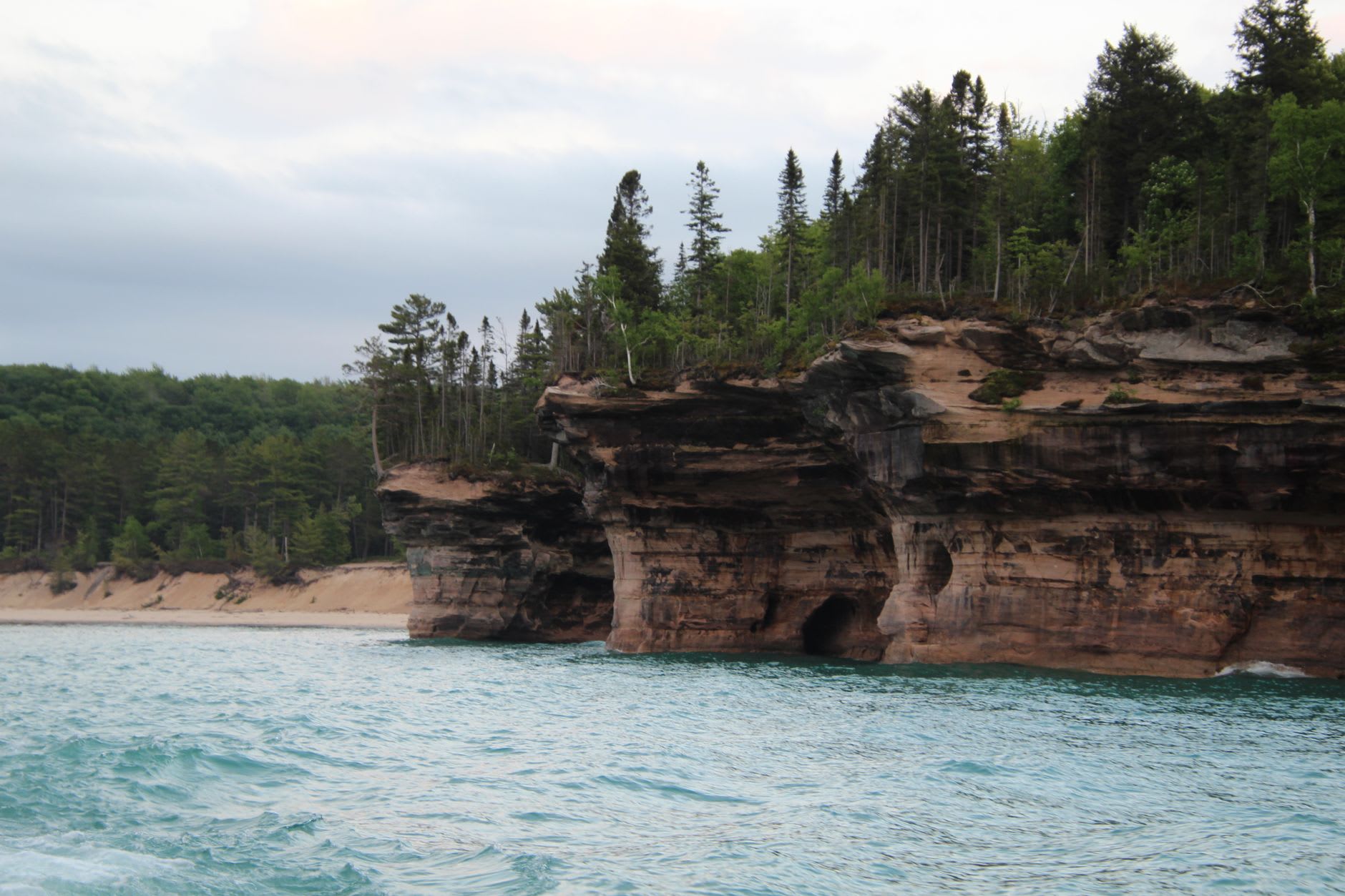
Inside, the sound changed completely. The lap of water against stone, amplified and redirected by the curve of the cave, became something reverberant and strange. The light coming through the arch painted the ceiling in gradients of amber and green. We sat in the kayaks for a long time without speaking, which is not something I do easily — but the cave seemed to require it. There are twenty-two islands in the archipelago, each with its own character: some forested and remote, home to black bears and nesting eagles; others with old lighthouses staffed by keepers who lived through Superior winters that killed ships. The lighthouses are all automated now, but several have been preserved, and in summer you can camp on the islands and fall asleep to nothing but Superior’s low, constant sound against the rock.
In winter, when the lake freezes and conditions cooperate, the caves become ice caves — the walls sheeted in blue and white, the arches transformed into frozen waterfalls, the cave floors covered in ice so clear you can see the sand beneath. Rangers open the ice cave trail in February in good years, and when they do, thousands of people hike the frozen lakeshore to reach them. I went in a mild year when conditions didn’t quite cooperate and stood on the shore watching ice chunks the size of cars grind against each other in the cold, which felt like enough of a spectacle on its own. The ice cave years, when they do open — maybe two or three times in a decade — are by all accounts something that recalibrates your sense of what water is capable of becoming.
When to go: July through September for kayak sea cave tours; book weeks in advance in summer, as the outfitters in Bayfield fill up quickly. The ice caves open on average two or three years out of five in February — check the National Park Service’s Apostle Islands conditions line. Spring (May–June) offers the park nearly empty but the water remains extremely cold.