Whitsunday Islands
"Whitehaven Beach is the one place I have ever stood where the ground itself looked unreal."
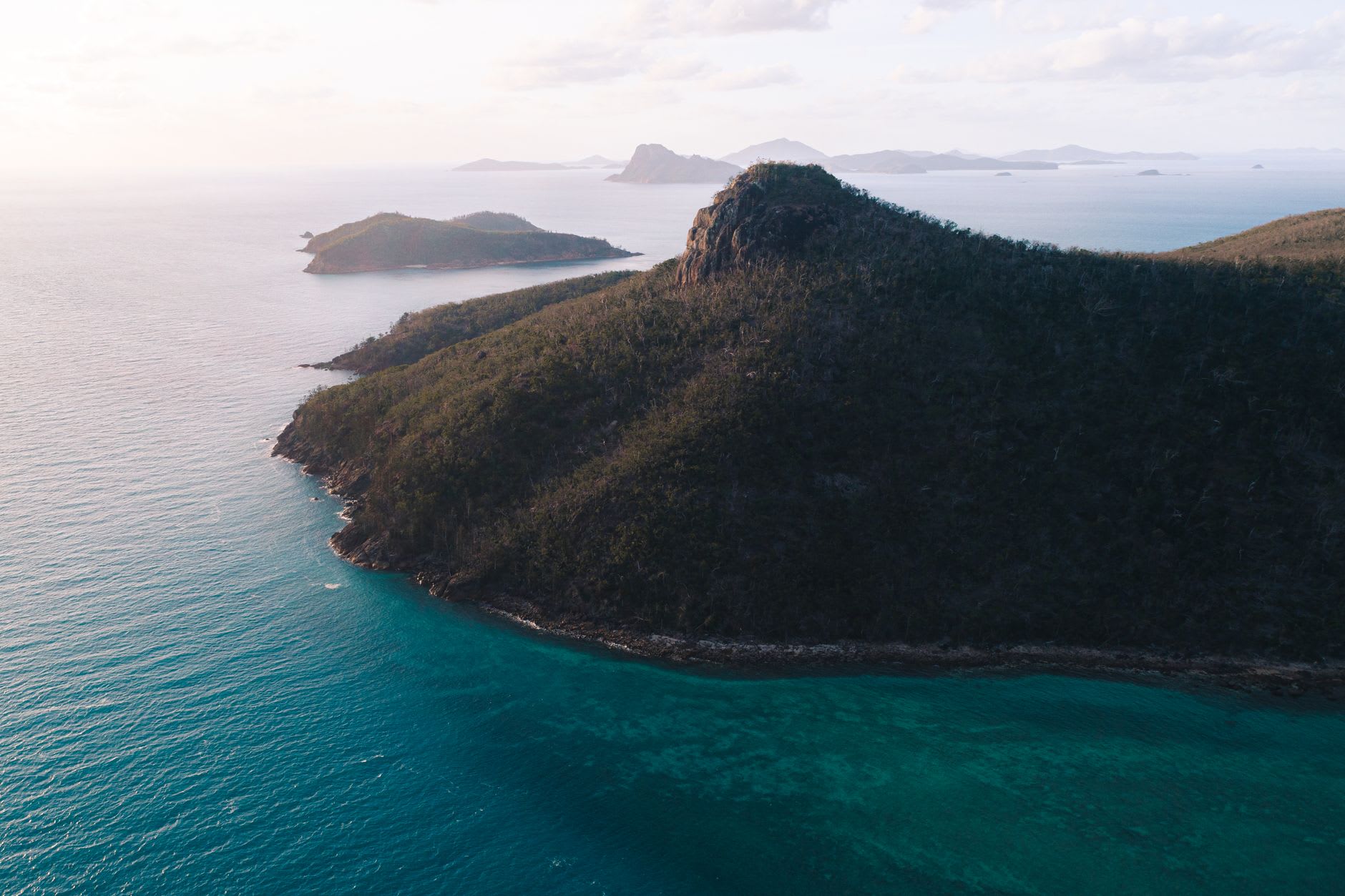
The catamaran out of Airlie Beach clears the headland and suddenly the Whitsundays open up: forty islands in close proximity, their forested ridges stacked behind each other in receding shades of blue-green, the water between them shifting from jade to cobalt depending on depth and cloud cover. I had been in Queensland for almost two weeks at this point and thought I had adjusted my expectations accordingly, but this particular view — the first full sight of the islands from the water — still made me stop what I was doing and just look. There is a compositional rightness to these islands, the way they cluster and separate in a pattern that feels deliberate, as if the Coral Sea arranged them with some aesthetic intention in mind.
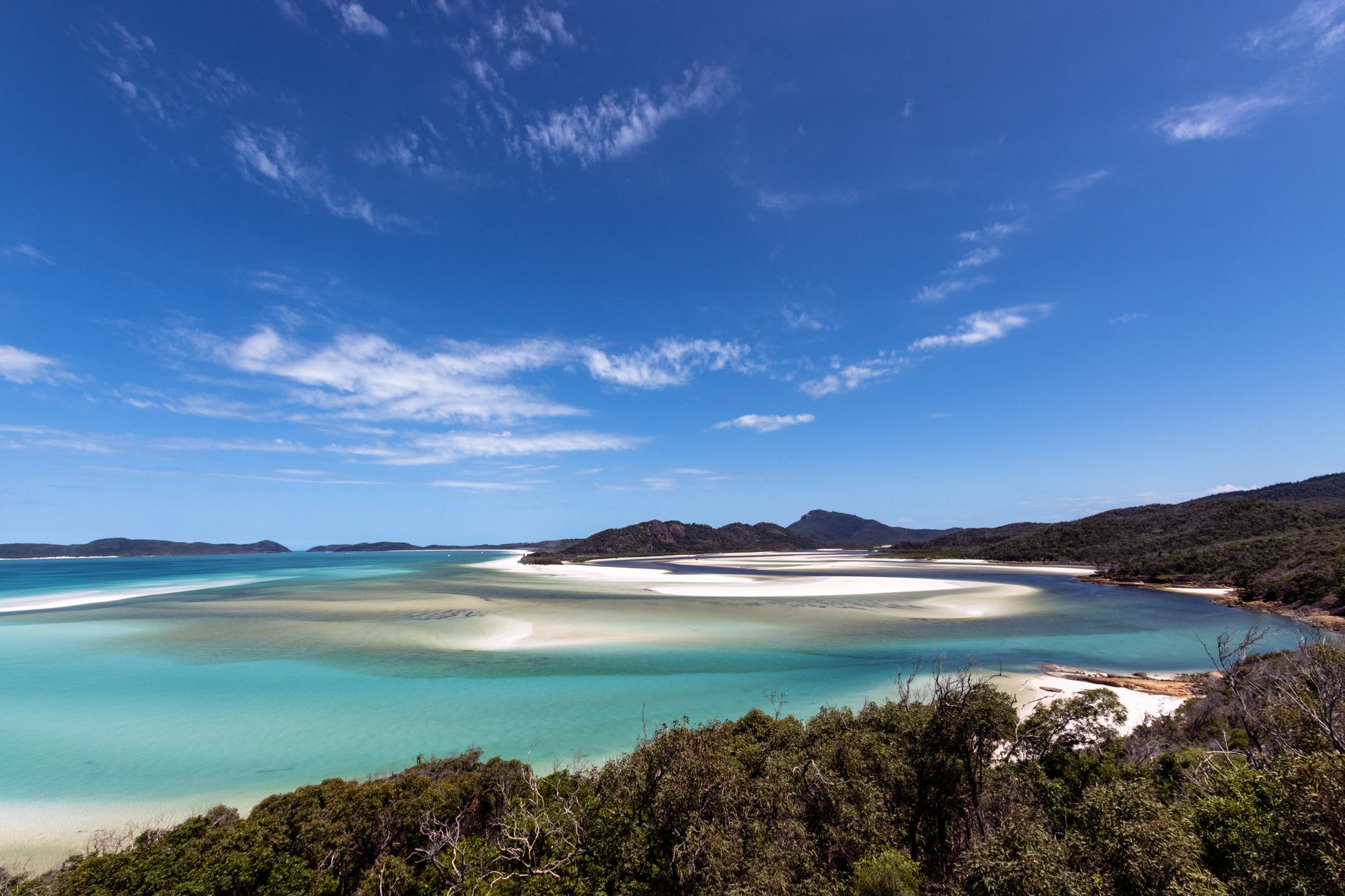
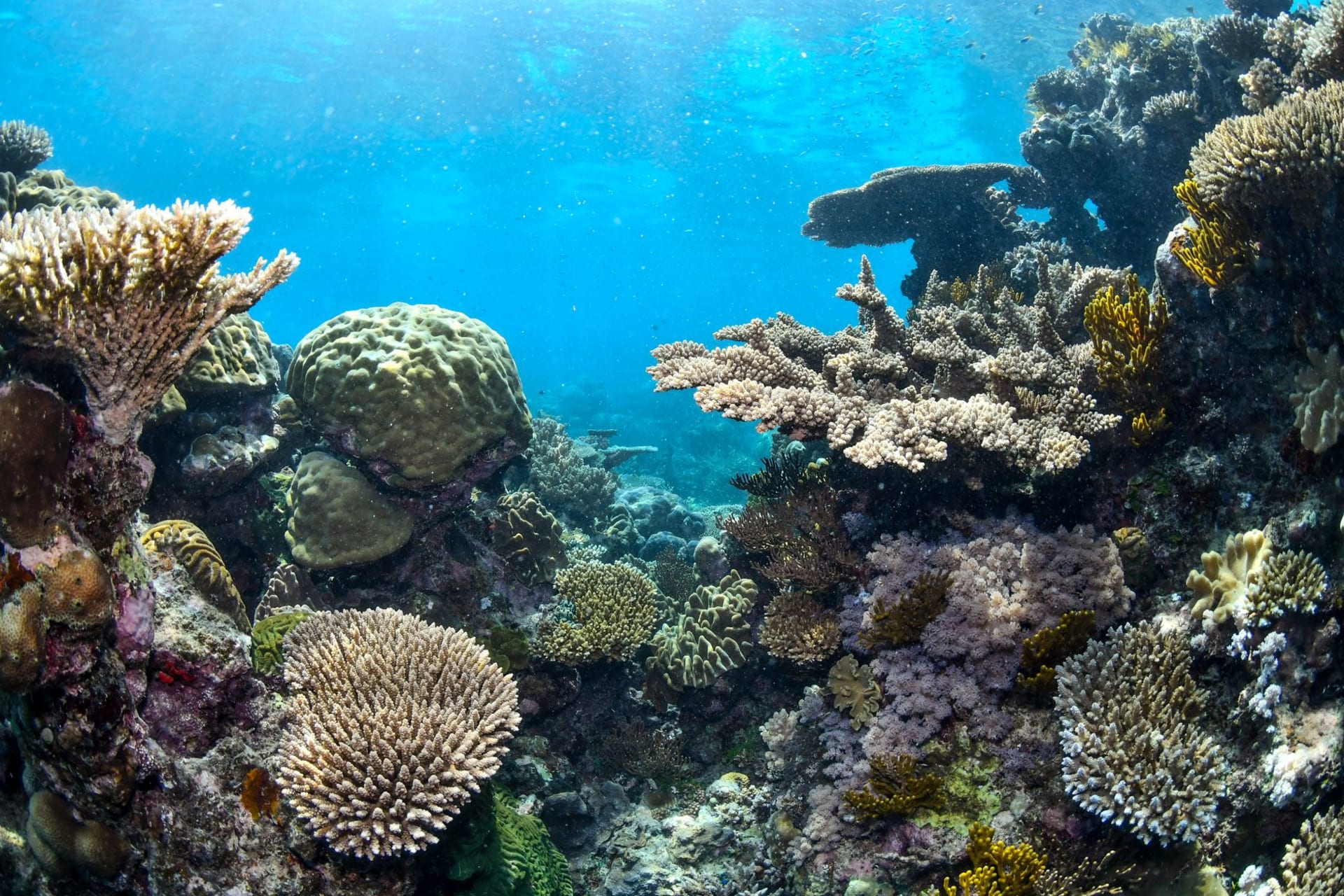
The Whitsundays are not the outer reef. There is no Cod Hole here, no wall of staghorn dropping into deep blue, no parrotfish the size of your torso. What the Whitsundays have instead is a different kind of intensity: the fringing reefs of the islands themselves, accessible by snorkel in water so clear you can read the depth by colour alone, and Whitehaven Beach, which occupies its own category of experience entirely. The silica sand at Whitehaven is 98 per cent pure — a figure that sounds technical until you stand on it and notice that it does not heat up, even at midday in the tropics, and that it squeaks faintly underfoot like fresh snow. From the Hill Inlet lookout you see what the drone shots in every Queensland tourism campaign are trying to capture: the tidal swirl of the inlet mixing white sand with turquoise water in patterns that look like marbled paper, constantly shifting. I watched it for twenty minutes and the pattern never repeated.
Sailing is the proper mode here. The bareboat charter companies based in Airlie Beach will rent you a catamaran if you have a certificate, or you can crew on one of the skippered vessels that depart daily. Either way, the experience of sleeping at anchor in a bay between two uninhabited islands, waking to the water perfectly still at five in the morning, and being in the snorkel before anyone else is awake — that is the thing. The fish populations around the fringing reefs are dense and varied: clownfish in anemones, reef sharks doing slow circles in the sandy shallows, the occasional eagle ray banking through the blue like a page turning.
Airlie Beach, the mainland base for everything Whitsunday, is a slightly chaotic strip of backpacker bars and tour operators that you pass through quickly. The town has enthusiasm in its favour and not much else. Spend your time on the water. The bay at Cid Harbour on Whitsunday Island, the snorkelling at Blue Pearl Bay on Hayman, the sheltered anchorage at Nara Inlet where the walls of the fjord-like channel rise steep on both sides — these are the experiences that accumulate into something you will describe badly to people who were not there, which is the surest sign it was worth doing.
When to go: June through August is ideal sailing weather — steady southeast trade winds, low humidity, reliable visibility. September and October are also excellent and slightly less crowded. Cyclone season runs December through April; the reef doesn’t disappear but conditions can be volatile and some operators suspend charters entirely. May is a good shoulder month with warm water and reasonable prices.