Oceania
Great Barrier Reef
"Nothing I had read, seen, or imagined prepared me for the actual colour."
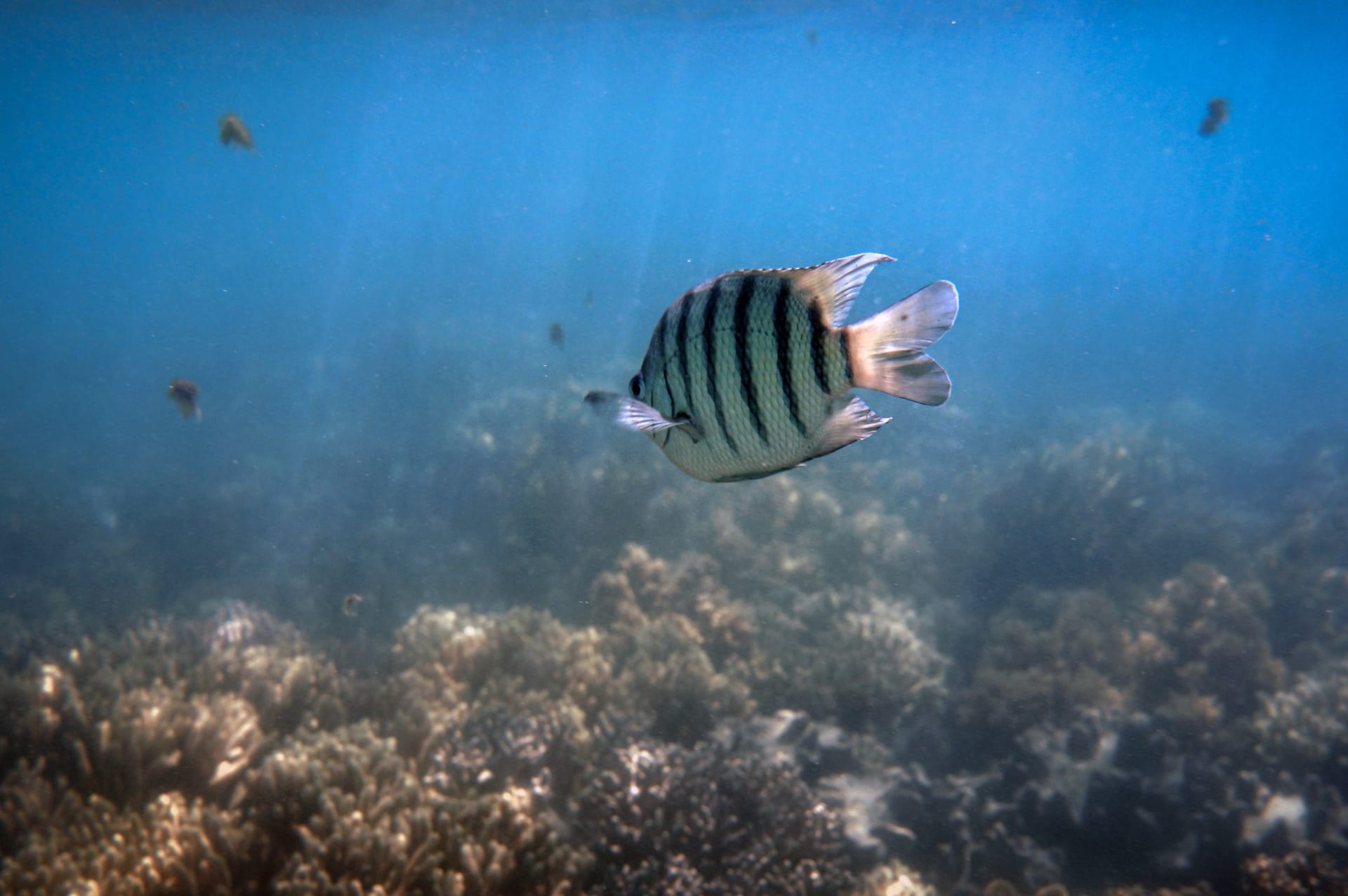
The first time you put your mask under the water at the outer reef, your brain does something unusual — it refuses, briefly, to process what it is seeing. Not because it is overwhelming in an emotional sense, though it is that too, but because the colour saturation is so far beyond what you have ever encountered outside of a screen that your visual system requires a moment to recalibrate. Electric blue parrotfish the size of your torso. Staghorn coral spreading in formations that look like they were designed by someone who had never encountered the concept of restraint. Schools of fish so dense they move like a single organism, parting around you with an indifference that is somehow more humbling than hostility. I spent ten minutes floating above a bommie — a coral pinnacle rising from the sand — doing nothing at all, which is not something I do easily.
The Great Barrier Reef is not one place. It is a system of 2,900 individual reefs and 900 islands stretching from the tip of Cape York down to the Whitsundays, and the experience of it varies enormously depending on where you enter. The tourist platforms off Cairns — the big pontoons accessible by day boat — are fine for a first look but represent about one percent of what is here. The outer ribbon reefs, accessible only by liveaboard, are a different proposition entirely. Three days aboard a small dive vessel anchored over Cod Hole or Osprey Reef in the Coral Sea will rearrange your sense of what the ocean is. I am not a diver — I did everything on snorkel — and it was still the most intense marine experience of my life. The liveaboard from Cairns out to the Ribbon Reefs takes about five hours of open-ocean crossing, and if you are prone to seasickness, bring medication you trust.
The Whitsundays offer a different angle: more about sailing between islands, the blinding white silica sand of Whitehaven Beach, and snorkelling fringing reefs in water the colour of a swimming pool advertisement. It is less biologically dense than the outer reef but more immediately beautiful in a landscape sense — the kind of turquoise-and-white composition that makes you understand why Queensland gets called paradise in the brochures. Both are worth your time. They are not interchangeable.
When to go: June through October is the dry season in tropical Queensland — lower humidity, no stingers in the water (the box jellyfish that make swimming dangerous appear from November to May), and visibility in the water that can reach thirty metres. This is prime time, and it shows in the prices. May and November are the shoulder months — still manageable, cheaper, and less crowded. Avoid the wet season if you can; not because the reef disappears but because the heat and rain make the logistics genuinely unpleasant.
What most guides get wrong: They spend too long on the bleaching narrative without telling you what is actually still there. The reef has suffered — genuinely, seriously, and the science is unambiguous about why. But large sections of the outer reef, particularly in the north and the Coral Sea atolls, remain in extraordinary condition. Going with a specific expectation of devastation means you will either miss what is still alive and spectacular, or feel vaguely cheated. Go with open eyes in both directions. The reef deserves honest witness, not a predetermined story.