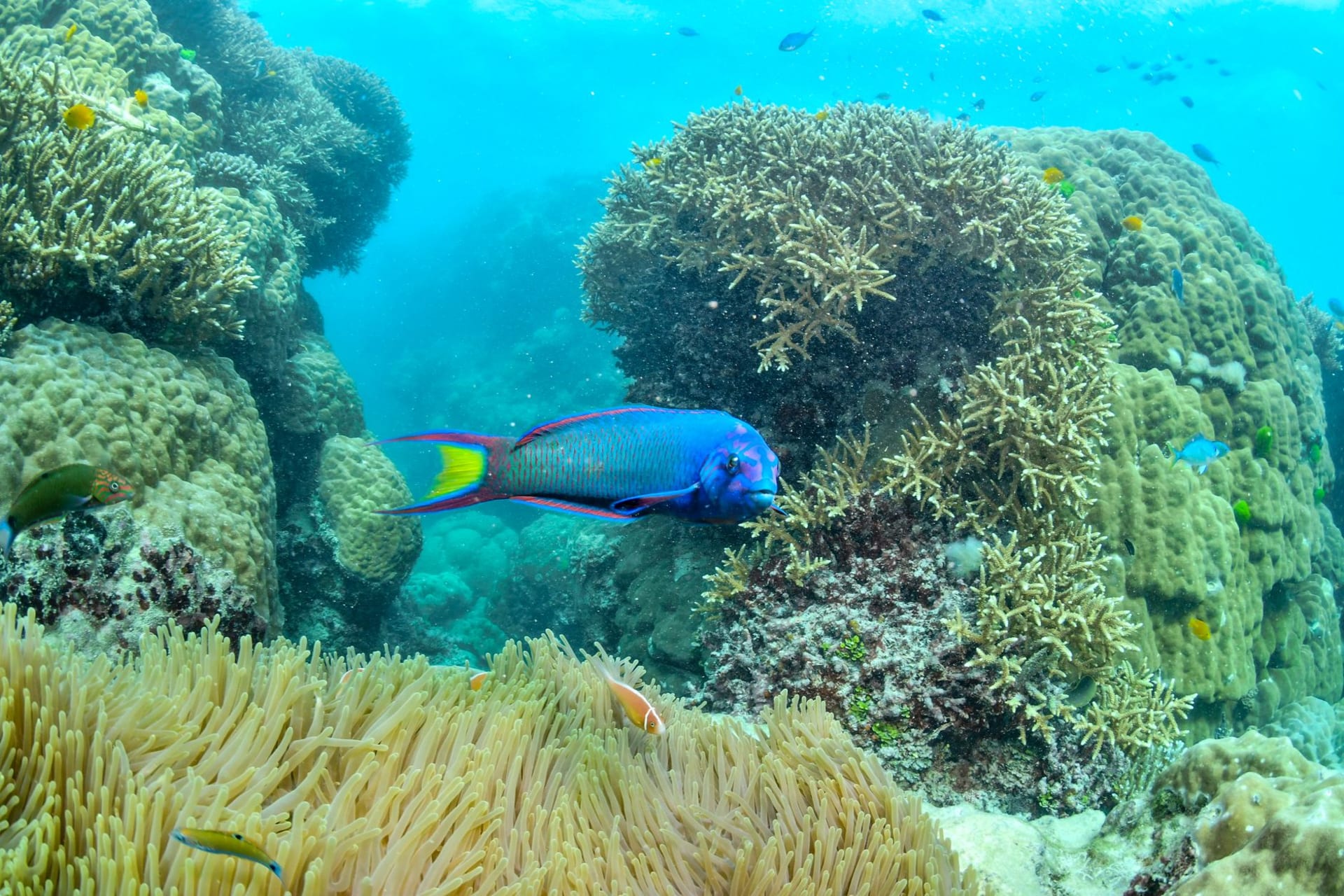
Heron Island
"At low tide you walk on the reef itself, and the world contracts to coral and rock pools and the sound of small water."
The catamaran from Gladstone takes two hours and lands you on an island that measures roughly eight hundred metres by three hundred metres. Heron Island is small enough that you can walk its perimeter in twenty minutes, small enough that the research station — a University of Queensland facility that has operated here for decades — occupies a meaningful proportion of its surface area, small enough that the birds nesting in the pisonia trees represent a population that rivals the human one. On the first evening a buff-banded rail walked across my feet while I was watching the sunset and neither of us made a sound about it.
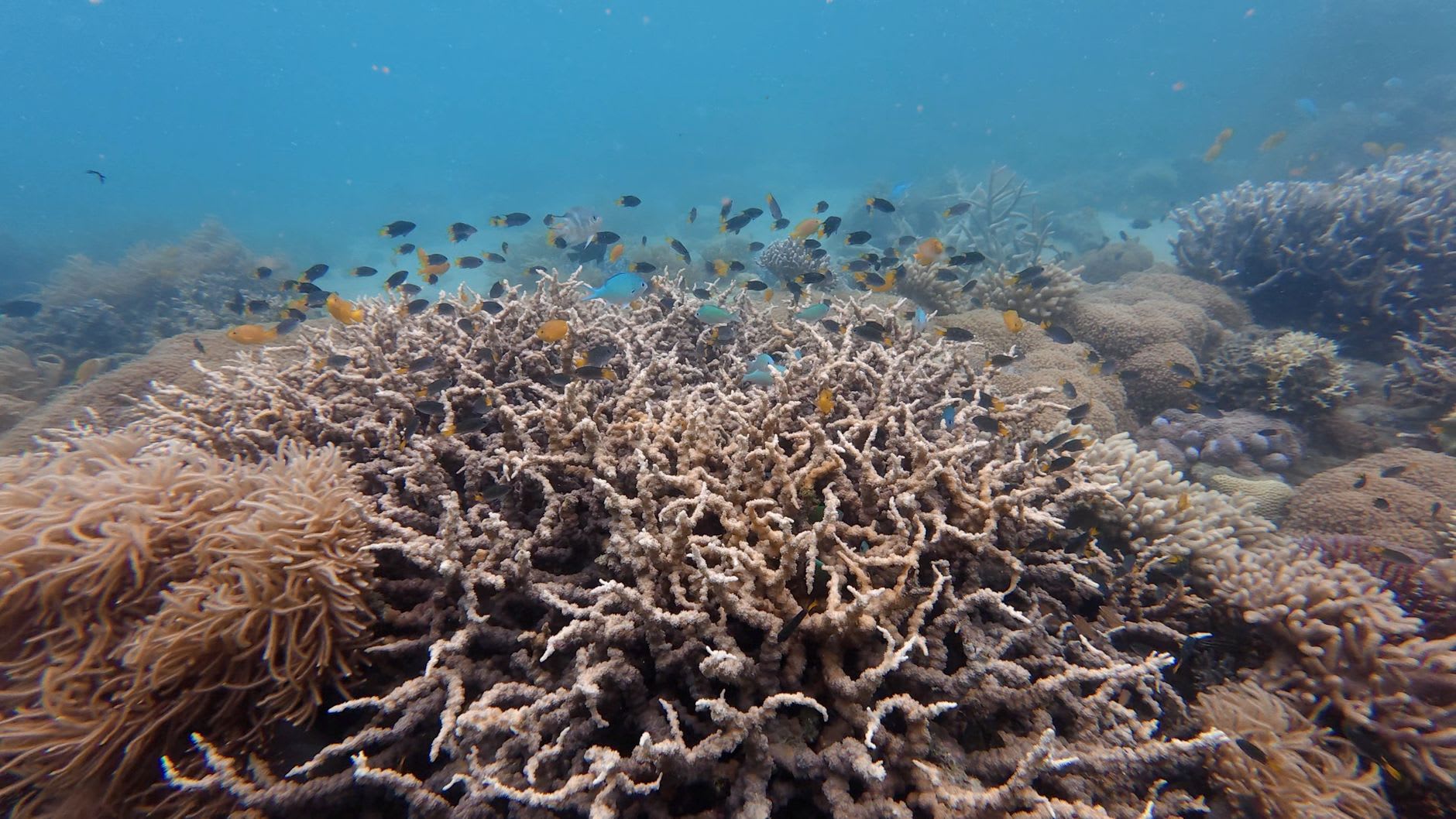
The thing about Heron Island that makes it different from every other reef destination I visited is the directness of the access. There is no ferry to a pontoon, no snorkel trail that ends at a roped-off area, no transfer to a different boat. You walk from your room to the beach and into the water and within thirty metres you are on the reef. At low tide the reef flat is exposed and you walk on it — carefully, on the dead coral, not on the living structure — among the rock pools and the starfish and the small animals going about their tidal business. A moray eel occupied a crevice two steps from the shore and watched me with the aggressive indifference that morays perfect. I watched it back for a while. It declined to clarify what it was thinking.
The reef flat descends into the snorkel zone, which descends into deeper channels, and the whole system is extraordinarily intact. The research station’s long presence here has meant the reef around Heron has been monitored continuously for decades — it has experienced bleaching events and recovered, and the current state of the coral is, by the standards of the modern reef, remarkably good. Hawksbill and green turtles are everywhere: in the water, resting on the bottom, surfacing for air with a patience that makes human swimming look anxious by comparison. During nesting season — November through March — the loggerhead turtles come ashore at night. The resort runs guided nesting tours, which means walking the beach in the dark, torch off, and watching a creature that has existed since before the dinosaurs calmly excavate a nest in the sand and deposit a hundred eggs as if this is the most ordinary thing in the world. It is, for her. That is the point.
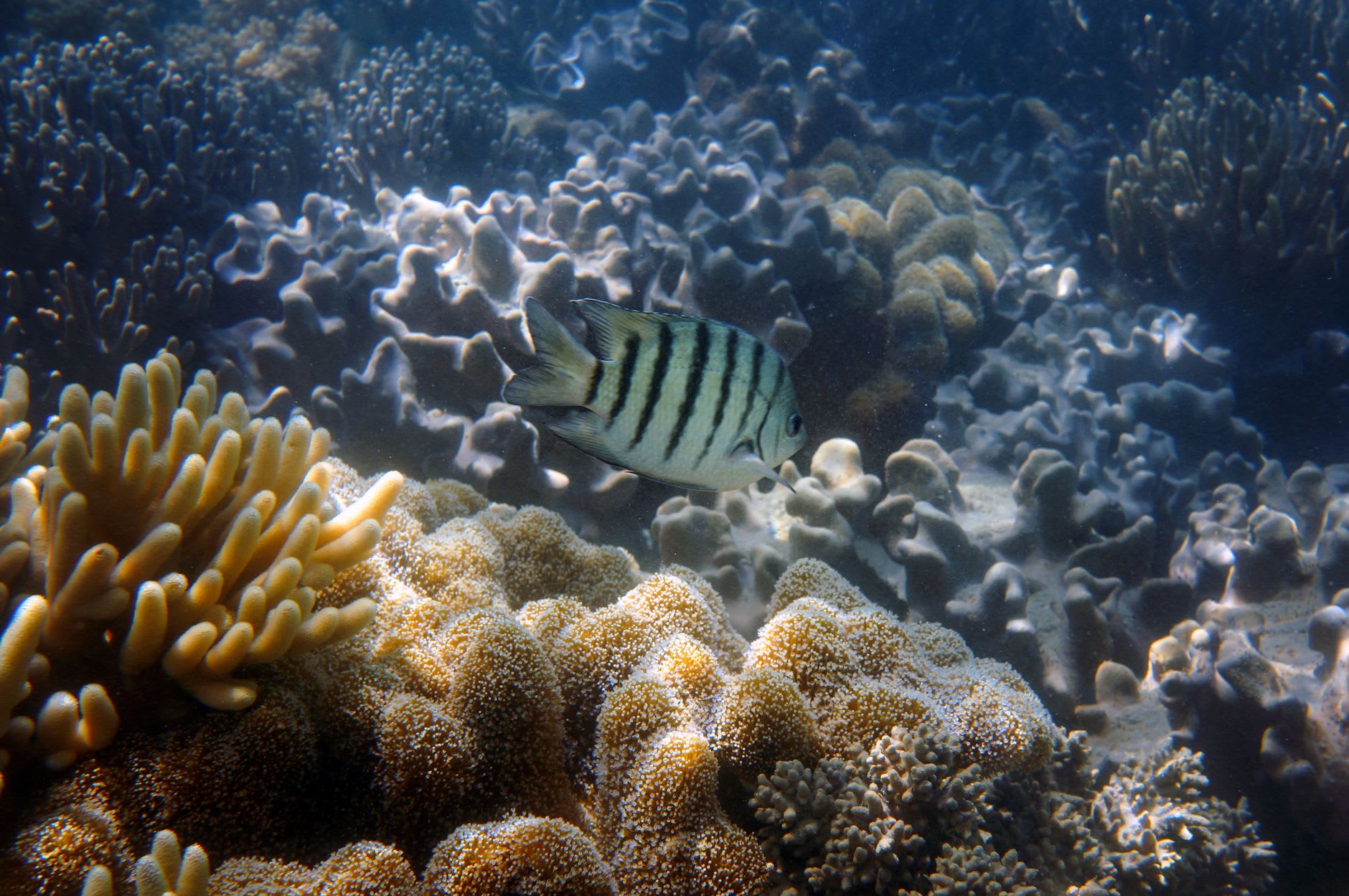
The research station atmosphere gives Heron Island a particular character. At breakfast you might sit near a marine biologist who has been underwater since five in the morning measuring coral growth rates. The station occasionally offers short educational sessions that guests can attend. The resort is not cheap but it is, deliberately, not a luxury retreat either — it is a functional, comfortable base for people who have come specifically to be in the water and around the reef. The guests who are here by mistake, expecting Whitsundays-style glamour, look slightly confused by the second day. The ones who came for the right reason look, by the second day, like they are trying to figure out how to extend their booking.
When to go: October through January is turtle nesting season — extraordinary if that is your primary interest. May through September offers the clearest water and most comfortable temperatures. Manta rays are present from June to October. March and April can be rough with cyclone-adjacent weather; the catamaran from Gladstone can be suspended in poor conditions. The island books out months in advance for turtle nesting months — plan well ahead.