Fitzroy Island
"The turtle had a missing flipper and was swimming in determined circles, and I could not stop watching."
The ferry from Cairns takes forty-five minutes and deposits you at a small jetty on Welcome Bay. The water at the jetty is so clear you can count the fish from the dock — sergeant majors in their striped jackets, parrotfish chewing at the coral ballast, a small reef shark making a slow circuit under the pier with the patience of something that has nowhere else to be. You step off the ferry into that specific tropics combination of salt air and rainforest — the green vegetable smell of the trees mixing with the tang of the ocean — and the Cairns tourist strip immediately feels a very long way away, which is not a small achievement for twenty-six kilometres.

Fitzroy Island is a continental island — granite and rainforest all the way down, unlike the coral cays further offshore. National park covers most of it. The trails through the interior are dense and humid, the canopy close overhead, and the birds are loud and invisible in the usual rainforest way, always present and never quite where you are looking. The Lighthouse Trail climbs to the old lighthouse on the northern headland and on a clear day you can see the outer reef from the top, a pale shimmer on the horizon that does not look real.
The Cairns Turtle Rehabilitation Centre, operated by Fitzroy Island Resort, is one of the more unexpectedly moving things I encountered in Queensland. Sea turtles that have been injured — by boat strike, by ingested plastic, by fishing gear — are brought here to recover. On the day I visited there were eleven animals in the tanks: a hawksbill with a damaged shell from a propeller strike, two green turtles rehabilitating from fibropapillomatosis, a loggerhead that had lost a flipper and had compensated by swimming in a focused, determined spiral that was heartbreaking and somehow also impressively purposeful. The staff member who showed me around talked about each animal by name with a matter-of-fact affection. The success rate, she said, is high. Most of them go back.

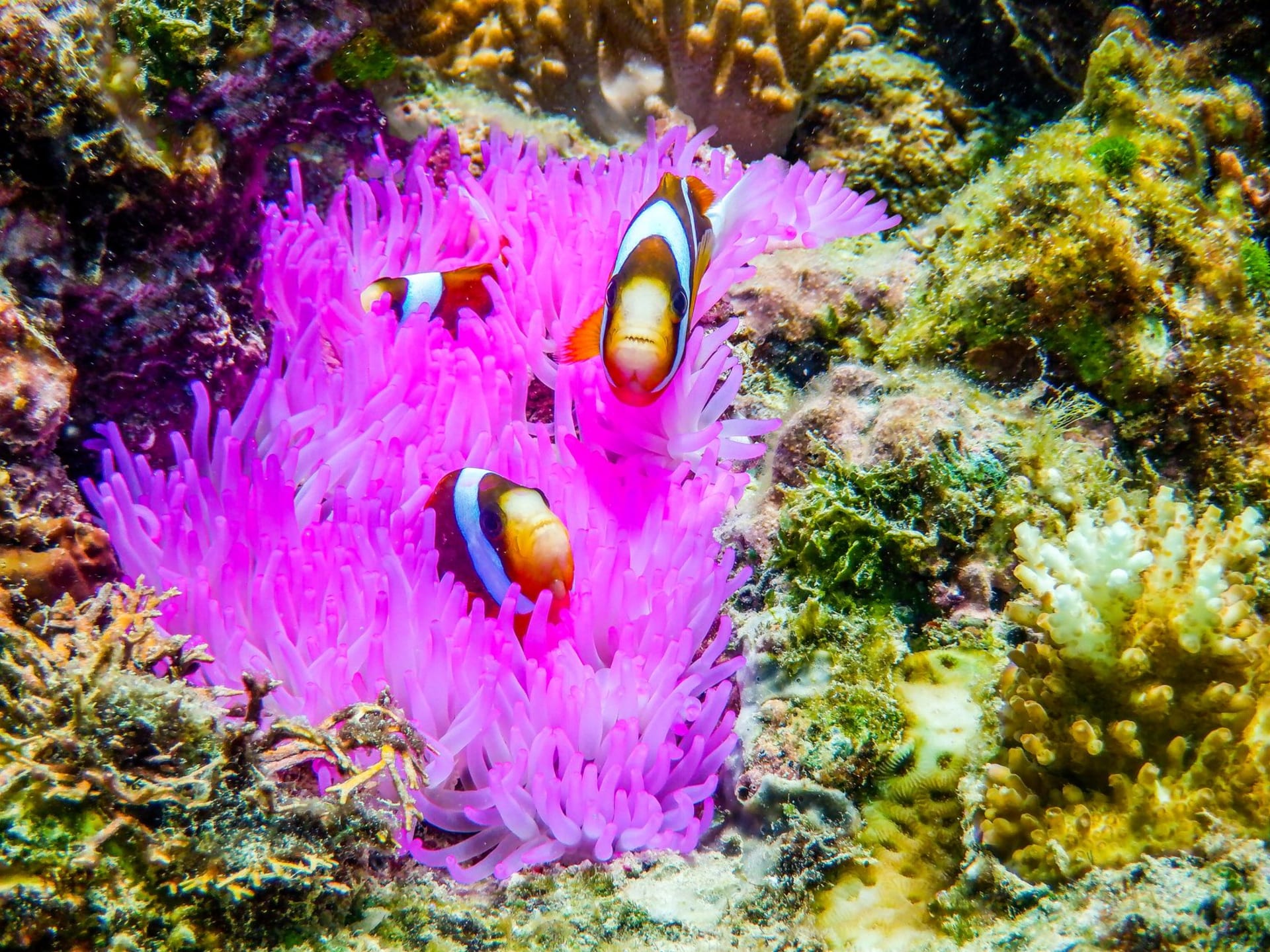
The snorkelling off Welcome Bay is accessible rather than spectacular — the fringing reef here has been impacted by the proximity to Cairns and the high visitor numbers, and the visibility can cloud up later in the day with boat traffic. Go in early, before the day-tripper rush from Cairns arrives, and you will find reasonable coral and decent fish populations among the rubble. The resort rents gear and the snorkel trail is marked. For better underwater experience, book a boat trip to the outer reef while staying on Fitzroy overnight — the combination works well. You get the accessibility of the island and the intensity of the outer reef, without giving up either.
When to go: April through November avoids the worst of the stinger season and offers the clearest water. June through September is dry season — ideal. Fitzroy is a genuine day-trip option year-round since the ferry from Cairns runs daily regardless of season, though in the wet season (December to March) afternoon rain is reliable and snorkelling visibility can be reduced. Staying overnight rather than day-tripping changes the experience significantly — the island after the last ferry leaves is a different, quieter place.