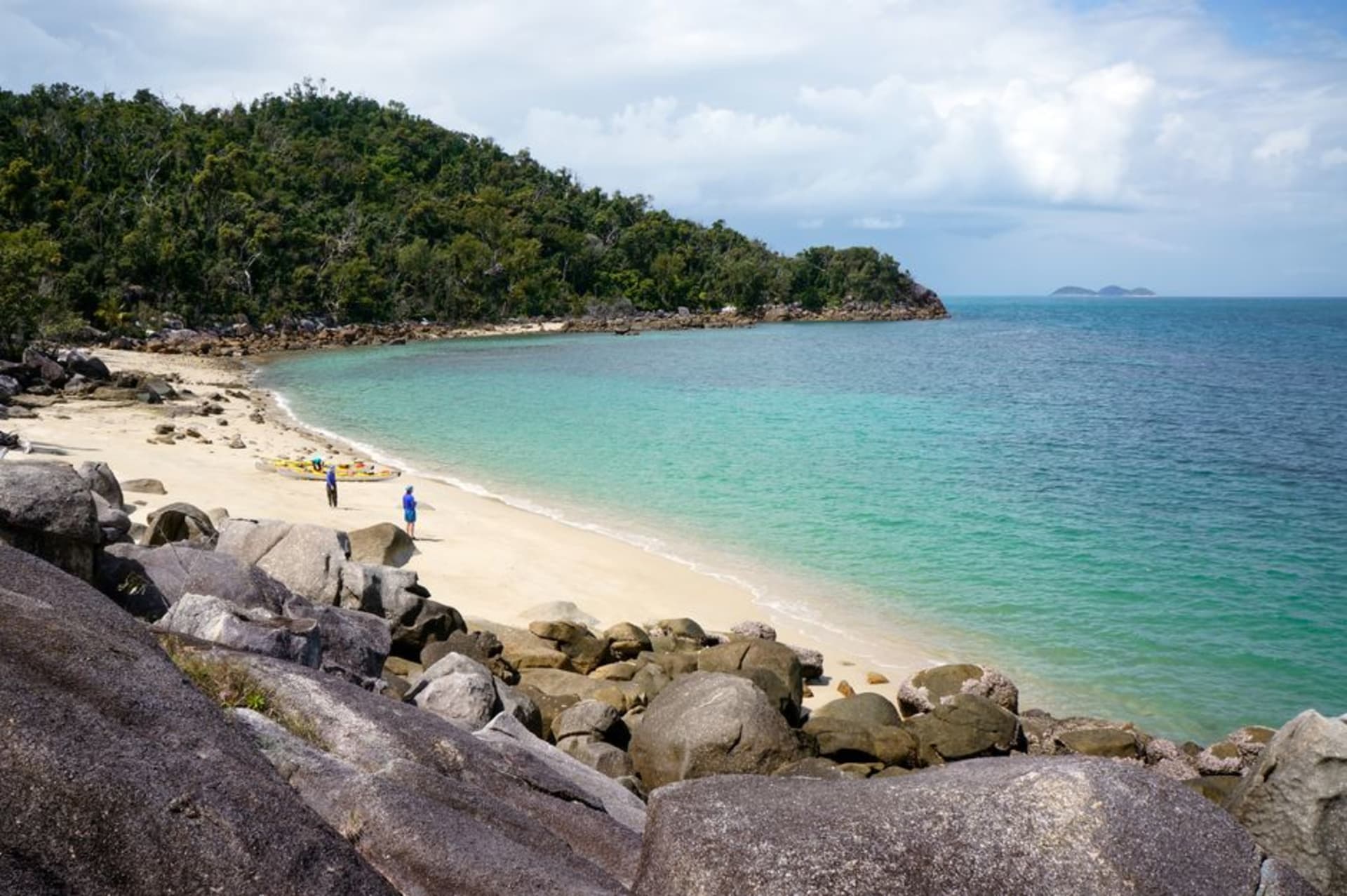
A rainforest-covered island abandoned by its resort and reclaimed by wallabies, which somehow made it more compelling to visit, not less.
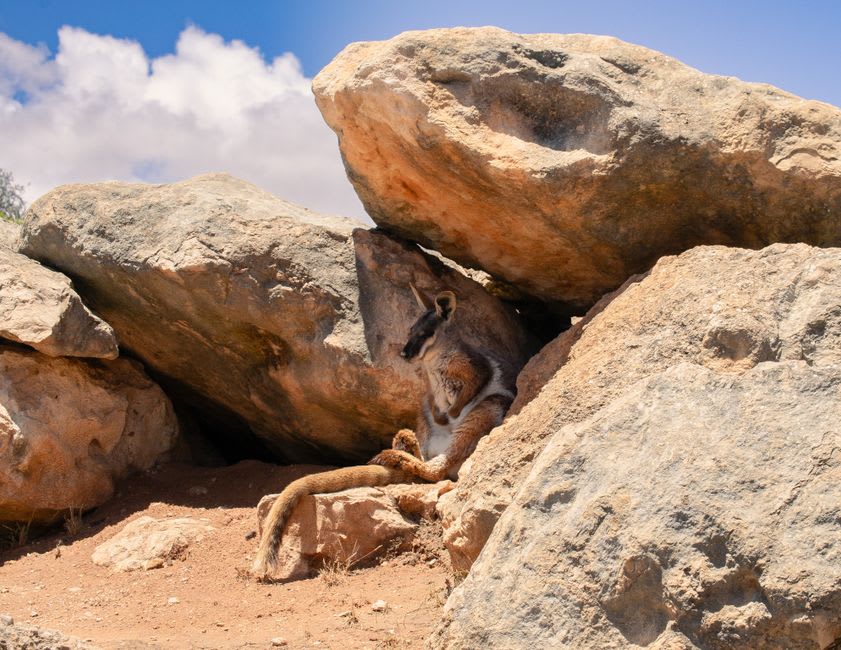
Dunk Island — Coonanglebah to the Djiru people, whose land this is — sits a short water taxi ride off Mission Beach, close enough that you can see its rainforested peak from the mainland on a clear day. There used to be a well-known resort here, one that hosted honeymooners and celebrities for decades, until Cyclone Yasi tore through in 2011 and closed it for good. What remains is something I found unexpectedly moving: a national park island where the old resort infrastructure sits quietly reclaimed by vegetation, and where wallabies now outnumber tourists by a wide margin.
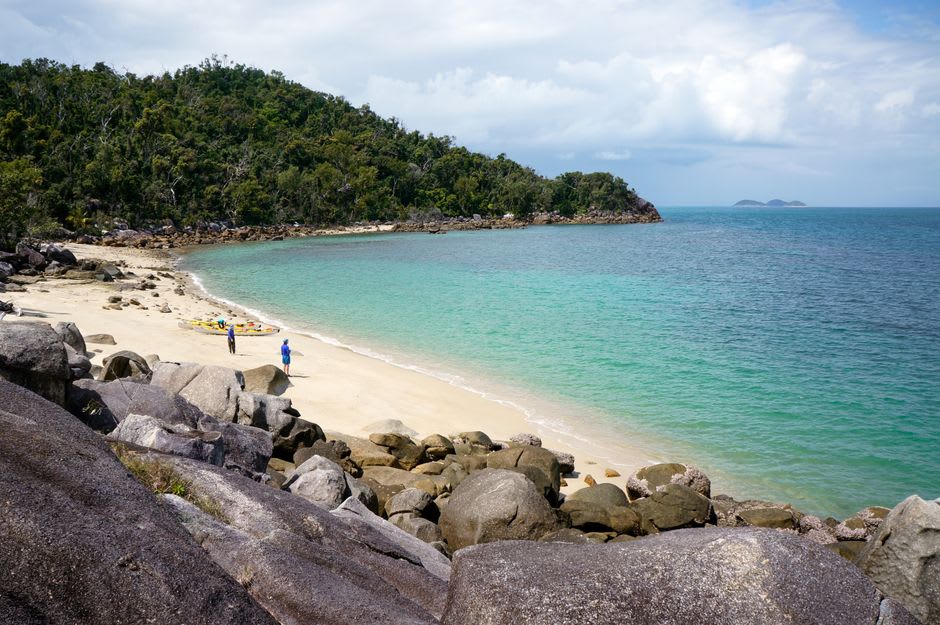
I walked the trail up to Mount Kootaloo, a couple of hours return through rainforest thick with basket ferns and strangler figs, past the crumbling shell of the old resort’s golf course, now more meadow than fairway. From the summit the view opens out over the whole Family Islands group scattered across water in three or four distinct shades of blue, with the reef itself a pale smudge further out. A pair of agile wallabies watched me eat my sandwich from a respectful distance, clearly used to negotiating for scraps, and clearly disappointed when I didn’t offer any.
The beach near the old jetty is close to empty most days, and the snorkelling just offshore, while not the outer reef’s spectacle, is genuinely pleasant — small bommies, sea cucumbers scattered across the sand like discarded punctuation, the occasional turtle cruising past unbothered.
When to go: May through October brings the driest trail conditions for the walk to Mount Kootaloo and the calmest water taxi crossings. Check that water taxi services are running before you commit — schedules are seasonal and can be sparse outside peak months.