Murom
"Some cities show you their age. Murom just lets you feel it, standing there on the riverbank."
A river town older than Moscow, where a legendary warrior's cradle meets a saint's love story on the banks of the Oka.
I’ll admit I hadn’t heard of Murom before a Moscow friend mentioned it almost in passing, the way you’d mention a family member nobody talks about enough. “Older than Moscow,” he said, like that should settle it. It did. Lia and I rerouted our Golden Ring loop to include it, and I remember the exact moment the bus crossed the bridge over the Oka and the whole skyline of bell towers came into view — I actually said “oh” out loud, which Lia still brings up.
What got me first was the Spaso-Preobrazhensky Monastery, one of the oldest in the country, sitting above the river like it’s been keeping watch since 862, when Murom shows up for the first time in the Primary Chronicle. We walked the grounds in the early evening, and a monk was sweeping leaves off a path with no particular urgency, and I thought: this is a place that has never needed to hurry. Lia lit a candle inside; I stood outside by the wall looking at the water, thinking about how many centuries of people had stood in roughly that same spot doing roughly the same thing.
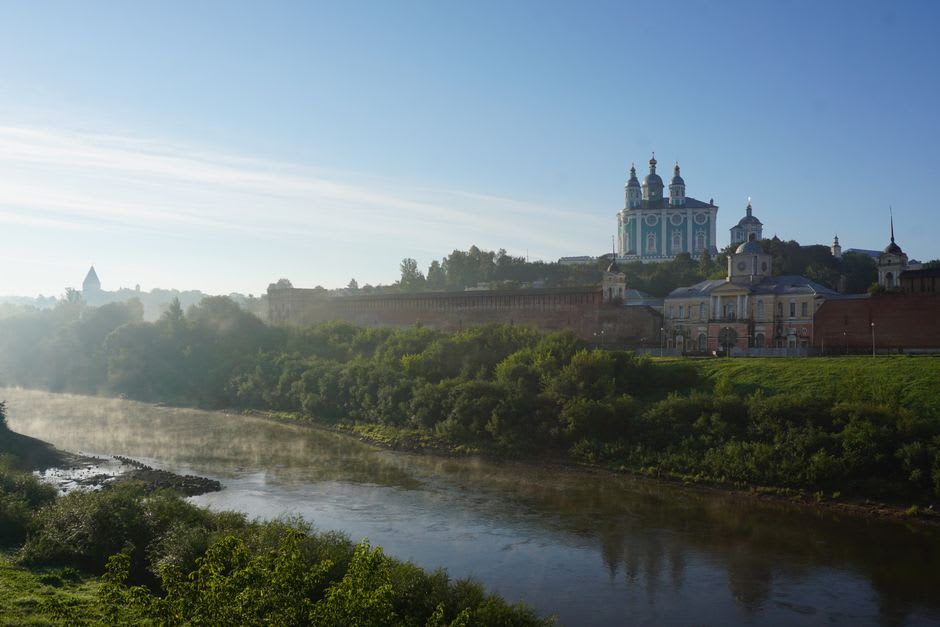
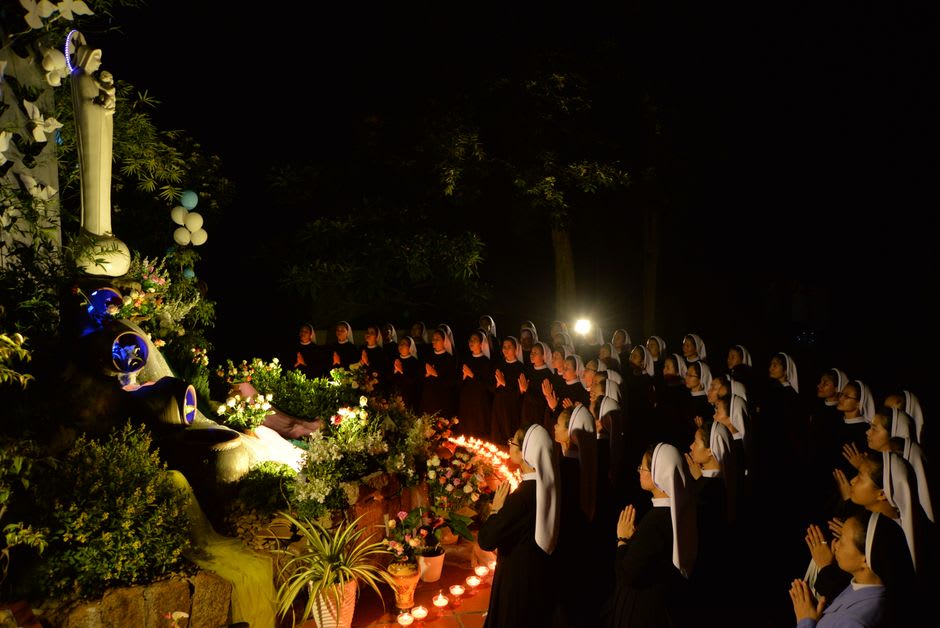
Murom’s other claim to fame is Ilya Muromets, the bogatyr — Russia’s answer to a folk-epic superhero — supposedly born in a village nearby, and you feel him everywhere, in statues and stories the locals tell with a straight face and a glint in their eye. But it was the Holy Trinity Convent that actually got to me, more than the monastery had. It holds the relics of Peter and Fevronia, patron saints of marriage in Russian Orthodoxy, and there’s a quiet, steady stream of couples who come to pray there, some clearly newlyweds, some looking like they’ve been married forty years. Lia squeezed my hand without saying anything, and I didn’t need her to.
We stayed two nights in a small guesthouse near the merchant quarter, where the 19th-century timber-and-brick facades along the river still have that unhurried provincial elegance — carved window frames, faded paint, the occasional cat asleep on a windowsill. In the mornings I’d walk down to the Oka with a coffee and just watch the mist come off the water. It’s not a flashy town. It doesn’t try to be. That, more than anything, is what I keep thinking about.
When to go: We went in early autumn and got that perfect Golden Ring light without the crowds, but if you can time it, aim for late spring or early autumn and try to catch the July 8 Peter and Fevronia festival — it’s when the town’s whole reason for being seems to come into focus.
Keep exploring
More from Golden Ring
 golden-ring-russia
 Pereslavl-Zalessky
A lake town that shaped Russian history without ever caring much about being noticed — birthplace of Alexander Nevsky and Peter the Great's first navy.
Explore golden-ring-russia
 Ples
A village of two thousand souls on the Volga bend that became the quiet obsession of Russia's greatest landscape painter and never quite recovered.
Explore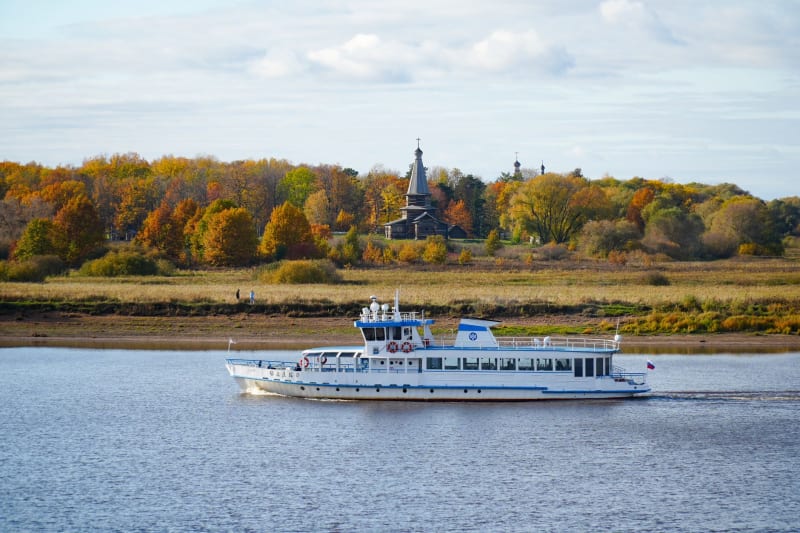 golden-ring-russia
 Rostov Veliky
A kremlin floating above a frozen lake like something from a dream you can't quite convince yourself you didn't have.
Explore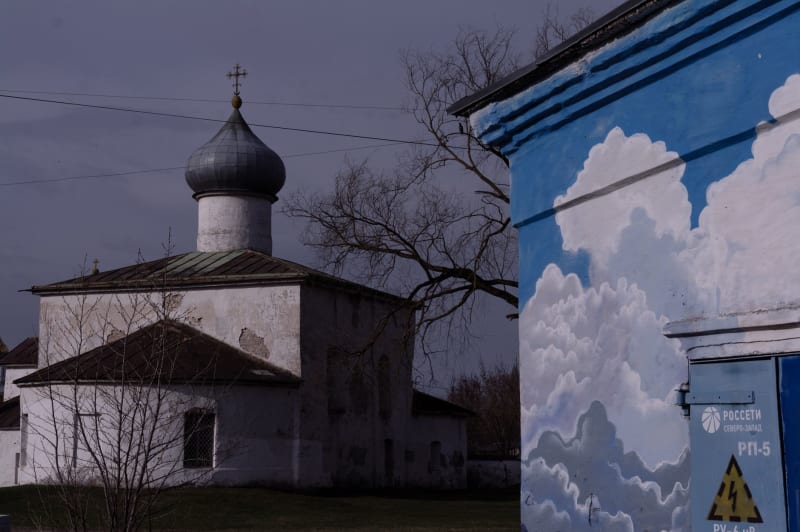 golden-ring-russia
 Sergiev Posad
Russia's holiest monastery town, where pilgrims and tourists arrive by the same train and disperse toward entirely different kinds of awe.
Explore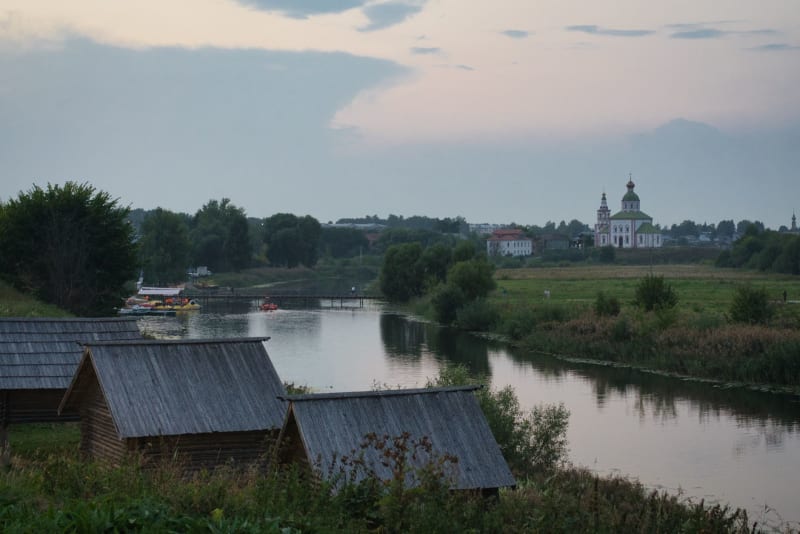 golden-ring-russia
 Suzdal
Eleven thousand people, fifty churches, and zero desire to pretend the twenty-first century happened here.
Explore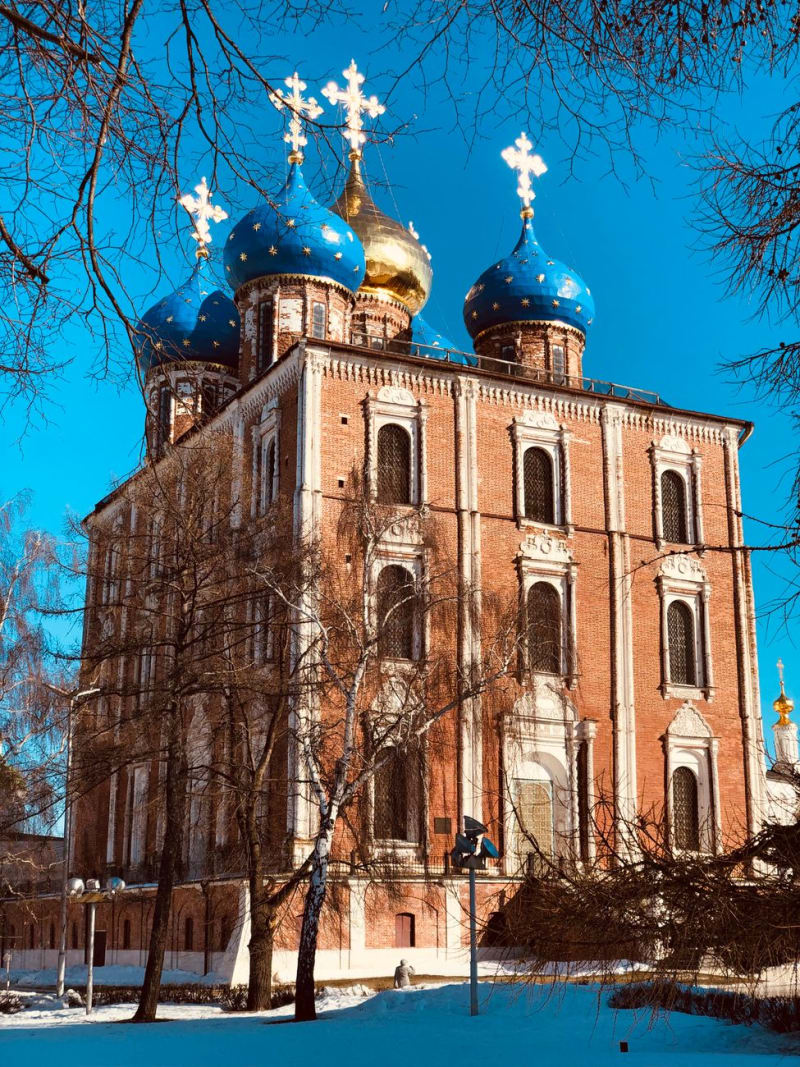 golden-ring-russia
 Uglich
A quiet Volga town where a murdered child-tsarevich and a blood-red church turned a sleepy riverbank into one of Russian history's great unsolved cases.
Explore