Europe
Golden Ring
"The Russia nobody thinks to visit, frozen in amber since the twelfth century."
A crescent of medieval Russian towns where onion domes pierce winter skies and the Orthodox Church never left — history that didn't have to be restored because it was never abandoned.

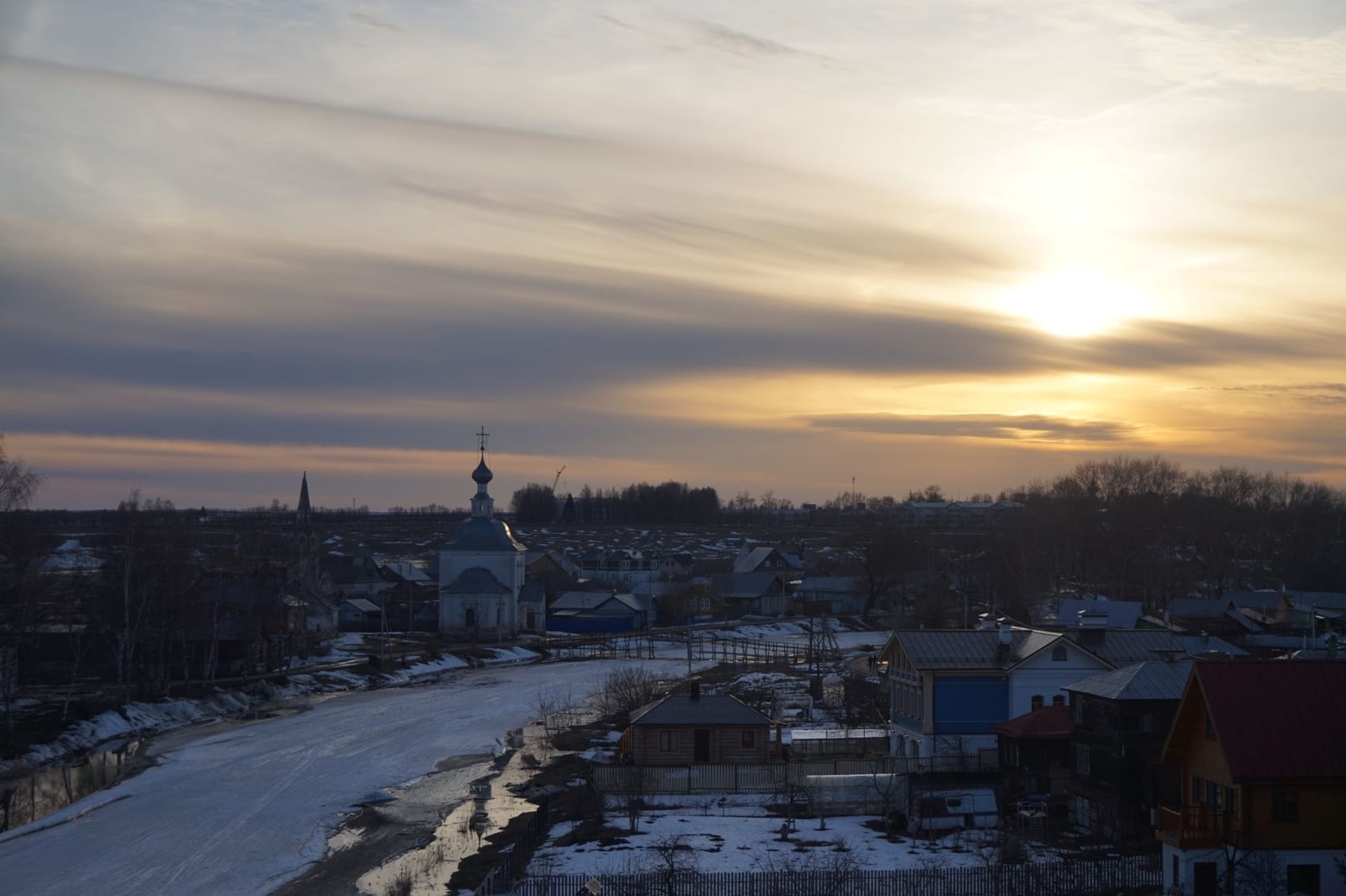
I arrived in Suzdal on a train from Vladimir in February, when the temperature was somewhere south of minus twenty and the only sound in the main square was the creak of snow under my boots. There were no other tourists. A woman in a padded coat sold hot medovukha — honey mead — from a little wooden stall near the Kremlin walls, and I stood there with both hands wrapped around the cup watching the white-and-blue Church of the Nativity go from grey to pink to gold as the sun dropped. It took about eleven minutes. I didn’t move.
The Golden Ring is a loose circuit of eight towns northeast of Moscow — Sergiev Posad, Pereslavl-Zalessky, Rostov Veliky, Yaroslavl, Kostroma, Ivanovo, Suzdal, Vladimir — each of which was, at some point between the eleventh and seventeenth centuries, a center of Russian political or religious power. What makes them different from medieval towns elsewhere in Europe is that most were simply bypassed by industrialization rather than bombed and rebuilt. Suzdal in particular has fewer than eleven thousand residents and more than fifty churches, monasteries, and convents, many of them still functioning. The Museum of Wooden Architecture on the edge of town collects izby — traditional log farmhouses — from across the region, reassembled on a riverbank meadow. Walking through it in winter, with smoke rising from the chimneys they keep burning for atmosphere, is one of the stranger time-collapse experiences I’ve had anywhere.
Vladimir is the practical base — larger, less precious, a real Russian city with a working train station and blini cafés where locals eat lunch without any interest in you. The Cathedral of the Assumption there is twelfth century, its frescoes including work by Andrei Rublev, and entry costs almost nothing. Yaroslavl has the best restaurant scene on the circuit and a Volga embankment that rewards an aimless evening. Rostov Veliky’s kremlin sits directly on a lake, which in winter becomes a snowfield that locals cross on foot, the kremlin towers floating above the white like a fever dream.
When to go: Late November through March for the full winter atmosphere — snow transforms every white-walled church into something luminous, and the crowds (never large to begin with) essentially vanish. May and June are lovely if you want green meadows and river reflections. Avoid July and August; even in Russia these towns get tour buses.
What most guides get wrong: They treat the Golden Ring as a day trip from Moscow, which produces a frantic check-the-box loop. These towns require slowness. Stay two nights in Suzdal minimum. Eat in the gostinitsas — the small Soviet-era hotels — where the borscht is honest and the staff will try to have a conversation in three languages simultaneously. The point is not the churches, exactly. The point is what it feels like when a country’s oldest layer is still its surface.
Explore
Places in Golden Ring
 golden-ring-russia
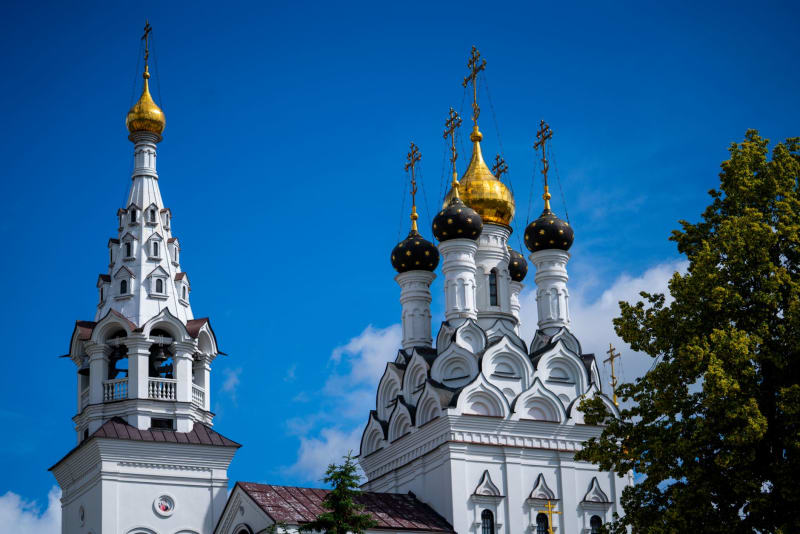
 Bogolyubovo
A twelfth-century church standing alone in a river meadow, arguably the most perfectly sited building in Russia.
Explore golden-ring-russia
 Gorokhovets
A pocket-sized merchant town on the Klyazma where 17th-century stone chambers still stand, untouched by the industrial century that reshaped everywhere else.
Explore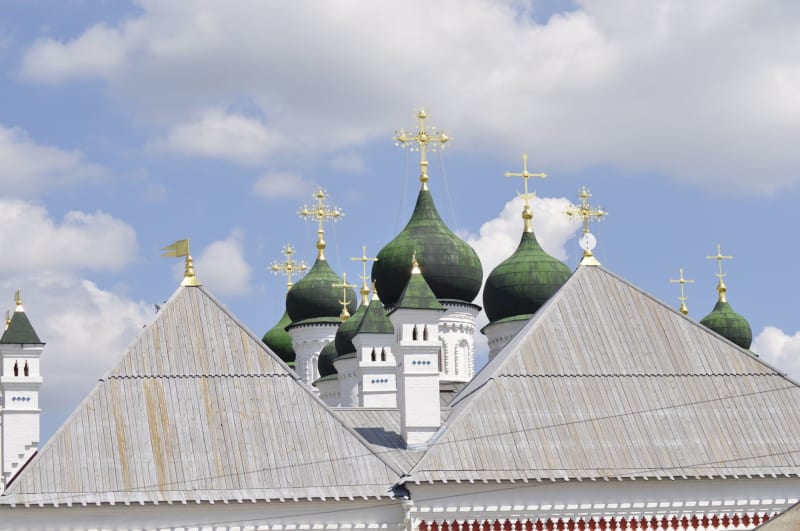 golden-ring-russia
 Ivanovo
The Soviet-era textile capital that built Constructivist masterpieces between the factory whistles and still lives in their angular shadows.
Explore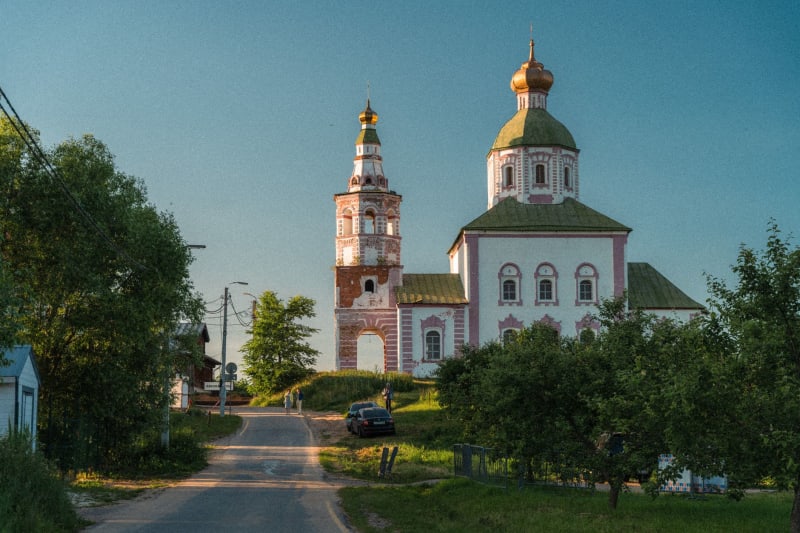 golden-ring-russia
 Kostroma
Where Russia's last dynasty was born in a monastery and the trading arcades still smell of the furs that made this city worth fighting over.
Explore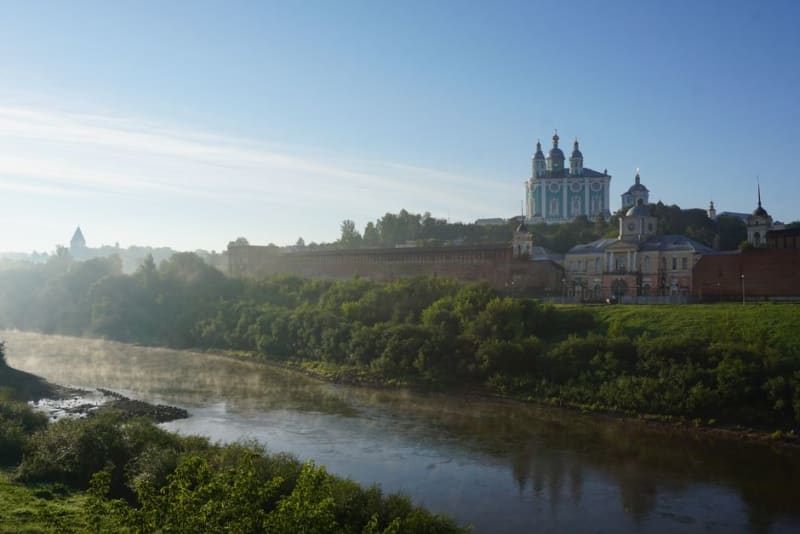 golden-ring-russia
 Murom
A river town older than Moscow, where a legendary warrior's cradle meets a saint's love story on the banks of the Oka.
Explore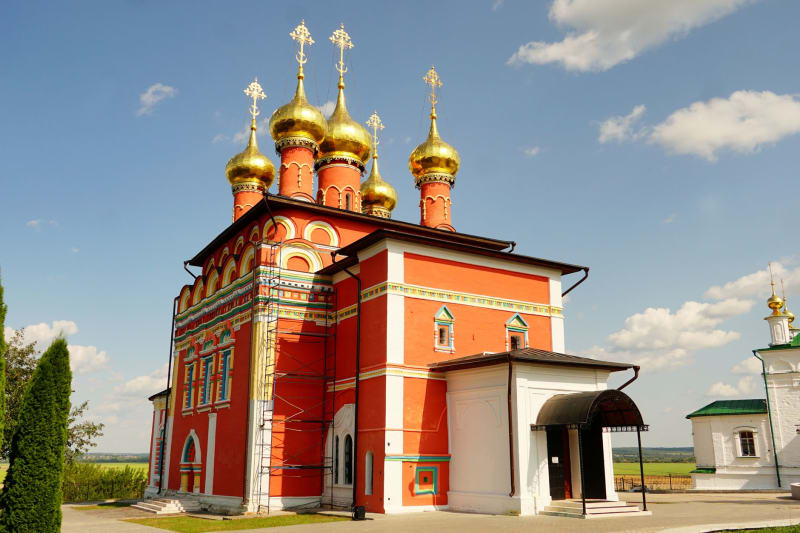 golden-ring-russia
 Pereslavl-Zalessky
A lake town that shaped Russian history without ever caring much about being noticed — birthplace of Alexander Nevsky and Peter the Great's first navy.
Explore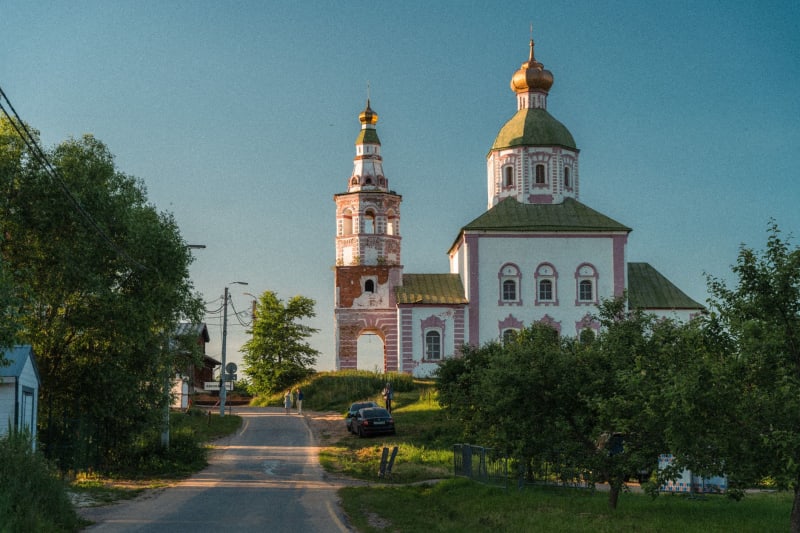 golden-ring-russia
 Ples
A village of two thousand souls on the Volga bend that became the quiet obsession of Russia's greatest landscape painter and never quite recovered.
Explore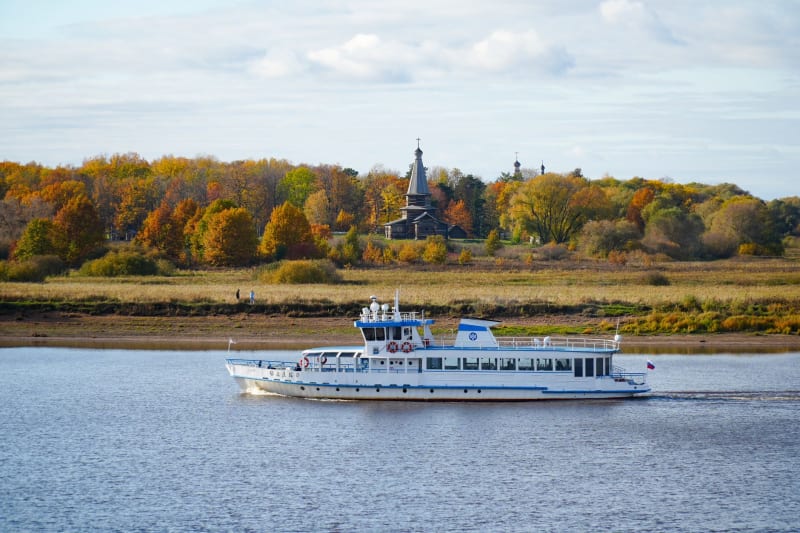 golden-ring-russia
 Rostov Veliky
A kremlin floating above a frozen lake like something from a dream you can't quite convince yourself you didn't have.
Explore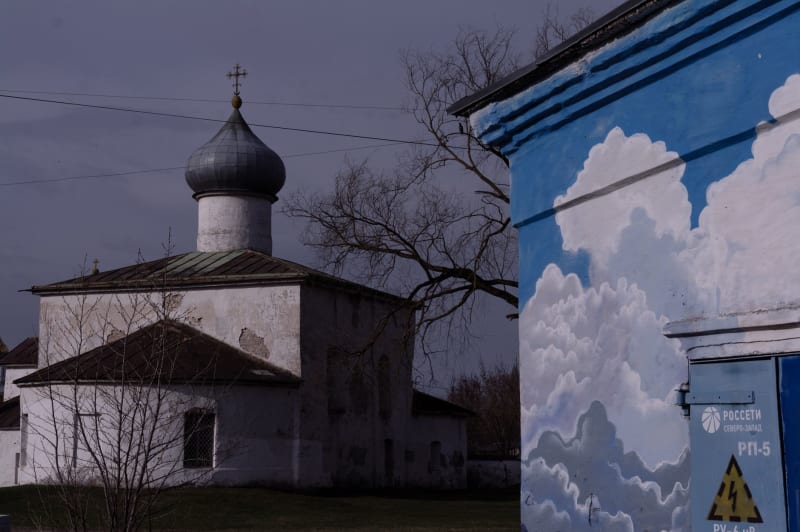 golden-ring-russia
 Sergiev Posad
Russia's holiest monastery town, where pilgrims and tourists arrive by the same train and disperse toward entirely different kinds of awe.
Explore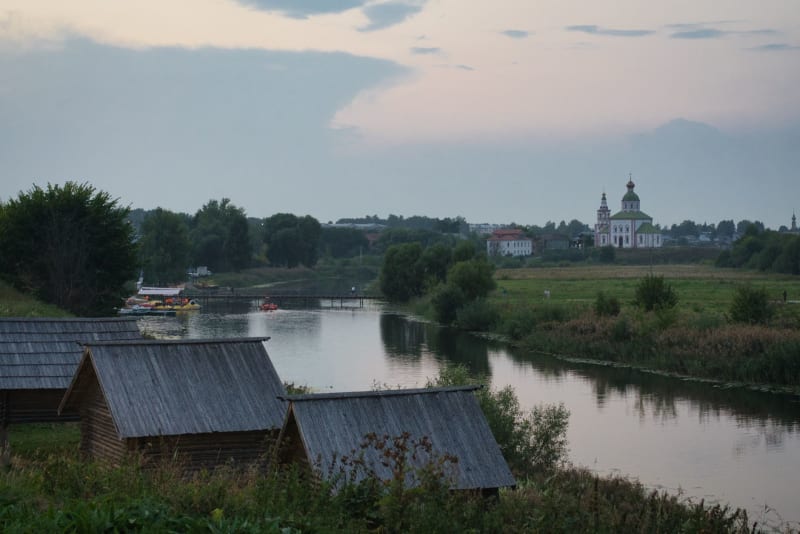 golden-ring-russia
 Suzdal
Eleven thousand people, fifty churches, and zero desire to pretend the twenty-first century happened here.
Explore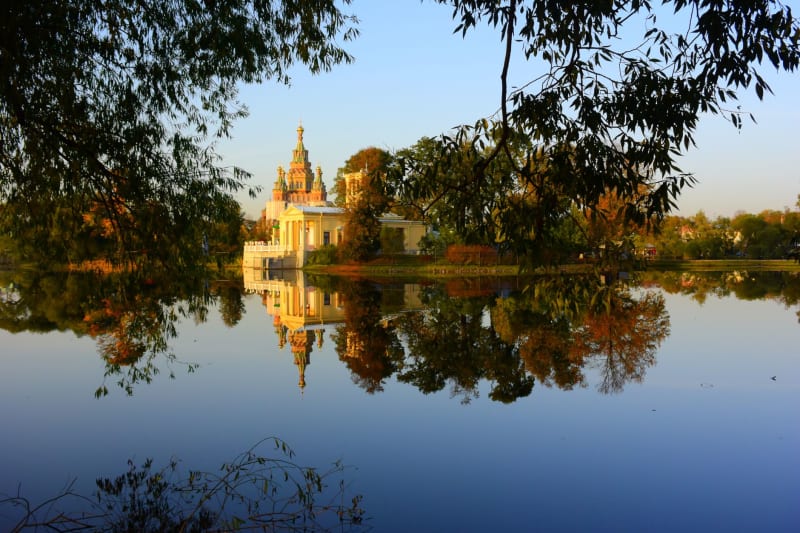 golden-ring-russia
 Uglich
A quiet Volga town where a murdered child-tsarevich and a blood-red church turned a sleepy riverbank into one of Russian history's great unsolved cases.
Explore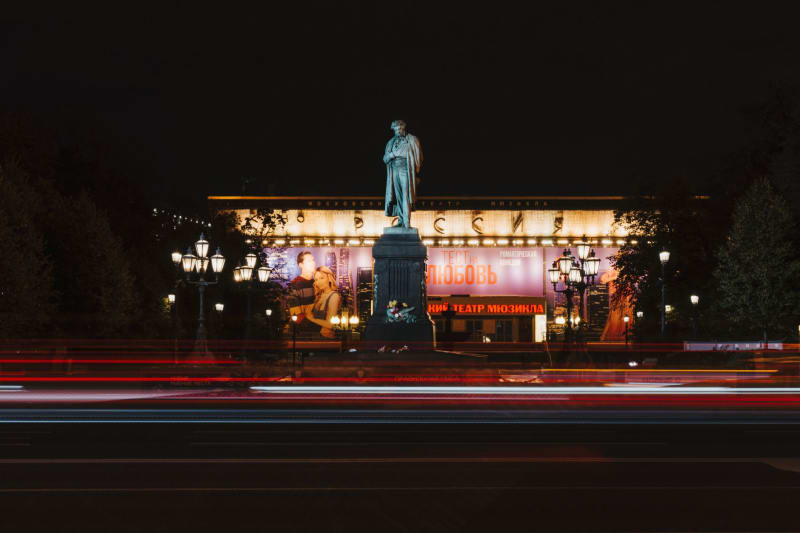 golden-ring-russia
 Vladimir
The unglamorous capital of the Golden Ring where twelfth-century frescoes share a wall with Soviet-era lunch counters.
Explore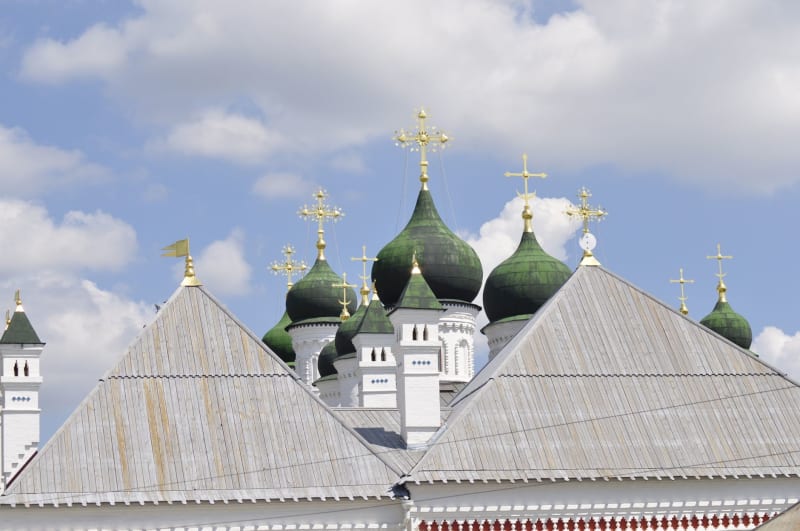 golden-ring-russia
 Yaroslavl
The Golden Ring's most liveable city, where the Volga is wide enough to look like a sea and the restaurant scene would embarrass cities five times its size.
Explore