
A 17th-century Portuguese fort guarding the Mandovi River mouth, where laterite walls and an old lighthouse still watch the Arabian Sea.
Lia and I almost skipped Fort Aguada. We’d been in Goa five days by then, mostly horizontal on Sinquerim beach, and “fort” sounded like homework. But our guesthouse owner insisted, tapping the map with his finger and saying only “sunset, go before six.” So we went, sweaty and skeptical, up the short climb from the beach road, and I remember the moment the walls opened up and the whole estuary appeared below us — I actually stopped walking. The Portuguese built this in 1612, right where the Mandovi River meets the sea, specifically to stop Dutch and Maratha ships from coming in. Standing on the bastions, you understand instantly why they picked this spot — you can see everything, every boat, every current, for miles.
What got me wasn’t the defense angle, though. It was learning that “aguada” just means water in Portuguese, and that the whole fort exists because of a freshwater spring here that ships used to restock on their way through. The lower section held a reservoir big enough to supply passing vessels for months — I stood at the edge of it trying to imagine sailors filling barrels in the heat, grateful for something as unglamorous as clean water after weeks at sea. Lia pointed out that it’s kind of romantic, a fort built to protect a drinking fountain. I hadn’t thought of it that way, but she’s right.
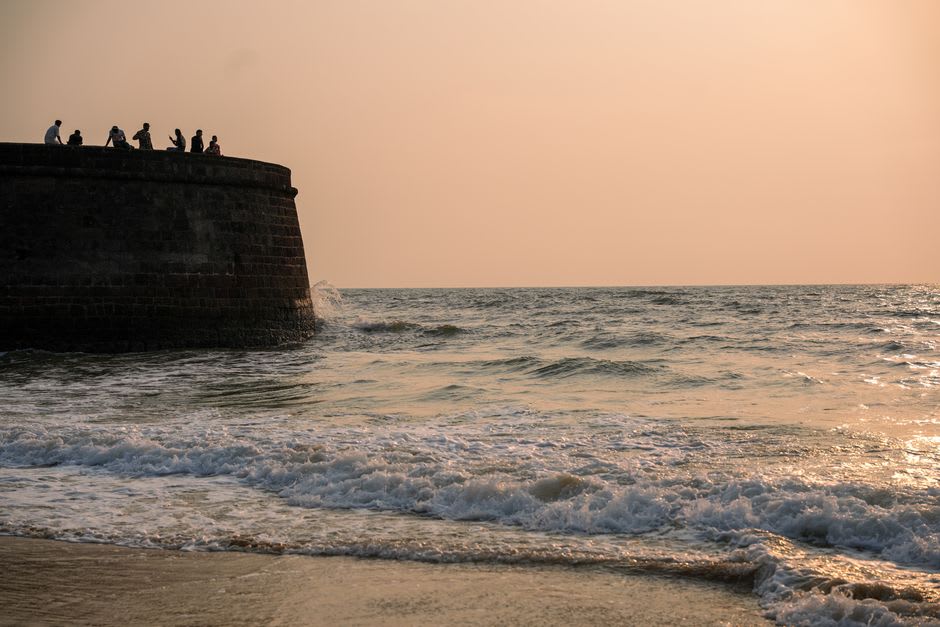
We wandered toward the lighthouse next, a squat four-storey structure that’s apparently one of the oldest of its kind in Asia. It doesn’t look dramatic from a distance, more like a stubby tower than anything cinematic, but knowing its age changed how I looked at it. I put my hand on the wall for no real reason, just wanting to touch something that old. Later, reading up on the place, I learned part of the fort was later turned into a central jail — a strange second life for a building that started as a water stop and a lookout post. Goa holds a lot of these layered histories if you scratch the surface, and Fort Aguada felt like a perfect small example of it.
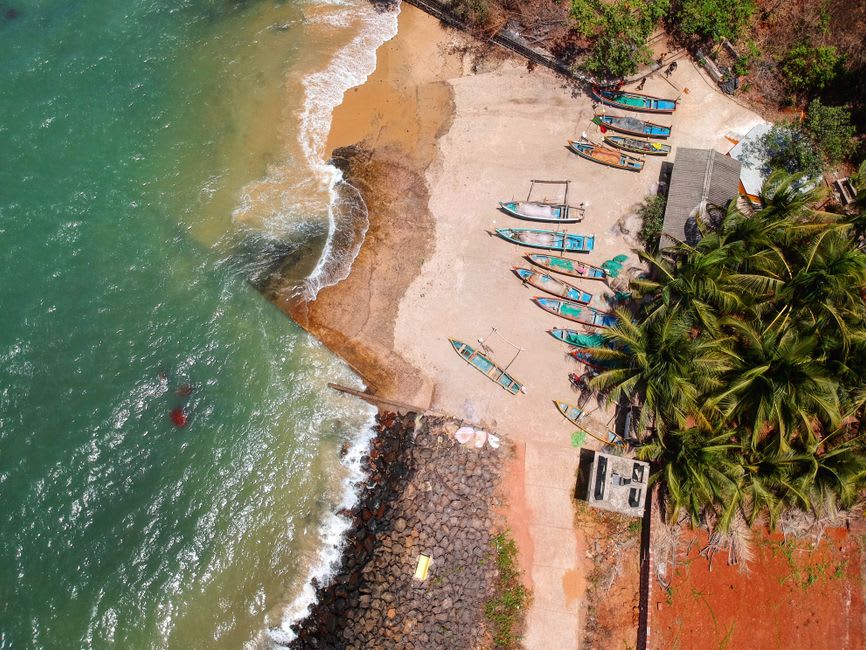
By the time the sun dropped toward the water, the whole rampart had filled with people, all of us facing the same direction, phones and cameras up, nobody talking much. I don’t usually love a crowded sunset spot, but this one earned it — the light hit the lighthouse and the laterite stone turned a deep rust-orange, and the estuary below went gold and then pink. Lia and I sat on the wall until it was almost dark, in no hurry to leave.
When to go: Time your visit for late afternoon, so you’re up on the ramparts as the light fades — the view over the Arabian Sea and the Mandovi estuary at sunset is the whole reason to make the climb.