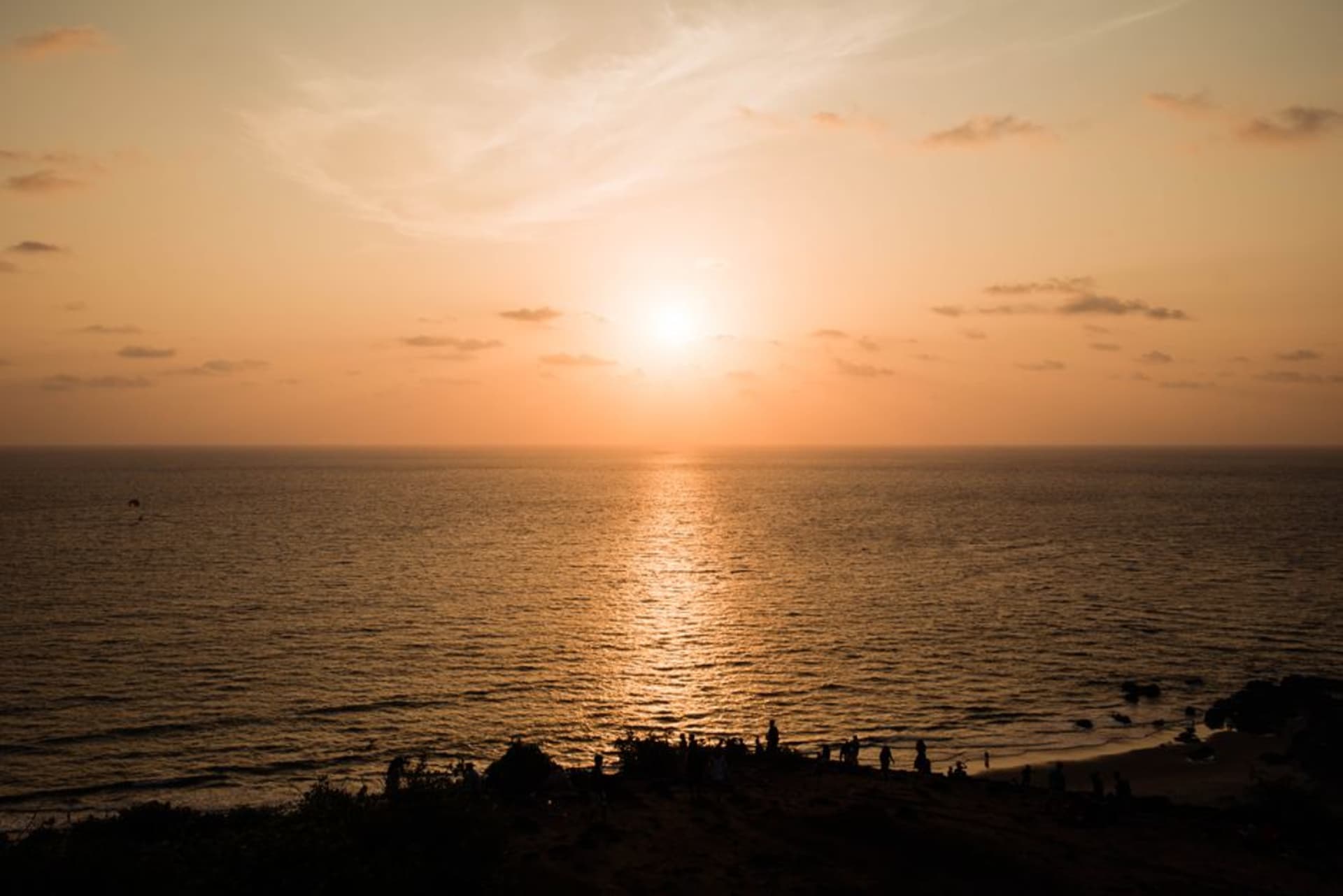
Laterite ruins above the Chapora River where Portuguese cannons once watched for Marathas, now a sunset ritual for half of Vagator.
Lia found out about Chapora Fort the way she finds out about most things in Goa — someone at breakfast mentioned it, half-joking, as “the Dil Chahta Hai fort.” Neither of us had seen the film, but by the time we’d climbed the dirt track up from Vagator, red dust on our sandals and the Chapora River glinting below, it didn’t matter. We understood the appeal instantly. There’s almost nothing left of the fort itself — a ring of crumbling laterite walls and bastions, no roofs, no rooms, just structure standing against sky — and somehow that emptiness is exactly what makes it work.
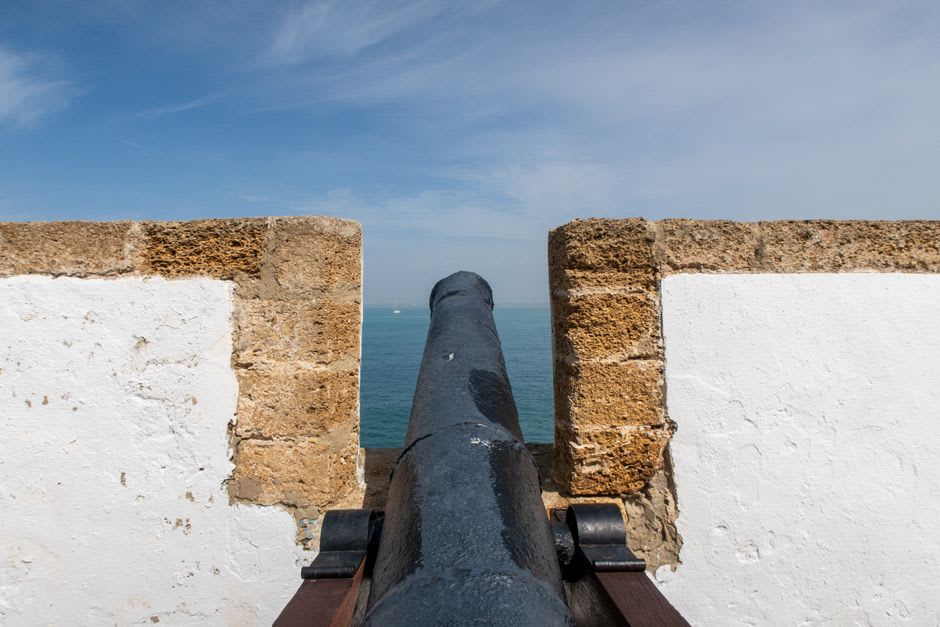
What’s left dates back further than the Bollywood crowds suggest. The Adil Shahis of Bijapur built the original structure, and the Portuguese rebuilt it in 1717 to hold the river mouth — this was the route traders used to reach inland Goa, and the Marathas were a constant threat from across the water. Standing at the northern bastion, looking down at the water sliding past Vagator on one side and Anjuna curling off toward the sea on the other, you can read the whole strategic logic of the place without needing a plaque to explain it. Cannons sat right where we were sitting, pointed at exactly this stretch of river.
We’d timed it badly on purpose — arrived with maybe forty minutes of daylight left, which meant scrambling over broken stone in fading light while trying not to lose Lia’s hat to the wind. Worth it. The laterite goes a deep rust-orange as the sun drops, and Vagator beach below turns gold, then pink, then just shapes. Someone had a bluetooth speaker playing something we didn’t recognize, a few backpackers passed around a bottle, and nobody seemed bothered that this was, structurally speaking, just a wall. I ate a bag of roasted peanuts I’d bought from a woman at the base of the hill and thought it was one of the better meals of the trip, which tells you something about the setting rather than the peanuts.

What stayed with me afterward wasn’t the film-location trivia, though I get why it’s the hook — it was how little effort the fort makes to be a tourist attraction. No ticket booth, no railings to speak of, just old stone left to erode at its own pace while the view does all the work. We walked back down in near-dark, phone flashlights out, already talking about coming back before we’d even reached the bikes.
When to go: Time it for sunset — that’s when the ruins and the coastal sweep toward Vagator and Anjuna are at their most dramatic, though I’d still get there with enough light to find your footing on the walls.