Anjuna
"Anjuna is what happens when a revolution becomes a destination — and somehow stays interesting anyway."
The Wednesday flea market was already three-quarters of the way through dismantling itself when I arrived at noon, which is precisely the right time to arrive. The vendors who remain at that hour are the ones who have given up pretending to sell anything and are sitting on their blankets eating lunch from tiffin boxes. I walked through what remained — silver anklets, Tibetan singing bowls, silk scarves from Rajasthan, the inevitable Bob Marley t-shirts — and bought nothing except a glass of fresh lime soda from a woman who had set up her cart in the strip of shade behind the cashew trees. The soda was salty and cold and I stood there for a long time.
Anjuna has been famous for so long that it has become difficult to see clearly. The name conjures things — the 1970s, Goa trance, the hippie beach, the full-moon parties — and those associations are not entirely wrong. The ghost of that particular moment of freedom, when European backpackers and Indian mystics and musicians all landed on this beach and stayed for years, is genuinely present here. You can feel it in the specific architecture of the beach shacks, in the way the afternoon light falls on the laterite cliffs at the northern end of the beach, in the music drifting from the bars that never quite seems modern.

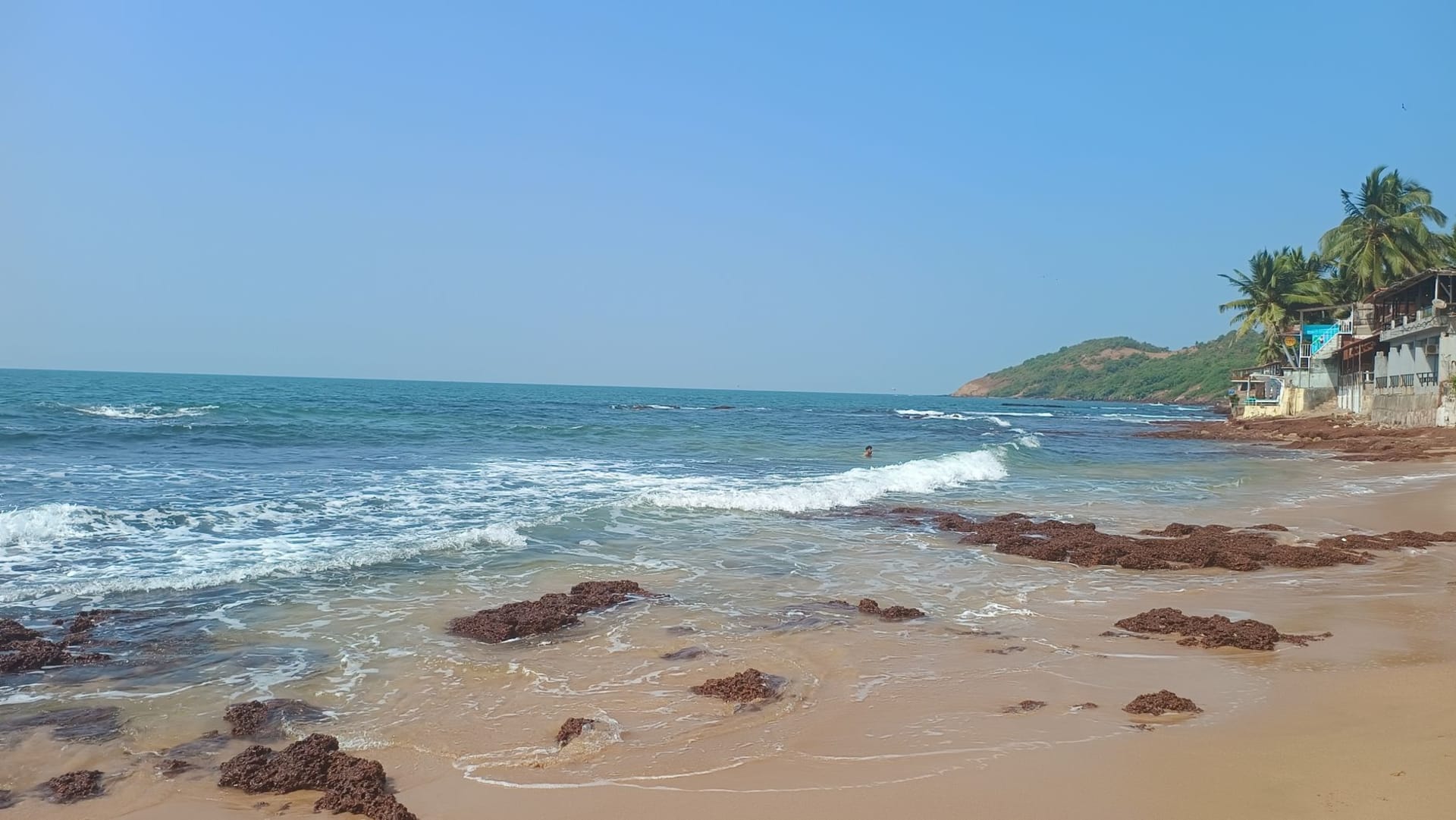
But Anjuna is also, despite itself, a genuinely beautiful place. The beach is wide and silver-grey, curving south from a rocky headland into a gentler stretch where the fishing boats are pulled up above the waterline and children run in the evenings. The laterite cliffs at the north end glow orange-red in the late sun and the boulders that tumble into the sea are good for climbing if you pick your route. I sat on those rocks one evening with a beer and watched the sun go into the water and thought that there are worse fates than being a cliché beach that actually delivers on its promise.
The old hippie haunts — Curlies, Shore Bar — are still there and still function as places where people collect in the afternoons to nurse drinks and stare at the sea. The crowd has changed. It is more Indian now than European, more Instagram than counterculture, but the instinct that brings people to those particular seats facing that particular water is the same one that brought the first wave in 1972. Some landscapes simply work as backdrops for the particular human feeling of not wanting to be anywhere else.

I stayed two nights at a guesthouse run by a Goan Catholic family in the village above the beach — away from the beach shack strip, in the actual residential streets where life happens independently of the tourist economy. In the morning their rooster woke me before six, and I could hear the grandmother saying her rosary in the next room, and a truck selling vegetables announced itself from the lane below. This Anjuna, the one above the cliffs, is worth finding.
When to go: November through February. The Wednesday flea market runs throughout the season. The beach gets unpleasantly crowded between Christmas and New Year; the first two weeks of January and November are better. The Wednesday market closes during the monsoon.