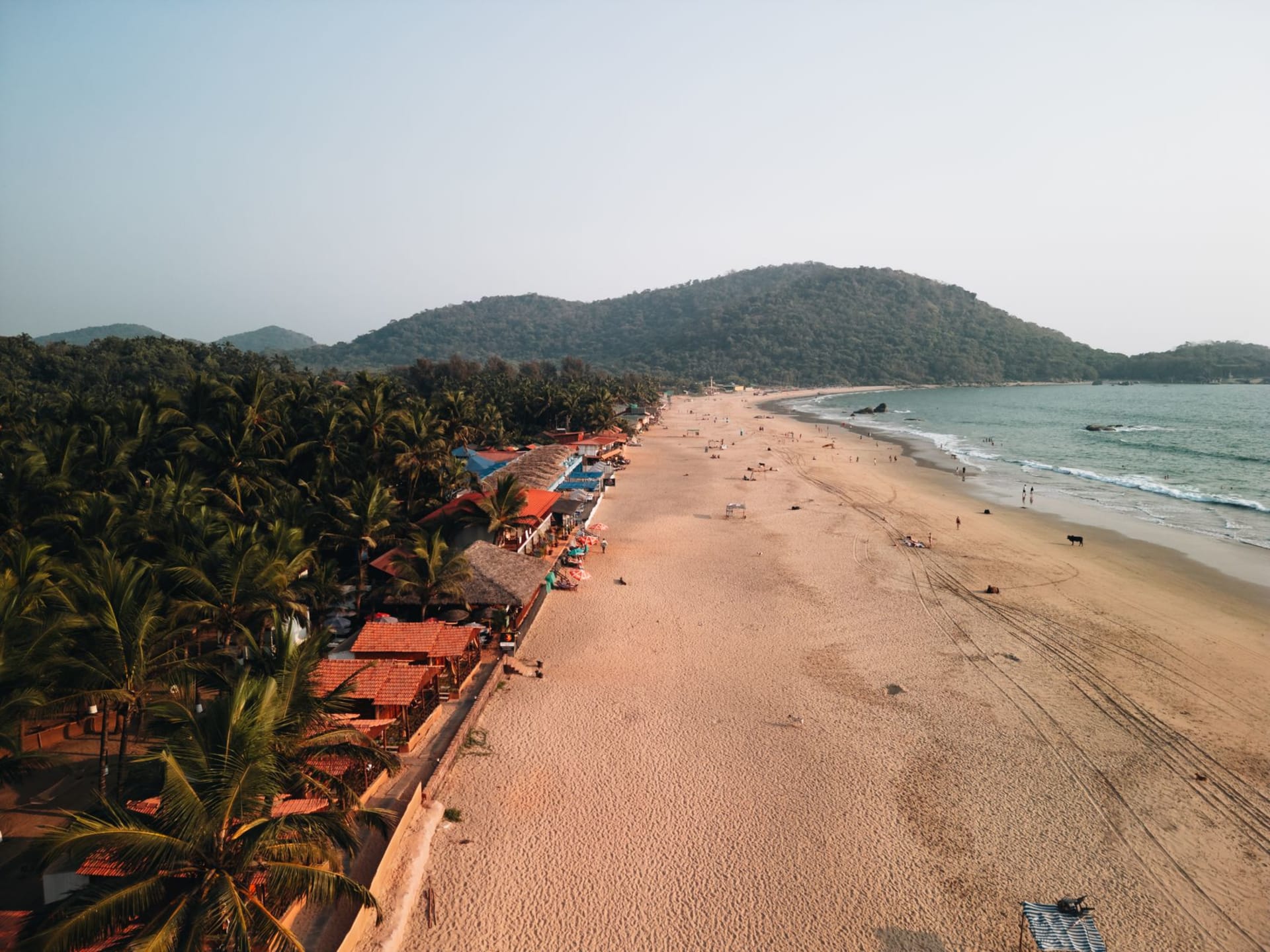
Agonda
"Agonda taught me that the best beach is always the one where the sea refuses to be comfortable."
I had spent three nights at Palolem — lovely, busy, very fine — and was feeling the particular low-grade restlessness that comes from being comfortable in a place that is working hard to make you comfortable. A woman at the guesthouse said: try Agonda, it’s fifteen minutes north, nothing is there. She meant it as a warning. I took it as a recommendation.
Agonda is a long beach — nearly three kilometres of dark sand — backed by forested hills that come down steep and green to the shore. There are a handful of beach hut camps strung along the back of the beach, and a small village of maybe a few hundred people on the road behind. That’s the infrastructure. The beach itself is exposed: the Arabian Sea comes in here with more force than at Palolem’s protected bay, and the waves are big enough in December that swimming requires paying attention. On the afternoon I arrived, the surf was running hard and grey and there were no swimmers in the water. There were three cows on the beach. The cows were also not swimming.

Agonda is one of the nesting sites of the olive ridley sea turtle — the small brown turtle that hauls itself up Goa’s beaches from November to March to lay eggs in the sand. The hatchlings emerge at night about fifty days later. The beach huts operate strict no-light policies after sunset during nesting season, and the state forest department maintains a presence. I walked the beach one evening in the dark, using no light except the moon, and came across a patrol of two young men from the forest department moving slowly along the upper beach with a flashlight they kept pointed at the ground. They were checking for tracks. They explained, quietly, that a female had come up the previous night but the nest had not yet been located precisely.
I did not see a turtle. I also did not see a hatchling run. What I saw was the beach at night without artificial light, and that was enough: the surf white in the moonlight, the hills black against the sky, the village lights a distant warmth to the north. The darkness at Agonda is genuine and complete.

The mornings at Agonda are the best part. The sun comes over the hills behind the beach and the light at seven or eight in the morning is slanted and very gold and the beach is almost always empty except for the fishermen checking their nets at the southern end. I drank coffee at my beach hut’s little bamboo cafe and ate toast and watched the light change across the water. The sea would be too rough to swim in before ten, which meant I sat and watched it for two hours — which I now recommend as a practice. The waves teach you something when you can’t be in them: something about patience, about looking, about the way force works without apology.
When to go: November through February. Nesting season runs November through March and the hatchling emergence, when it happens, is at night. Check with your guesthouse about any turtle sightings — they will know, and responsible operators will not allow guests to disturb nesting females or hatchlings. The surf is strongest in December and January; February is calmer and warmer for swimming.