Mole National Park
"The best view in Ghana is a cold beer and an elephant thirty metres away."
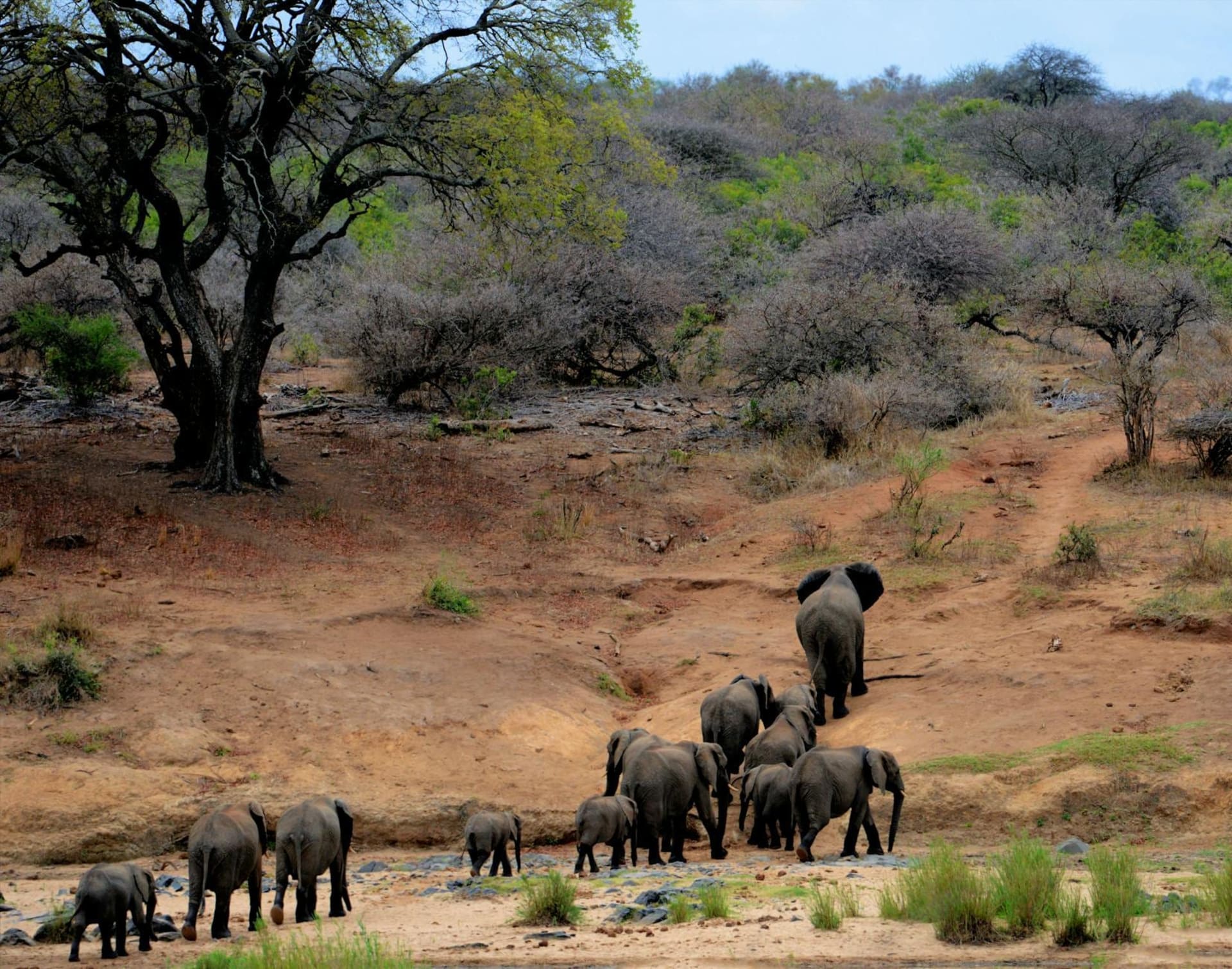
Ghana's largest wildlife refuge, where elephants drink at waterholes visible from your lodge balcony at dawn.
The road to Mole from Tamale is four hours of corrugated laterite that rattles your teeth and reddens everything you own. You arrive dusty, mildly defeated, and then you walk out onto the terrace of the Mole Motel — the only lodge that overlooks the main waterhole — and two bull elephants are standing directly below you in the late afternoon haze, trunk-deep in mud, completely unbothered. The exhaustion leaves the body very quickly after that.
At the Waterhole
The Mole Motel terrace is one of the most improbable observation decks in West Africa: a crumbling concrete platform above a shallow brown waterhole, furnished with plastic chairs and a bar that sells cold Club Beer, which is exactly what you should be holding when the elephants come. They come morning and evening, sometimes in groups of eight or ten, sometimes as lone bulls who plant themselves in the shallows and go still as statues. Lia set up on the terrace before sunrise our first morning and refused to leave for three hours. I brought her coffee and stopped apologizing for the itinerary I had planned.
The park covers 4,840 square kilometres of Guinea savanna — the largest protected area in Ghana — and the wildlife density near the waterhole is startling by any measure. Warthogs trot past in single file at dusk. Kob antelopes graze the burnt-grass clearings. Baboons raid the motel kitchen if the door is left open, which it often is.
On Foot with a Ranger
What distinguishes Mole from parks that keep you behind glass is the guided walking safari. For a few cedis and a ranger armed with a rifle he has never had to use, you walk into the savanna at dawn — the grass still wet, the light still pink — and track elephant prints through the clay. The smell of the bush in that light is something specific: dust, dry grass, a faint mineral edge from the laterite soil, and underneath it all the warm animal smell of something large and nearby. We came around a stand of shea trees and found a small family group ten metres off the path. The ranger stopped us with one raised hand and we stood there long enough to hear the elephants breathe.
What I did not expect was the birds. I am not a birder, but Mole holds over 300 species and the northern white-crowned shrike alone — a bird so self-possessed it seems to be judging you — kept stopping me mid-path.
Getting There and Back
The bus from Tamale — the VVIP coach to Larabanga — takes four hours and drops you at the park junction, where shared taxis cover the last few kilometres to the gate. Larabanga itself is worth an hour: the mosque there, built of mud and timber in the Sudano-Sahelian style, is among the oldest buildings in Ghana, and the custodian will walk you around it for a donation.
When to go: November to April, the dry season, when the vegetation thins and animals concentrate around water sources. The rains between June and September make the laterite road genuinely impassable and the waterhole less reliable as a viewing point.