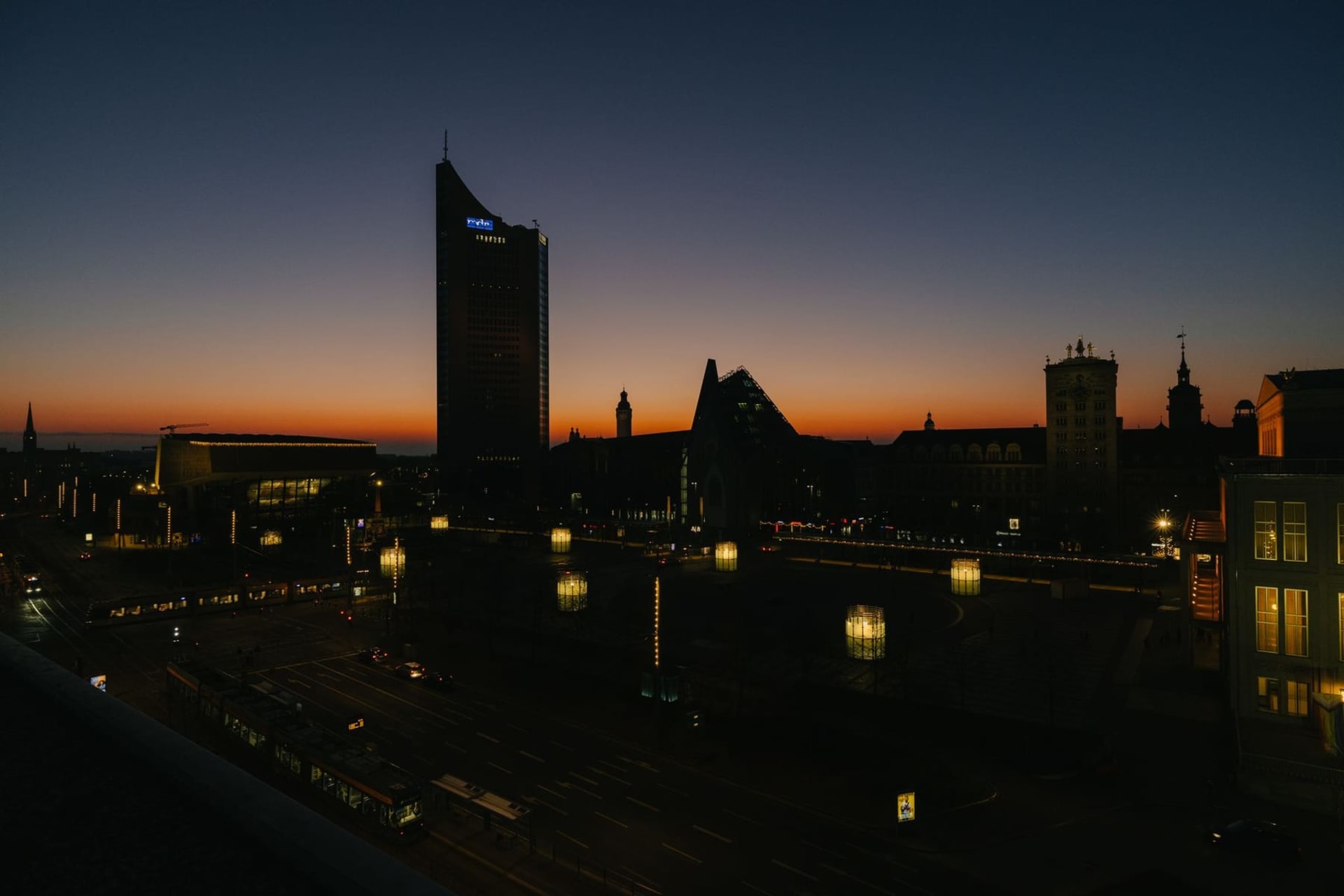
The city that gave the world Bach and the peaceful 1989 revolution pulses today with galleries, a thriving music scene, and raw creative energy.
The first thing that surprised me about Leipzig was how quiet the mornings are. Not empty — the bakeries on Karli are already pulling rye loaves from stone ovens, and the market stallholders at Markt are arranging hothouse tomatoes with the focused care of jewelers — but unhurried. Berlin announces itself constantly. Leipzig waits for you to notice it.
Bach, Beer, and the Weight of October
We arrived in early November, which was deliberate. The Nikolaikirche — the church where the Monday demonstrations that toppled the East German state began in 1989 — was nearly empty on a Tuesday morning. I sat in one of the white pews and tried to understand what it meant to stand in a room where people had gathered, unarmed, and changed the course of a country. The organ was silent. That silence felt more eloquent than anything it might have played.
The Thomaskirche, where Bach spent the last 27 years of his life directing the choir boys, sits just a few blocks away. Lia found a small brass plaque near the altar and stood there reading it long after I had moved on. She said later it was the detail about him writing cantatas for every Sunday of the liturgical year — over two hundred of them — that stopped her. That kind of sustained, unglamorous commitment to craft. We talked about it over Sächsische Sauerbraten at Barthels Hof, a courtyard restaurant tucked into one of the old merchant passages, the kind of place that has been feeding people through every political regime this city has survived.
Südvorstadt and the Galleries Nobody Warned Me About
The unexpected discovery came on our second afternoon, when we wandered south of the Ring toward Südvorstadt and stumbled into the Spinnerei — a vast nineteenth-century cotton mill that now houses something like thirty artist studios and galleries. I had read about it, but reading about it and actually standing inside a space that smells of linseed oil and cold concrete and something faintly electric is different. A painter named Carsten Nicolai had a solo show running in one of the main halls. I am not always sure what I am looking at with contemporary art. Here I did not need to be sure. The work simply occupied the same air as me.
Back outside, the light had turned that particular shade of pewter that northern European cities produce in late autumn — not dark, not bright, the color of old pewter — and Karl-Liebknecht-Strasse was filling with students from the university, cyclists, a man walking an enormous grey dog. The city felt lived-in in the best possible sense.
When to go: Late spring (May–June) brings the city to full creative life, with the Wave-Gotik-Treffen festival drawing an extraordinary crowd to the Agra park grounds. November is quieter but unexpectedly moving — the anniversaries of the 1989 revolution are observed with genuine feeling, and the Christmas market that begins in late November transforms the Marktplatz into something out of a woodcut print.