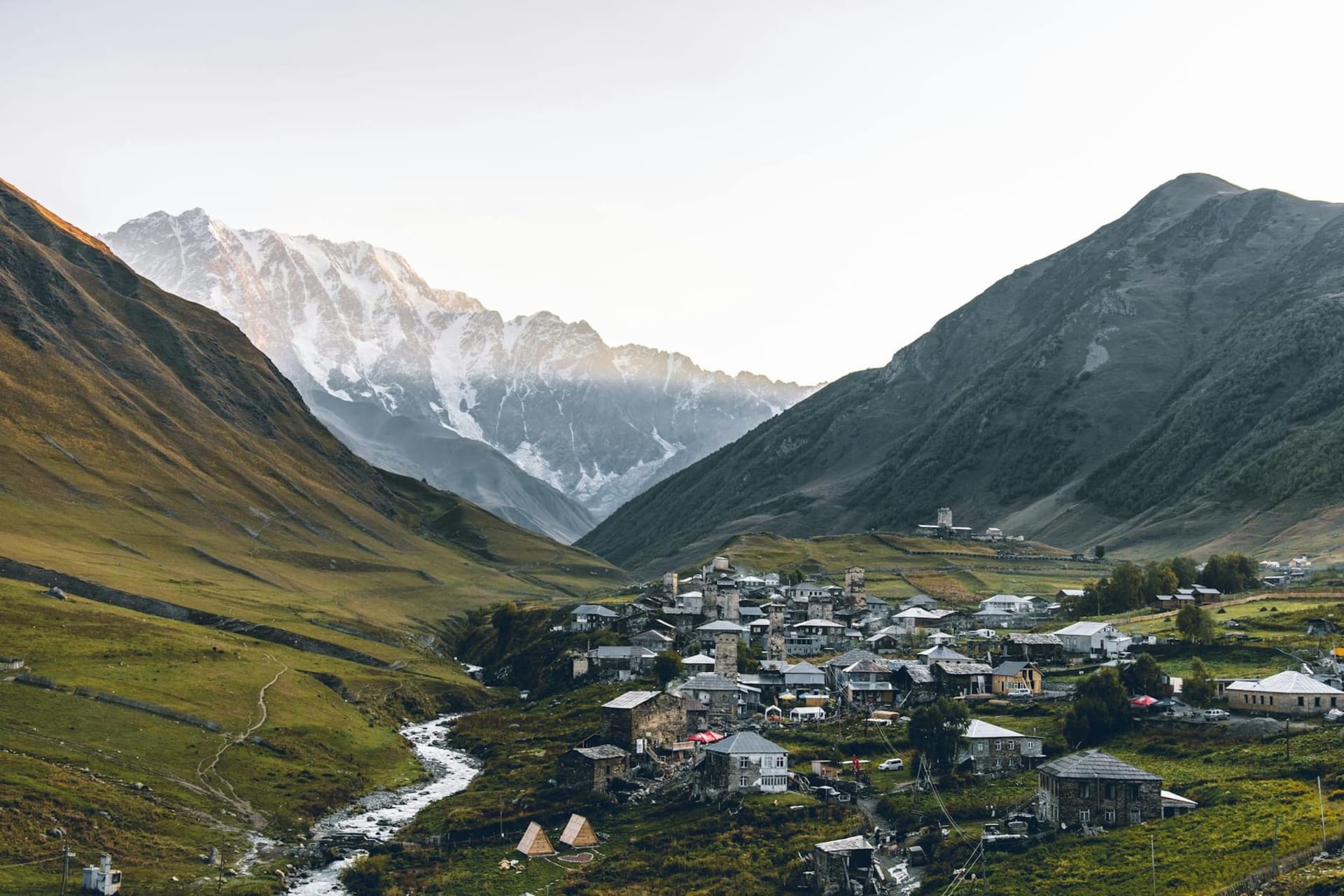
Medieval watchtowers rise above glacier valleys in the high Caucasus — Georgia's most isolated and breathtaking highland.

The marshrutka climbed for four hours from Zugdidi, the road narrowing until it was barely a shelf scraped into the cliff face. Lia had her forehead against the glass, watching the Enguri River turn from grey to turquoise a hundred meters below. I was watching the towers appear one by one through the pines — squat, muscular, windowless — like something planted there by a civilization that had no interest in being found.
Mestia and the Weight of Stone
Mestia is the administrative center of Upper Svaneti, though “center” flatters it. There is a main square, a Svan tower museum, a supermarket with unreliable electricity, and a string of guesthouses along the road toward the Chalaadi glacier trailhead. We stayed at a family home off the lane that bends past the ethnographic museum — a wooden house that smelled of pine resin and something frying in clarified butter downstairs.
The towers are everywhere. They date from the ninth to the thirteenth centuries, built by individual families as refuges and status markers. Some are thirty meters high, their walls a meter thick at the base. Walking among them in the morning, before the few other tourists emerged, I kept running my hand along the stone — not rough exactly, more like weathered bone. The light in Svaneti at that hour has a specific quality: thin, very white, coming off the snow on Mount Tetnuldi and arriving at the valley floor already exhausted.
We ate kubdari every day — the Svan meat bread, stuffed with pork and spiced with a local blend that includes blue fenugreek and dried marigold. It tastes like nothing I had encountered in Tbilisi. Richer, more serious. The woman who made ours at the guesthouse folded the dough without looking at her hands.
The Road to Ushguli
I had not expected Ushguli to be as remote as it was. It sits at 2,200 meters, reportedly the highest continuously inhabited settlement in Europe, and even in late July the surrounding peaks held snow. The drive from Mestia takes two hours on a road that is generously described as unpaved.
What surprised me — genuinely stopped me on the path between the cluster of tower-houses — was the smell of hay drying in the sun. Such an ordinary smell. Such an ordinary thing to do at the edge of the world.
When to go: June through September offers the best road conditions and full access to Ushguli, with July and August warmest but busiest. Late May and early October bring solitude and dramatic light, though the upper road may still carry snow.
Keep exploring
More from Georgia
 georgia
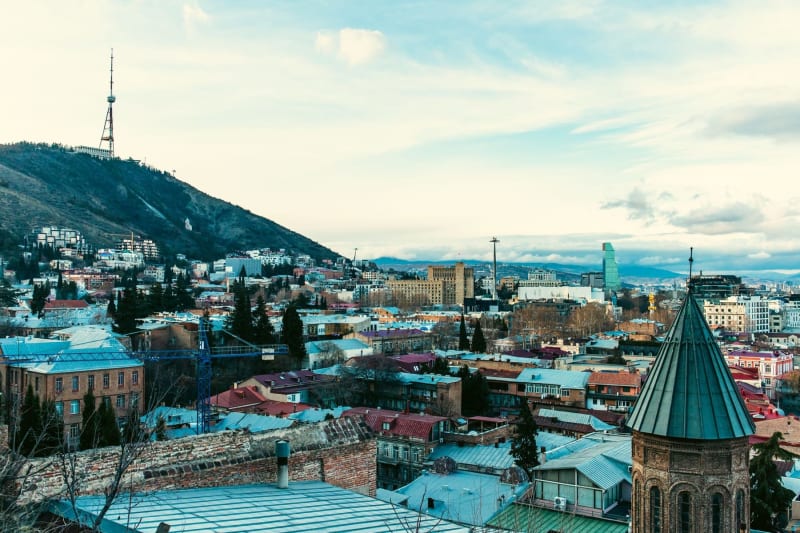
 Tbilisi Old Town
Carved wooden balconies, sulfur bathhouses, and wine bars spilling into cobblestone alleys below the fortress.
Explore georgia
 Uplistsikhe
A cave city carved into volcanic rock above the Mtkvari River, inhabited since the Iron Age and abandoned to silence after the Mongols came.
Explore georgia
 Ushguli
A cluster of four stone villages beneath Georgia's highest peak, where medieval towers have watched over Upper Svaneti for a thousand years.
Explore georgia
 Vardzia Cave City
A 12th-century cave city carved into a volcanic cliff — 3,000 rooms and a royal chapel hewn from the rock.
Explore georgia
 Batumi
Georgia's subtropical coast piles palm trees, Soviet spa hotels, and a new skyline of casino towers onto a Black Sea shore where Adjarians serve the best khachapuri in the country from boats made of dough.
Explore georgia
 Kakheti Wine Region
The cradle of wine civilisation — qvevri buried in earth, amber wine, and vine-covered villages in the Alazani Valley.
Explore