Tsitsikamma
"The gorge doesn't look like South Africa. It looks like the beginning of something much older."
The road into Tsitsikamma National Park descends through forest so dense and tall that the light dims noticeably, as if the canopy is making a decision on your behalf. I had driven through sunshine for an hour, the coast open and glittering on my left, and then suddenly the yellowwood trees closed overhead, the temperature dropped, and the road wound down toward a coast that had nothing leisurely about it — rocks, surf, a cold river running fast and brown through a gorge it had been cutting for thousands of years. Tsitsikamma does not ease you in.

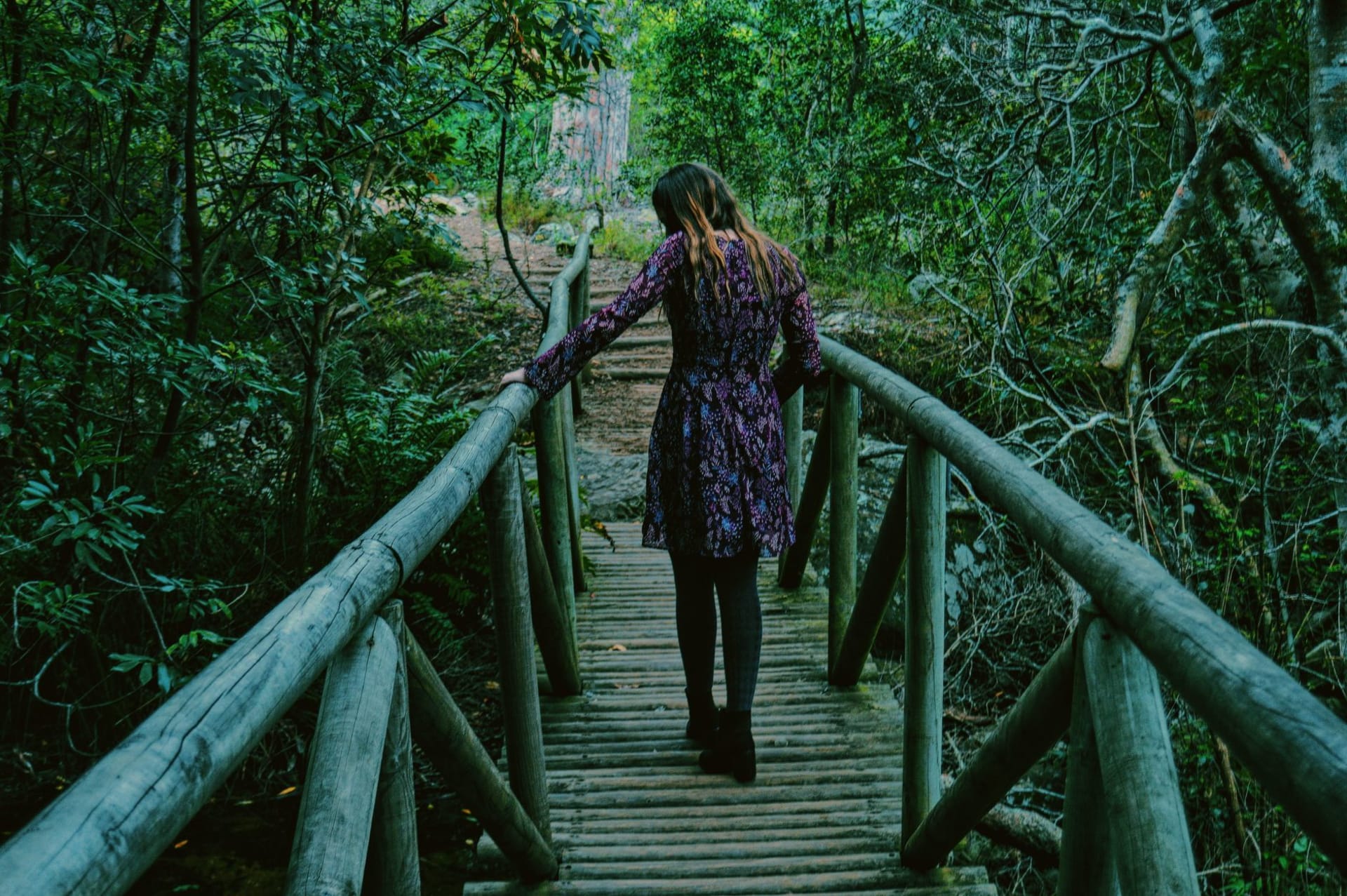
The suspension bridge at the Storms River mouth is the famous thing, and it merits the fame. You walk from the park reception through indigenous forest — actual indigenous forest, with stinkwood and ironwood and outeniqua yellowwood trees that were already old when the first European ships rounded the cape — and then the gorge opens below you, a sheer-walled slot of black and brown rock with the river channelling between the walls in white water, and the bridge is a narrow, gently swaying thing that puts you directly above the action. The noise is enormous. Spray comes up. You stand there gripping the cable railing and feel the precariousness of it as a physical sensation in your chest.
The Otter Trail begins here too, at the river mouth — five days of coastal hiking from Storms River to Nature’s Valley, mostly on cliffs above the ocean. The trail is famous enough that bookings fill a year ahead. I did not have a booking. I walked the first section, down to the first river crossing, and turned back with a fairly detailed plan to return properly one day. The coastal forest here is extraordinary: tree ferns, lily pads in still pools, the sudden appearance of the sea through gaps in the canopy, a brilliance of light after the shade.

The park accommodation — chalets and campsites right at the river mouth — is booked solid in season, but I had heard about this and reserved early. My chalet had a deck facing the sea, and I ate biltong and drank a beer at dusk while the Southern right whales moved offshore in ones and twos, their breath visible in the fading light. This is a winter thing mostly, but I caught the tail end of the season in early September. The whales were unhurried, which seemed right for a coastline that has been here longer than anything watching it.
The camp’s restaurant serves decent braai plates and something called a kudu burger that I ordered with skepticism and finished with respect. The espresso machine was broken. I drank instant coffee on the deck in the morning fog and the quality of the coffee was the least interesting thing happening.
When to go: The forest has no bad season — it rains year-round and the green stays constant. For whale watching offshore, July through October is the window. The Otter Trail requires advance booking and runs all year, but spring (September–November) offers wildflowers and whale sightings. In summer, the park fills up; reserve chalets and bridge walk permits well in advance.