Africa
Garden Route
"The kind of coast that makes you pull over every ten minutes."
I drove the Garden Route in the wrong direction the first time — east to west, against the light, rushing toward Cape Town with three days to spare. That was a mistake. Do it westward, yes, but slowly: with a week at minimum, a tent in the boot if you have one, and the understanding that this is not a road trip so much as a series of places that happen to be connected by tarmac. Each one insists on being taken seriously.
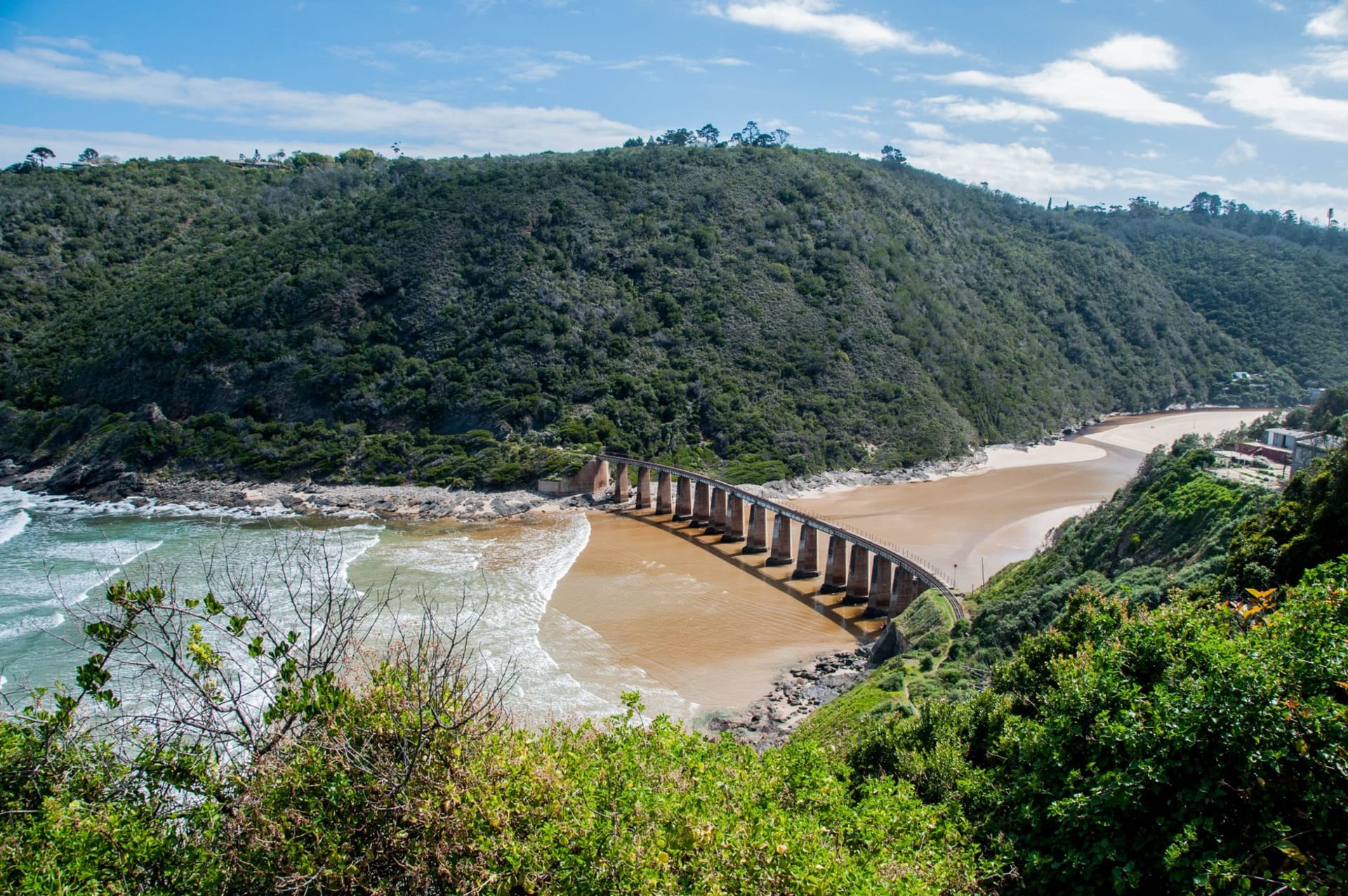
The stretch between George and Plettenberg Bay is what people mean when they say Garden Route, but that’s like saying the Dordogne is just the Périgord. Knysna is the obvious centrepiece — that tidal lagoon and the two sandstone heads that guard its mouth are genuinely stunning, especially from the water at dusk when the light goes amber and the herons line up on the channel markers. But Wilderness is quieter and stranger, a place where rivers meet the sea behind barrier dunes and the forest pushes so close to the coast you feel the two ecosystems in conversation. The Tsitsikamma section, further east, is where things get properly wild: a suspended trail bridge over the Storms River gorge, cold water funnelling between black rock walls, and Southern right whales offshore if the timing is right. I ate crayfish at a roadside braai stand near Keurboomstrand that cost almost nothing and tasted of cold Atlantic water and smoke. That meal still comes back to me.
The Outeniqua Mountains run as a backdrop throughout — not dramatic in the Drakensberg sense, but forested right to the ridge, and full of passes where a single lane switchbacks up through yellowwood trees and the air drops ten degrees. The Outeniqua Pass between George and Oudtshoorn is a reasonable day trip inland if you need a break from coast. But the coast is the thing.
When to go: October to April for warmest swimming and driest days, though the Garden Route gets some rain year-round — which is exactly why it stays green. November and March avoid the worst school-holiday crowds while the ocean temperature reaches something bearable. July and August can be grey and cold but wild, and if whale watching is the goal, that quieter, windier window is often better than you’d expect.
What most guides get wrong: They treat it as a drive to complete rather than a place to stay. People rent a car in Cape Town, check off Knysna and a bungee jump at Bloukrans, and move on. But the Garden Route is best lived laterally — a few nights in Wilderness, a few in Knysna, hiking the Otter Trail if you’ve booked far enough ahead, eating at the night market in Plettenberg Bay. The destinations look small on a map. They are not small in experience.