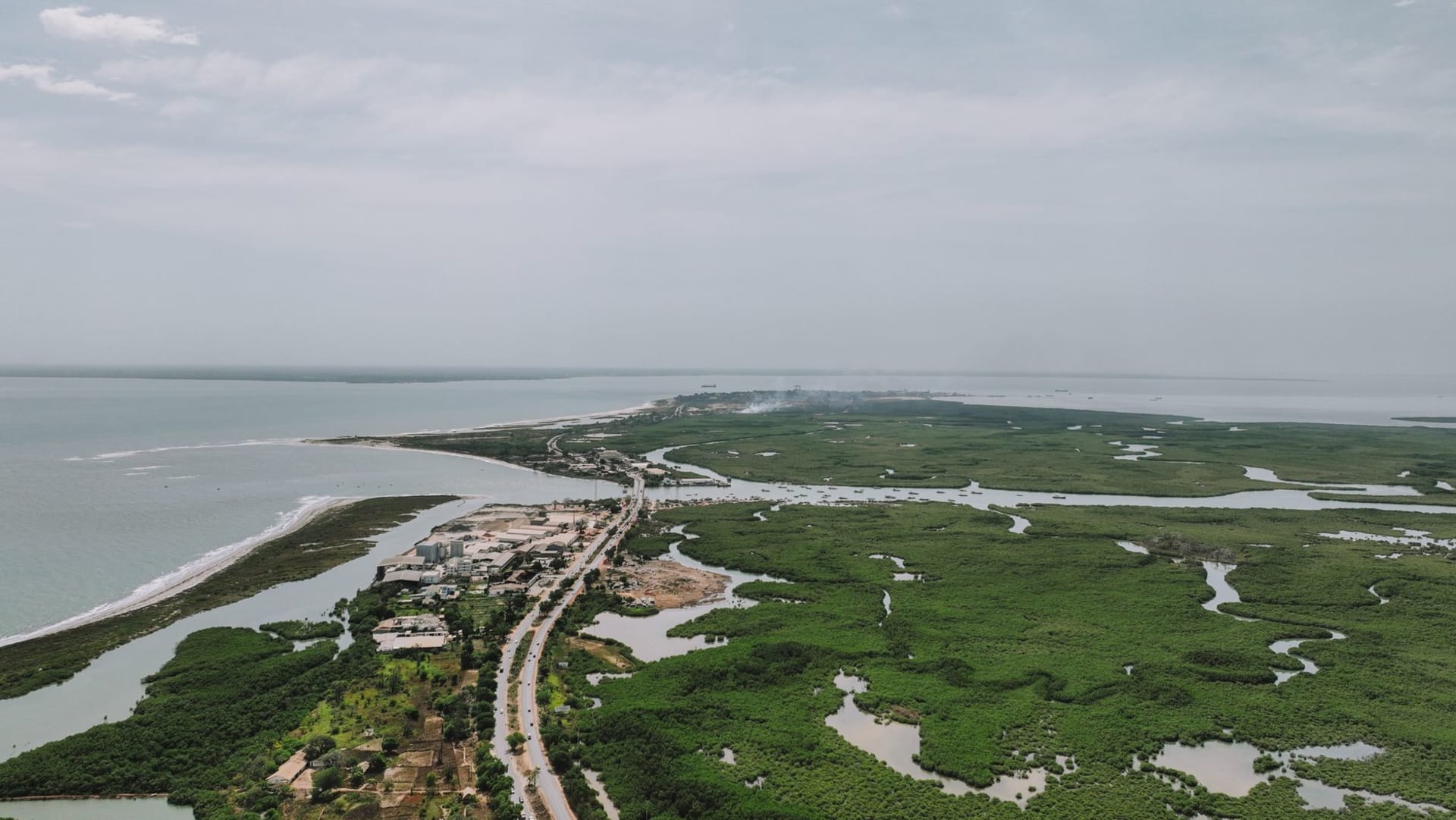
Jinack Island
"I walked for forty minutes along the beach without seeing anyone. In West Africa, that is almost impossible to achieve."
Getting to Jinack requires commitment of a particular kind — not difficulty exactly, but an agreement to do things at the pace things happen here rather than the pace you’d prefer. The island sits north of the main tourist coast, separated from the mainland by a network of mangrove creeks and the wide mouth of Oyster Creek. You reach it by pirogue, either from the north or from the coast road near Barra, and the crossing takes somewhere between twenty minutes and an hour depending on the tide, the wind, and what else the pirogue driver has going on that morning. I waited on the north bank for forty minutes while a tire, three sacks of rice, and a woman’s entire market inventory were loaded before me. Nobody was apologizing for this. It was simply how loading worked.
Jinack is long and narrow, about ten kilometers of Atlantic-facing sand backed by shallow lagoons and thick scrub. The two small villages on the island — Jinack Kajata and Jinack Niji — have no electricity grid, no paved roads, and no hotels in the conventional sense, though both have basic guesthouses run by local families with varying degrees of preparedness for unexpected visitors. I stayed with a family in Kajata who fed me rice and fish for dinner and breakfast and whose youngest son spent the entire evening teaching me the five phrases in Jola he considered indispensable.
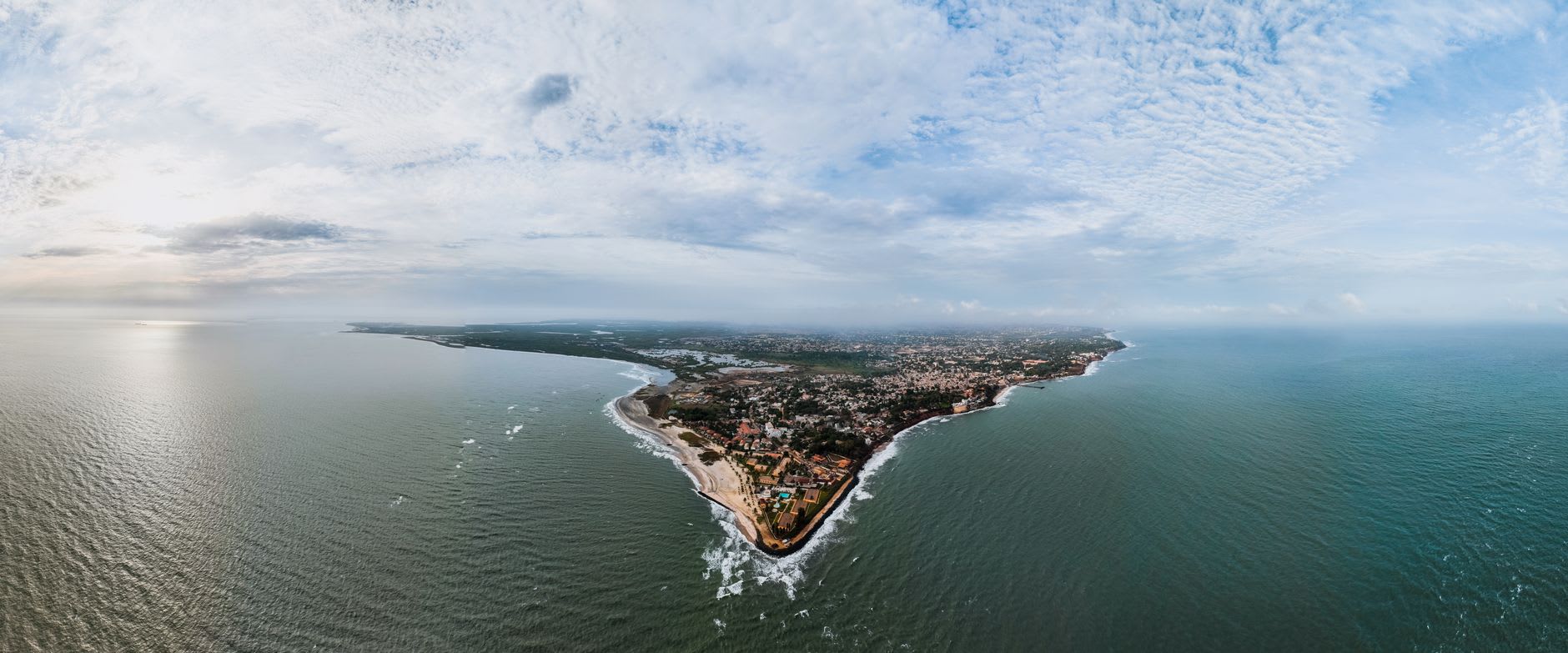
The beach on the ocean side is serious Atlantic beach — wide, ungroomed, surf-broken, running without interruption in both directions until it bends out of sight. There are no sunbeds. There are no vendors. There are, between November and March, sea turtles coming ashore at night to lay eggs — green turtles and leatherbacks both, using the same stretch of sand they’ve used for longer than any other fact about this island. I went out at midnight with my host’s teenage daughter, who knew the signs, and watched a leatherback — enormous, the color of old slate, moving with that slow and laborious deliberateness that makes you feel you’re witnessing something geological — excavate a nest and begin laying. She told me not to use a torch until after the turtle had settled into the process. We watched in darkness, listening to the ocean.
The lagoon side is all birds — waders in the shallows at low tide, terns working the channels, osprey circling above the mangrove edges. I borrowed a dugout canoe from the village and paddled the inner creeks for an hour one afternoon, startling egrets at every bend, the water completely clear over white sand, the mangrove roots making cathedral shapes at the waterline.
Jinack is the kind of place that creates the sensation of having arrived somewhere genuinely outside the system — not in a romantic fantasy sense, but in the very practical sense that the systems (electricity, road, tourist infrastructure) simply haven’t arrived yet. Whether that remains true in five years is uncertain. For now the beach is empty at dawn and the turtles come back every year.
When to go: November through February for sea-turtle nesting activity, good weather, and manageable surf. Sea turtles come ashore to nest between November and March. Plan to stay at least one night — arriving and leaving the same day misses the character of the island entirely. Bring cash, a headlamp, and enough water for the crossing.