Africa
The Gambia
"The smallest country on the continent, and one of the most quietly alive."
I arrived at Banjul airport in the middle of the afternoon, the kind of West African heat that hits you before the plane door is fully open. The taxi driver was playing Youssou N’Dour on a crackling speaker, and within twenty minutes I was watching fishermen haul nets on the beach at Bakau while schoolchildren in uniforms wove between plastic chairs at a roadside café. No ramp-up, no transition. The Gambia simply begins the moment you land.
What surprises most people about The Gambia is the scale — or rather the lack of it. The entire country is about 50 kilometers wide on either side of the River Gambia, and the coastal strip where most visitors stay is compact enough that you can eat breakfast in a local compound, spot a crowned crane in a creek-side mangrove by mid-morning, and be eating fresh barracuda grilled over charcoal on the beach before the sun moves. That density is not a limitation. It is the whole point. You are not racing between highlights here. You are sitting inside one long, slow, river-scented moment.
The food never quite makes it into the guidebooks, which is a shame. Benachin — a one-pot rice dish with fish, tomato, and whatever vegetables came off the boat — is eaten everywhere and tastes different at every table. Domoda, a peanut stew that can be made with chicken or goat or groundnuts alone, is richer and more complex than its description suggests. At the Serrekunda market, women fry little fish cakes called accara and sell them with chili sauce wrapped in newspaper. Eat them standing up, in the noise and the smoke and the heat, and nowhere else.
The river itself is the reason to leave the coast. Upriver, past Georgetown and the stone circles of Wassu — built by a civilization nobody has fully explained — the water slows and the banks become cathedral. Giant kingfishers perch on dead branches. Hippos grunt in the reed beds after dark. The boats are narrow, the sky is enormous, and The Gambia stops feeling small.
When to go: November through February is the dry season — cooler, clear, and when the birdwatching peaks. The Gambia has over 600 bird species and serious birders come specifically for this window. Avoid July and August, which are humid and rainy. March and April are transitional and can be good value if you don’t mind the rising heat.
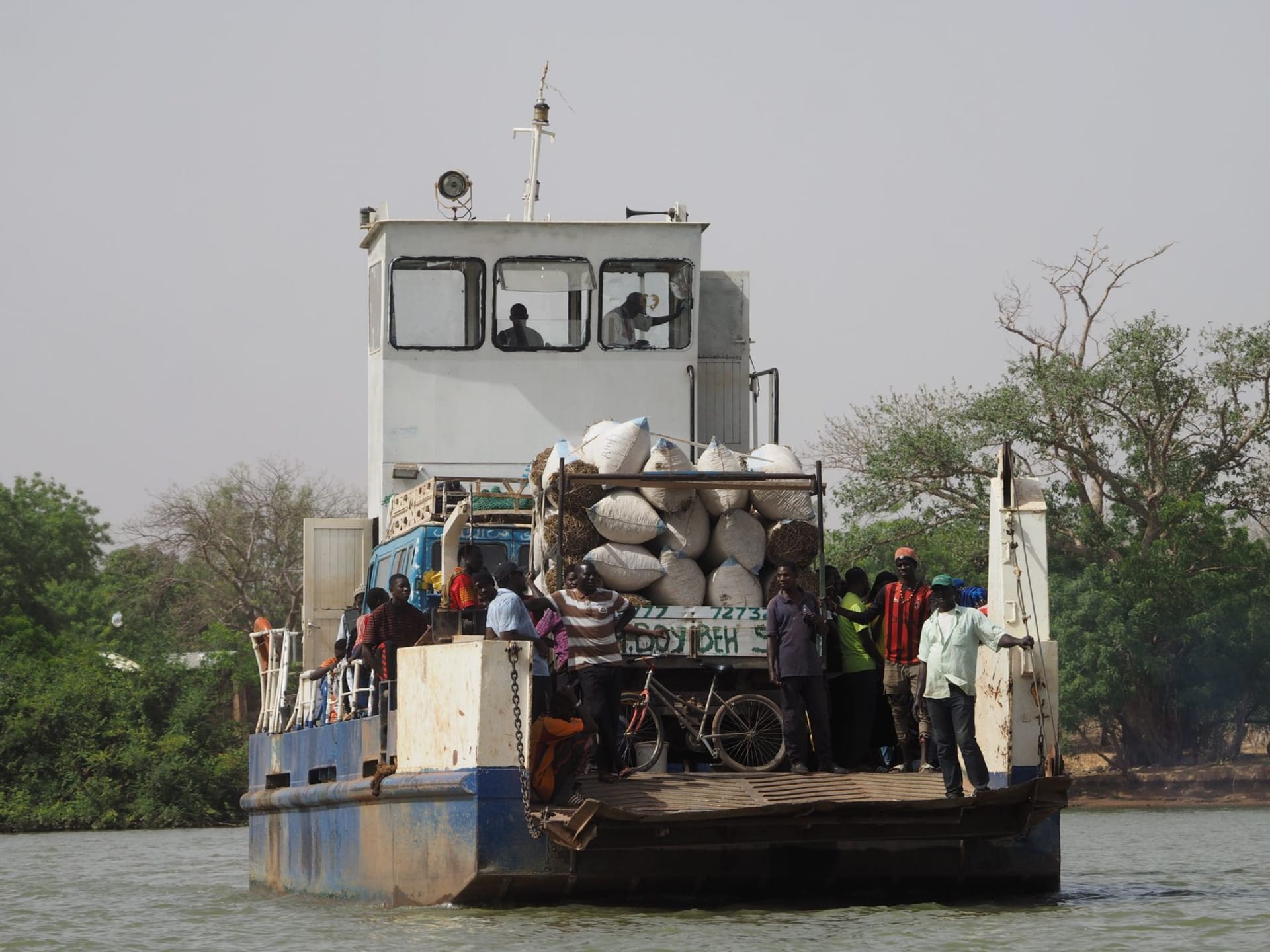
What most guides get wrong: They sell The Gambia as a cheap beach holiday for Northern Europeans who want sun in winter, full stop. That framing is accurate but exhausting — it buries the river, the upriver communities, the extraordinary birdlife, and the genuine warmth of a country where the tourist infrastructure hasn’t yet smoothed over everything interesting. Skip the resort strip after two days and head east. The real Gambia is the one the ferries cross at sunset, loaded with goats and market women and sacks of rice, moving slowly upstream toward somewhere that doesn’t have a tourist rating.