Bakau
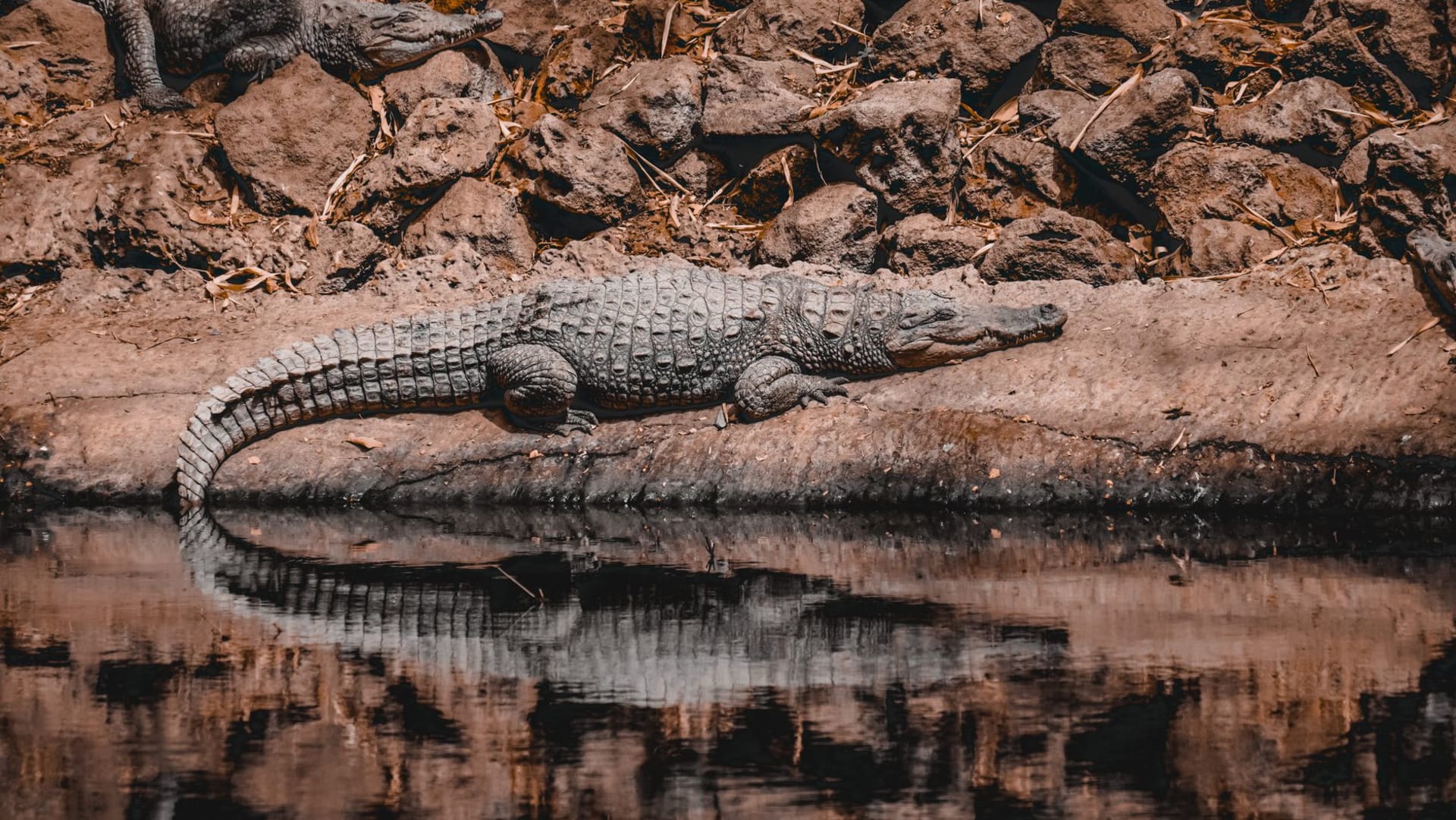
"The crocodiles sunning themselves at Kachikally looked too ancient to be surprised by anything, especially tourists."
The Kachikally Crocodile Pool is one of those places you arrive at skeptical and leave having revised several assumptions. It sits in the middle of Bakau, a short walk from the main road, inside a compound maintained by the Bojang family for generations. The fee is modest, the guide appears before you’ve finished paying, and within minutes you are crouching beside a Nile crocodile roughly the length of a car, one hand resting on its back, feeling the surprising roughness of the scutes and the warmth stored in its body from the morning sun. The crocodiles are considered sacred here — protected by the pool, revered by local women who come to bathe in its waters in hopes of improving fertility. The animals have lived alongside the neighborhood their entire lives and they register human presence the way a very old cat registers yours: with complete, magnificent indifference.
The guide told me about specific crocodiles by name. I forget now which was which, but the largest was elderly and slow and lay so still on the bank that I thought it was a log until one eye half-opened. The pool itself is small but genuinely beautiful — shadowed by palms and breadfruit trees, the water green and murky and catching the light in strange ways.

The beach at Bakau runs south from the mouth of Oyster Creek, wide and relatively uncrowded outside the resort zone. Every morning before seven the fishing pirogues return with the night catch and the scene at the fish market below the beach is one of the most vivid in the country — men in rubber boots sorting barracuda and bream and yellowed snapper into piles on the sand while buyers crowd around, money changing hands in the smoke and noise and smell of the sea. I ate a fried fish sandwich from a woman cooking on a camp stove at the market’s edge, made with just-caught barracuda and a chili sauce that was not joking around.
The botanical garden nearby — mostly large trees and overgrown paths — is good for an early morning walk, quiet in a way the beach rarely is. Weaverbirds build their hanging nests in the canopy, visible from the path if you stop and look up. Sunbirds flit through the flowering shrubs. The Gambia’s birdlife is everywhere once you start looking, and Bakau is as good a place as any to start looking.

In the evenings, the strip along the beachfront road fills with small restaurants and juice bars. I sat at a plastic table eating domoda — that dense, rich peanut stew — while the last of the light left the sky and someone at the next table was having a very long and apparently very enjoyable phone call. The night was warm and the generator at the restaurant hummed and the palm trees stood perfectly still. Bakau is not trying to be exotic. It simply is.
When to go: November through February for cooler, drier weather and the best birdwatching. The fish market is most active in early morning regardless of season — go before 7am. The Kachikally pool is open year-round and worth visiting any time of day, though morning light makes the vegetation around the pool especially beautiful.