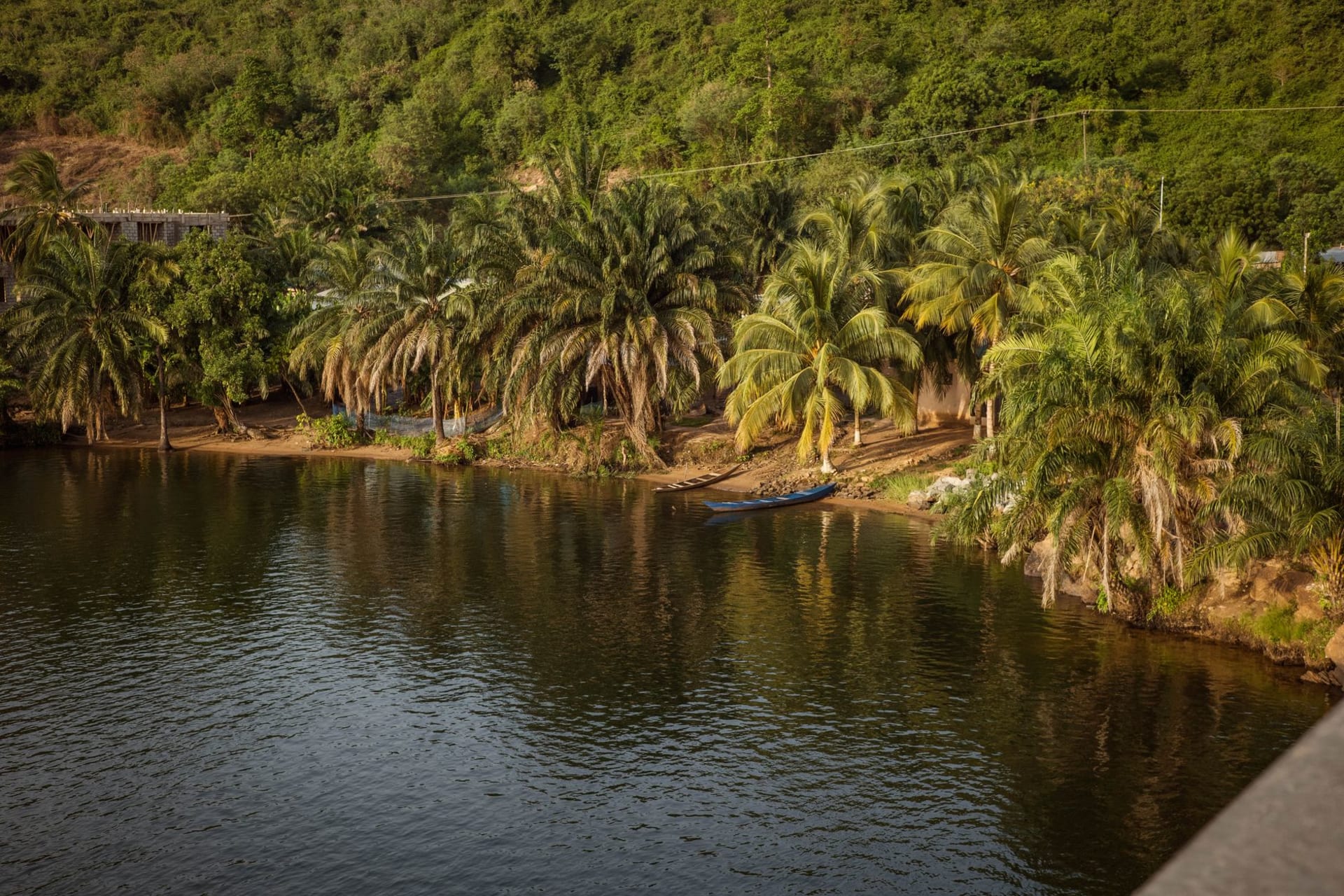
Abuko Nature Reserve
"In less than an hour's walk I counted more bird species than I'd seen in a month anywhere else."
Abuko is not large. You could walk the main trail in under an hour at a tourist’s pace, which means most visitors do exactly that and come away thinking they’ve seen it. What you actually see in that hour depends almost entirely on whether you are moving or standing still, and in my experience, Abuko rewards stillness more than almost any reserve I’ve visited. I arrived just after seven in the morning when the light was still filtering sideways through the gallery forest and the birds were at the peak of their morning activity, and I spent ninety minutes on a stretch of path no longer than two hundred meters. I did not feel I was wasting time.
The core of the reserve is a long, thin oxbow lake fed by a small creek — the kind of dark-water creek that absorbs light without giving any back, the surface absolutely still and covered in patches of water plants. Long-tailed cormorants dry their wings on dead branches above it. A African finfoot — a bird so secretive that most birders never tick it — moved along the water’s edge beneath an overhang of roots, its red bill catching a slant of sun. I stood and watched it for five minutes until it vanished upstream. My guide, who knew every bird in the reserve by call alone, looked as pleased as I felt.
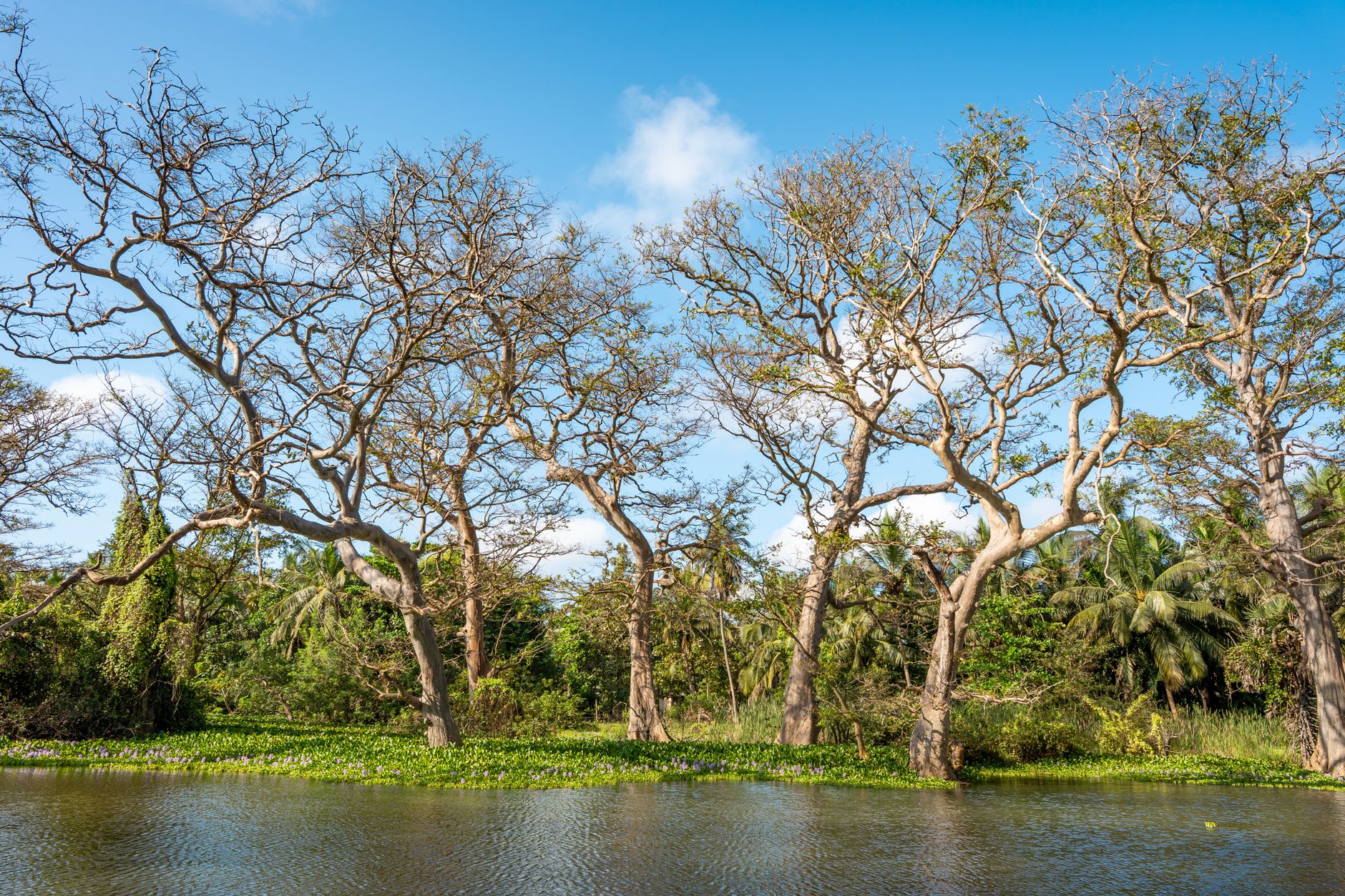
The mammals are harder to find but present. Green vervet monkeys move through the canopy in small troops, causing sudden rustling that at first sounds larger and more threatening than it is. There are Nile crocodiles in the lake — three or four visible on any given morning, lying on the bank in the positions of animals that have not needed to hurry in fifty million years. A West African dwarf crocodile, rarer and smaller, occasionally appears at dawn in the deeper sections of the creek. Guinea baboons bark from the forest edge at dusk.
The bird list here runs to over 270 species in an area smaller than a suburban golf course, which is one of those facts that sounds like marketing until you actually stand in the reserve and start counting. Red-cheeked cordon-bleu, violet starling, grey-headed kingfisher, palm-nut vulture, African paradise flycatcher — within two hours I was filling a page in my notebook. A Pel’s fishing owl has been recorded here though I didn’t see one; my guide told me it requires an early start and patience, two qualities I’ll claim only intermittently.

The small animal orphanage at the reserve’s entrance — home to servals, porcupines, and monkeys that can’t be released — is worth a few minutes, less for the animals themselves (they are clearly cared for but clearly captive) and more for the information boards about the reserve’s founding by a British conservationist in the 1960s, when the land was threatened with development. That it exists at all is the result of stubborn advocacy, and the forest around it has the quality of something that knows it survived something.
When to go: November through April for the dry season, when the undergrowth is less dense and visibility improves. Serious birders should visit in October and November when migratory species arrive from Europe and north Africa. Arrive at first light — the reserve opens at 8am but the gate often opens earlier for birders who ask nicely.